Guest Column: Suggests candidates for election
ED SLAVIN
St. Augustine
Publication Date: 10/26/08
Abraham Lincoln warned about politicians who "fool the people." Let's not be fooled again. Therefore, I respectfully recommend:
1. Defeating the defective St. Johns County charter again, as on Aug. 26. Supporters admit that their charter-drafting-bee was aimed at former Commissioner Bruce Maguire, whom they loathed. I'm no Maguire fan, but that's a bad reason to adopt a charter. Supporters pretend only developers oppose their poorly-drafted-charter. Vote no if you treasure limited government, accountability, human rights and environmental protection -- none well-addressed in the charter, which would be very difficult for the people to amend and was drafted by a few. Commissioners never explained refusals to adopt pages of proposed strengthening amendments. Starting Nov. 5, let's write a real charter addressing real concerns (like preventing corruption and waste with an inspector general, ombuds and elected county attorney).
2. Voting to change City Hall, Tallahassee, Congress and the White House. America will recover with wise leaders like Obama/Biden, with the courage to protect our health and our wealth, helping heal our nation's wounds.
3. Electing Jimmy Owens and Judith Seraphin City Commissioners. Let's heal our city's wounds, advance liberty and equality, safeguarding our environment, questioning those who wrought waste (secret environmental violations, tens of thousands in environmental fines) and millions in out-of-court settlements for police abuses. It's our money. Vote against those who reflexively, chauvinistically defend City Manager William B. Harriss.
4. Electing Doug Courtney State Representative (District 20). Incumbent William Proctor is out-of-touch, a walking conflict of interest, promoting Flagler College over needy public elementary and secondary schools. Elect Courtney to represent us in Tallahassee.
5. Electing to U.S. Congress Faye Armitage of Fruit Cove -- an economist, mother of five, grandmother of three, she raised a disabled son (her son-in-law is in Iraq). Eight-term incumbent John Mica is way too big for his britches, a national embarrassment. Mica's voted against raising the minimum wage and granting (unpaid) family and medical leave. Mica never apologized for taking money from the likes of convicted lobbyist Jack Abramoff or head-butting an ABC News cameraman upon leaving Tom DeLay's lobbyist party. Mica's spends special-interest campaign contributions on travel/hotels/casinos/restaurants/bars/private clubs. See www.cleanupcityofstaugustine.blogspot.com. Ungracious Mica's guilty of goading "liberals," President Clinton ("a little booger") and social welfare recipients ("don't feed the alligators"). But as Record Senior Writer Peter Guinta reported, Mica's given earmarks to campaign contributors (that's corporate welfare). Mica wrote that he flew to Tibet to sell airplanes to China for Boeing (whose PAC contributed thousands to Mica's campaigns). Economist Armitage will represent all of us and we can be proud to say that we finally have a Congressman who works to help people like us. No ninth term for Mica.
6. Electing Mosquito Control Commission candidates Ronnie Radford, Paul Linser and Gary Howell. We don't need to buy aircraft -- voters' will was finally heard -- and we don't need an unwise, rushed, unscientific return to aerial organophosphate spraying. AMCD's mission statement mandates scientific peer review and public hearings. Let's do it.
7. Voting against special interests' unfair state constitutional amendments, each of which would require 60 percent of the vote to be enacted into Florida's Constitution. Reject bigotry and greed.
Our founders' vision will prevail over "social dominators" led by the Karl Roves of the world -- the mean-spirited few who boss, bully, divide and gull people.
Leaders will want to discuss Congressional enactment of a St. Augustine National Historical Park, National Seashore and National Scenic Coastal Highway, welcoming the world to observe 11,000 years of indigenous Indian history, and 500 years of Hispanic, African-American, British, French, Minorcan, and other world cultures.
Vote.
Ed Slavin first wrote national park legislation for former U.S. Sen. Jim Sasser, D-Tennessee at age 20 (the proposed Great Smoky Mountains Wilderness Act) in 1977. On Nov. 13, 2006, Slavin proposed a St. Augustine National Historic Park, National Seashore and National Scenic Coastal Highway Act.
Click here to return to story:
http://staugustine.com/stories/102608/opinions_1026_058.shtml
© The St. Augustine Record
Friday, October 31, 2008


Who is CHUCK NUSBAUM? City of St. Augustine Contractor, Sorehead, Purveyor of Indency on our Public Airwaves on Radio Station WFOY-AM

CHARLES NUSBAUM is the CEO and President of Old City web services, the website designer for the City of St. Augustine.
CHARLES NUSBAUM is an angry man who mocks and insults reformers on his radio program, which may have landed WFOY radio in hot water with the Federal Communications Commission -- CHARLES NUSBAUM allegedly used two of the "seven dirty words" on his radio program earlier this week in denouncing progressives and reformers who want to stop the pollution and waste by the City of St. Augustine.
Will CHARLES NUSBAUM cause WFOY to be fined by the Federal Communications Commission for indecency?
See below:
October 31, 2008
Ms. Kris Phillips
Owner, WFOY-AM
527 Lewis Point Road
St. Augustine, Florida 32086 via fax to 797-3446
Dear Ms. Phillips:
1. I am reliably informed that Mr. CHARLES NUSBAUM’s obscenity-laden radio broadcast on WFOY earlier this week:
(a) Repeatedly used two of the “seven dirty words” prohibited by FCC and the Supreme Court precedent;
(b) Slandered me and hurled pejoratives and accusations at me and others, holding us to obloquy, ridicule and defamation, in retaliation for protected activity under the environmental whistleblower laws, e.g., reporting environmental crimes by the City of St. Augustine to federal and state law enforcement authorities, including 40,000 cubic yards of solid waste illegally dumped in the Old City Reservoir, dumping treated sewage effluent from a leaking, shredded pipe in our saltwater marsh (with 120 feet of pipe missing). This is deeply offensive. NUSBAUM’s rantings are intended to chill protected activity under the First Amendment and environmental whistleblower laws.
2. CHARLES NUSBAUM wrote on the Plazabum.com website that this he does not pay for broadcast time. If this is true, I don’t reckon the revenue stream (zero) is worth it for WFOY, because NUSBAUM and WFOY could be sued for defamation every time Mr. NUSBAUM is on the air.
3. The First Amendment, in its majesty, protects CHARLES NUSBAUM’s right to free speech. But the First Amendment does not immunize NUSBAUM from being sued for defamation, fraud, blacklisting and other torts.
4. CHARLES NUSBAUM’s apparent outrage at my reporting environmental violations to federal and state authorities and accusing me of “costing the city and county money” is irrational, as was his mischaracterizing the nature of the pollution problems in our City. Having been a guest on your radio station several times, I know that you have higher standards.
5. CHARLES NUSBAUM’s hate speech is not protected by the First Amendment. Hate speech like NUSBAUM’s program does not belong on a family radio station.
6. May I suggest that you tape future NUSSBAUM broadcasts and consider sharing them with your FCC lawyer in Washington, D.C.?
7. By the way, when I tried to E-mail this message, it was twice returned with a message from your ISP, oldcity.com, stating inter alia, “SMTP; 554 Sorry, message looks like SPAM to me.” The message indicates that your Internet Service Provider (ISP) is “oldcity.com” (of which CHARLES NUSBAUM is President and CEO).
With kindest regards, I am,
Sincerely yours,
ED SLAVIN
www.cleanupcityofstaugustine.blogspot.com
P.O. Box 3084
St. Augustine, Florida 32085-3084
904-471-7023
904-471-9918 (fax).

Sorehead Wildly Indignant About Nearly Everything (SWINE) CHUCK NUSBAUM
(with a tip of the hat to cartoonist Al Capp, whose "Students Wildly Indignant About Nearly Everything" (SWINE) was part of the vintage comic strip, "L'il Abner."
Something's rotten in St. Augustine.by Doral Lovell
Something's rotten in St. Augustine.
No, it's not the wonderful people who live in the neighborhoods next to you and me.
It's the skulking, scurrilous sneak-thieves who are roaming our streets -- robbers and n'er-do-wells who are trying to negate democracy's process by stealing candidates signs under cover of night. Some are brazenly stealing in broad daylight, too -- but only if they can tell you're not home, that noone's around to catch or turn them in. That's how sneak-thieves work.
These sneaky, stealthy thieves are stealing our chosen icons -- the standard bearers of a democratic government -- from our residents, our communities, our citizens, our voters.
Now, I can't be certain if they are stealing signs from both the Republican and Democrat parties. But I can vouch that they are definitely stealing Obama signs -- I've lost five, yes five, planted in my condo yard in one week. And, yes, I'm a Democrat and I fully and enthusiastically support Barack Obama. And I bought a slew of his yard signs and placards to support his election and to pass out to friends.
But you won't see me advocating ripping off signs from those who publicly support McCain. No, indeed. I may not agree with your electoral choice, but I vehemently defend your right to make it. And to publicly promote your candidate by displaying his or her signs any way you legally can.
Our constitution protects such rights and so do most of St. Augustine's and St. John's County's law abiding citizens.
But this is an important and historic election year, and the good political people being victimized maybe can and should be taking counter-measures against these dirty tricksters. We need to fight these unconstitutional enemies of our basic democracy who want to subvert our right to work for and to vote for our candidates.
I have been canvassing others on this subject and know something about individuals who do not want my candidate elected. Because he's a Democrat. Because he's black. Maybe for many other reasons.
But racism has already clearly raised its ugly head. Ken Bryan, our successful black candidate for County Commissioner, has been targeted by klan-like thugs. He reported to the police and the press incidents of such thugs harassing a couple citizens who wanted to put up his campaign signs and then referring to him as a "n-----" candidate when they didn't succeed.
Then there are a couple of side-by-side homeowners off Riberia Street who I stopped by to compliment on putting their signs so high up on the side of their houses that NO thieves could reach them! Clever and cool!
Yet the woman who lived in one said her neighbor stopped by, pointing out she was afraid for her, because she "might get hurt" by the very thieves she thwarted. Scary? Yes, but the homeowner was undeterred.
So I say we should emulate this woman and our elected commissioner. Exhort our friends and neighbors and good citizens and yes, even our children, not to not look away or condone such actions or attitudes. Report this scourge of sign-stealers, anonymously if you feel it's necessary. Maybe justice will prevail -- if you put your signs up high enough!
Remember, such actions can only thrive when good men -- and women -- do nothing.
Say to the low-lifes on the prowl: Beware. Be prepared. Because we'll be vigilant, we'll be watching and waiting next time you steal. Be worried about being caught and exposed and prosecuted, you rotten gang of goons.
Dee Lovell
St. Augustine, FL 32080
No, it's not the wonderful people who live in the neighborhoods next to you and me.
It's the skulking, scurrilous sneak-thieves who are roaming our streets -- robbers and n'er-do-wells who are trying to negate democracy's process by stealing candidates signs under cover of night. Some are brazenly stealing in broad daylight, too -- but only if they can tell you're not home, that noone's around to catch or turn them in. That's how sneak-thieves work.
These sneaky, stealthy thieves are stealing our chosen icons -- the standard bearers of a democratic government -- from our residents, our communities, our citizens, our voters.
Now, I can't be certain if they are stealing signs from both the Republican and Democrat parties. But I can vouch that they are definitely stealing Obama signs -- I've lost five, yes five, planted in my condo yard in one week. And, yes, I'm a Democrat and I fully and enthusiastically support Barack Obama. And I bought a slew of his yard signs and placards to support his election and to pass out to friends.
But you won't see me advocating ripping off signs from those who publicly support McCain. No, indeed. I may not agree with your electoral choice, but I vehemently defend your right to make it. And to publicly promote your candidate by displaying his or her signs any way you legally can.
Our constitution protects such rights and so do most of St. Augustine's and St. John's County's law abiding citizens.
But this is an important and historic election year, and the good political people being victimized maybe can and should be taking counter-measures against these dirty tricksters. We need to fight these unconstitutional enemies of our basic democracy who want to subvert our right to work for and to vote for our candidates.
I have been canvassing others on this subject and know something about individuals who do not want my candidate elected. Because he's a Democrat. Because he's black. Maybe for many other reasons.
But racism has already clearly raised its ugly head. Ken Bryan, our successful black candidate for County Commissioner, has been targeted by klan-like thugs. He reported to the police and the press incidents of such thugs harassing a couple citizens who wanted to put up his campaign signs and then referring to him as a "n-----" candidate when they didn't succeed.
Then there are a couple of side-by-side homeowners off Riberia Street who I stopped by to compliment on putting their signs so high up on the side of their houses that NO thieves could reach them! Clever and cool!
Yet the woman who lived in one said her neighbor stopped by, pointing out she was afraid for her, because she "might get hurt" by the very thieves she thwarted. Scary? Yes, but the homeowner was undeterred.
So I say we should emulate this woman and our elected commissioner. Exhort our friends and neighbors and good citizens and yes, even our children, not to not look away or condone such actions or attitudes. Report this scourge of sign-stealers, anonymously if you feel it's necessary. Maybe justice will prevail -- if you put your signs up high enough!
Remember, such actions can only thrive when good men -- and women -- do nothing.
Say to the low-lifes on the prowl: Beware. Be prepared. Because we'll be vigilant, we'll be watching and waiting next time you steal. Be worried about being caught and exposed and prosecuted, you rotten gang of goons.
Dee Lovell
St. Augustine, FL 32080
THE JOHN MICA FAMILY, TRULY SCARY PEOPLE, AS THE ADDAMS FAMILY

Here they are! Lobbyist-cash-dining vampire Congressman JOHN MICA et ux, et brother-lobbyists (DAVID and DAN), et Congressman MICA's public dole-dining PR lobbyist children (D'ANNE and J. CLARK MICA).
And President GEORGE W. BUSH is LURCH.
Is that a dysfunctional family or what?
Of course, Al Gore wrote in "Earth in the Balance" that our Nation acted like a dysfunctional family when it came to environmental pollution, but the MICA FAMILY takes the cake (and shoots the caribou).
Why, Congressman JOHN MICA even joked to the Washington Post that he calls his FPC lobbyist brother DAVID "the polluter."
Ipse dixit.
There's an obvious correlation between MICA's advocacy in Congress and that of his brothers and children.
They're creepy and they're kooky,
Lobbyists and goofy,
They're all together oooky,
The Mica Family.
Our House is a disgra--ace
Where lobbyists embrace
They've completely lost face
The Mica Family.
(Neat)
(Sweet)
(Petite)
So get a pinstripe suit on
A broomstick you can crawl on
We're gonna recall 'em
The Mica Family.
What do you reckon?
Letter: Mica -- Never signed term-limits pledge
Letter: Mica -- Never signed term-limits pledge
U.S. Rep. John L. Mica
Washington, D.C.
Publication Date: 10/31/08
Editor: It is important to respond to several inaccurate statements made in one of your recent letters to the editor.
First, when seeking office and throughout my service, I have never signed any pledge to support term limits for members of Congress.
The U.S. Constitution provides a two-year term as set forth in Article I that only a Constitutional Amendment can alter. Furthermore, the pledge contained in the Contract with America, which I supported, placed six-year term limits for the U.S. House committee chairmen and leadership positions. In compliance, I served for six years as chairman of Aviation, four years as chairman of Civil Service and two years as chairman of Criminal Justice and Drug Policy. Republicans placed six-year term limits on leadership positions because only an amendment to the U.S. Constitution can change congressional terms.
The writer should be aware of this provision and also be aware that, in fact, Democrat members do not impose similar leadership term limits.
In 1995, I voted for a constitutional amendment that, if passed by two-thirds votes of Congress and the states, would impose 12-year term limits. Democrats blocked that measure so we currently retain two-year terms.
U.S. Rep. John L. Mica
Washington, D.C.
Click here to return to story:
http://www.staugustine.com/stories/103108/opinions_1031_105.shtml
© The St. Augustine Record
U.S. Rep. John L. Mica
Washington, D.C.
Publication Date: 10/31/08
Editor: It is important to respond to several inaccurate statements made in one of your recent letters to the editor.
First, when seeking office and throughout my service, I have never signed any pledge to support term limits for members of Congress.
The U.S. Constitution provides a two-year term as set forth in Article I that only a Constitutional Amendment can alter. Furthermore, the pledge contained in the Contract with America, which I supported, placed six-year term limits for the U.S. House committee chairmen and leadership positions. In compliance, I served for six years as chairman of Aviation, four years as chairman of Civil Service and two years as chairman of Criminal Justice and Drug Policy. Republicans placed six-year term limits on leadership positions because only an amendment to the U.S. Constitution can change congressional terms.
The writer should be aware of this provision and also be aware that, in fact, Democrat members do not impose similar leadership term limits.
In 1995, I voted for a constitutional amendment that, if passed by two-thirds votes of Congress and the states, would impose 12-year term limits. Democrats blocked that measure so we currently retain two-year terms.
U.S. Rep. John L. Mica
Washington, D.C.
Click here to return to story:
http://www.staugustine.com/stories/103108/opinions_1031_105.shtml
© The St. Augustine Record
FOLIO WEEKLY NAMES CONGRESSMAN JOHN MICA ONE OF ITS "SCARIEST PEOPLE" IN HALLOWEEN ISSUE
See page 19, with cut-out MICA mask

Wednesday, October 29, 2008
The Home Front by Mike Mullins: Rep. John Mica on Fannie/Freddie Special Prosecutor
Rep. John Mica on Fannie/Freddie Special Prosecutor
October 29, 2008 01:03 PM ET | Luke Mullins | Permanent Link | Print
Last week a handful of Republican lawmakers sent a letter to the U.S. attorney general asking him to appoint a special counsel to investigate Fannie Mae and Freddie Mac's role in triggering the current financial crisis.
From the letter:
At the center of the troubles in the mortgage-related markets may lie a cluster of maladies that never should have taken hold—fraud and mismanagement at Fannie Mae and Freddie Mac, missed opportunities to rein in these Government Sponsored Enterprises, and overzealous lending under the auspices of the Community Reinvestment Act (CRA).
Read the full letter here.
GOP members have been calling the mortgage finance giants patient zero of the crisis, as lawmakers on Capitol Hill look to score points before the election. For their part, Democrats are fingering deregulation and lax oversight—particularly on the part of the Federal Reserve—as the root cause of the turmoil.
I recently caught up with Rep. John Mica (R-Fla.), one of the lawmakers who made the request, to chat about the issue:
Why should a special prosecutor be appointed to investigate Fannie and Freddie?
"There are several FBI investigations ongoing that we know about, but this transcends traditional territory and they are a little bit squeamish to get into the government side of it. One of the reasons I called for the special prosecutor—or independent counsel—is that there are some political figures involved and they need to be held accountable. [A special prosecutor] can do agency, they can do private sector, and then they can come after people on the Hill. But right now on the Hill, it's very sensitive—it's a buddy-buddy thing—and a lot of them had culpability."
Which lawmakers are you referring to?
"The Wall Street Journal...showed that the biggest recipient of 20 years of political contributions was not Chris Dodd—he was actually in second place—it was actually Barack Obama, who in less than four years got the most money from Fannie Mae and Freddie Mac."
October 29, 2008 01:03 PM ET | Luke Mullins | Permanent Link | Print
Last week a handful of Republican lawmakers sent a letter to the U.S. attorney general asking him to appoint a special counsel to investigate Fannie Mae and Freddie Mac's role in triggering the current financial crisis.
From the letter:
At the center of the troubles in the mortgage-related markets may lie a cluster of maladies that never should have taken hold—fraud and mismanagement at Fannie Mae and Freddie Mac, missed opportunities to rein in these Government Sponsored Enterprises, and overzealous lending under the auspices of the Community Reinvestment Act (CRA).
Read the full letter here.
GOP members have been calling the mortgage finance giants patient zero of the crisis, as lawmakers on Capitol Hill look to score points before the election. For their part, Democrats are fingering deregulation and lax oversight—particularly on the part of the Federal Reserve—as the root cause of the turmoil.
I recently caught up with Rep. John Mica (R-Fla.), one of the lawmakers who made the request, to chat about the issue:
Why should a special prosecutor be appointed to investigate Fannie and Freddie?
"There are several FBI investigations ongoing that we know about, but this transcends traditional territory and they are a little bit squeamish to get into the government side of it. One of the reasons I called for the special prosecutor—or independent counsel—is that there are some political figures involved and they need to be held accountable. [A special prosecutor] can do agency, they can do private sector, and then they can come after people on the Hill. But right now on the Hill, it's very sensitive—it's a buddy-buddy thing—and a lot of them had culpability."
Which lawmakers are you referring to?
"The Wall Street Journal...showed that the biggest recipient of 20 years of political contributions was not Chris Dodd—he was actually in second place—it was actually Barack Obama, who in less than four years got the most money from Fannie Mae and Freddie Mac."
REPUBLICAN ST. AUGUSTINE CITY COMMISSIONER ERRONEOUS JONES a/k/a ERROL JONES CALLED JUDITH SERAPHIN A CARPETBAGGER AGAIN
ERROL JONES a/k/a ERRONEOUS JONES is doing it again -- calling Judith Seraphin a "carpetbagger." See below.
William Safire's American political dictionary defines a carpetbagger as someone who moves somewhere to run for political office. That's not Judith Seraphin -- that's repulsive, mean Republican City Commissioner ERROL JONES a/k/a ERRONEOUS JONES, who lived in NYC and Hawaii for 20 years and came home to run for Commissioner, losing thrice before winning in 2002.
Judith Seraphin didn't move to St. Augustine to run for office -- she moved here because she fell in love with the place and wanted to spend the rest of her life here.
She only became involved in politics when JONES made the motion on November 13, 2007 to bring 40,000 cubic yards of illegally dumped solid waste back to Lincolnville, his own supposed neighborhood.
ERROL JONES a/k/a ERRONEOUS JONES is a liar and a tool of multinational corporate interests, including those who send money here from India, China, Australia, Korea and other high-growth countries, investing in LLCs, lawyers and politicians.
Vote for Judith Seraphin and send ERROL JONES into the retirement he so richly deserves.
William Safire's American political dictionary defines a carpetbagger as someone who moves somewhere to run for political office. That's not Judith Seraphin -- that's repulsive, mean Republican City Commissioner ERROL JONES a/k/a ERRONEOUS JONES, who lived in NYC and Hawaii for 20 years and came home to run for Commissioner, losing thrice before winning in 2002.
Judith Seraphin didn't move to St. Augustine to run for office -- she moved here because she fell in love with the place and wanted to spend the rest of her life here.
She only became involved in politics when JONES made the motion on November 13, 2007 to bring 40,000 cubic yards of illegally dumped solid waste back to Lincolnville, his own supposed neighborhood.
ERROL JONES a/k/a ERRONEOUS JONES is a liar and a tool of multinational corporate interests, including those who send money here from India, China, Australia, Korea and other high-growth countries, investing in LLCs, lawyers and politicians.
Vote for Judith Seraphin and send ERROL JONES into the retirement he so richly deserves.
FLORIDA TIMES-UNION: CAMPAIGN 2008: Saving history, working for future -- The candidates agree that preserving St. Augustine's past is No. 1.
CAMPAIGN 2008: Saving history, working for future -- The candidates agree that preserving St. Augustine's past is No. 1.
By Bridget Murphy, The Times-Union
For one St. Augustine City Commission seat, this year's nonpartisan election pits a retired fire chief against a historic preservation planner.
For the other open seat, an African-American incumbent and retired educator is up against a community activist who hails from out of town but has become a passionate advocate for the minority neighborhood her opponent grew up in.
The candidates' backgrounds also hint at the issues they say matter most: protecting the city's historic past while supporting small businesses and people trying to make it in tight times.
The race for Seat 1 between incumbent Errol D. Jones and Judith Seraphin, the activist he's pegged as a carpetbagger, may turn into a referendum on the government's status quo.
Seraphin, 66, served as a neighborhood committeewoman in Philadelphia before moving to the area four years ago. The business owner crusaded against city officials for illegally dumping landfill material. She's also criticized commission members for treating residents with hostility and missing opportunities to grow the economy.
Jones, 65, who also worked as an economic development consultant, said he's better qualified because of his experience working in government and dealing with policy issues. The St. Augustine native said he's seen the city's past and present, while his newcomer opponent harps on certain issues and is "very critical of everything we've done."
"She's tried to tell us how they do it in Philadelphia," Jones said.
The face-off for commission Seat 5 will be between Jimmy Owens and Nancy Sikes-Kline.
Owens, 59, said his years of working to protect the city's residents and structures from fires, his experience dealing with government officials and his work balancing budgets and seeking grants prepared him to be a commissioner.
"I'd just like to give back to the community," he said.
Sikes-Kline, 51, has served on the city's code enforcement board and parking and traffic committee, along with several other government boards. She said St. Augustine has to stay competitive as a tourist attraction, including by making it easier for people to park.
The candidate said she would bring a "different kind of leadership" to the commission, one based on past successes working with all kinds of people and not just administrative experience.
Mayor Joseph Boles vacated Seat 5 to run again for mayor, which he won in August. Before this year the mayor also had to win a commission seat.
bridget.murphy@jacksonville.
com, (904) 359-4161
By Bridget Murphy, The Times-Union
For one St. Augustine City Commission seat, this year's nonpartisan election pits a retired fire chief against a historic preservation planner.
For the other open seat, an African-American incumbent and retired educator is up against a community activist who hails from out of town but has become a passionate advocate for the minority neighborhood her opponent grew up in.
The candidates' backgrounds also hint at the issues they say matter most: protecting the city's historic past while supporting small businesses and people trying to make it in tight times.
The race for Seat 1 between incumbent Errol D. Jones and Judith Seraphin, the activist he's pegged as a carpetbagger, may turn into a referendum on the government's status quo.
Seraphin, 66, served as a neighborhood committeewoman in Philadelphia before moving to the area four years ago. The business owner crusaded against city officials for illegally dumping landfill material. She's also criticized commission members for treating residents with hostility and missing opportunities to grow the economy.
Jones, 65, who also worked as an economic development consultant, said he's better qualified because of his experience working in government and dealing with policy issues. The St. Augustine native said he's seen the city's past and present, while his newcomer opponent harps on certain issues and is "very critical of everything we've done."
"She's tried to tell us how they do it in Philadelphia," Jones said.
The face-off for commission Seat 5 will be between Jimmy Owens and Nancy Sikes-Kline.
Owens, 59, said his years of working to protect the city's residents and structures from fires, his experience dealing with government officials and his work balancing budgets and seeking grants prepared him to be a commissioner.
"I'd just like to give back to the community," he said.
Sikes-Kline, 51, has served on the city's code enforcement board and parking and traffic committee, along with several other government boards. She said St. Augustine has to stay competitive as a tourist attraction, including by making it easier for people to park.
The candidate said she would bring a "different kind of leadership" to the commission, one based on past successes working with all kinds of people and not just administrative experience.
Mayor Joseph Boles vacated Seat 5 to run again for mayor, which he won in August. Before this year the mayor also had to win a commission seat.
bridget.murphy@jacksonville.
com, (904) 359-4161
ocala.com: Keller locked in dogfight to return to Congress
Keller locked in dogfight to return to Congress
His district has gone from solidly Republican to a Democratic majority since the lines were redrawn in 2002.
By Bill Thompson
Staff writer
Published: Wednesday, October 29, 2008 at 6:30 a.m.
Last Modified: Wednesday, October 29, 2008 at 5:59 a.m.
Depending on whom you ask, U.S. Rep. Ric Keller is poised to either eke out a victory over challenger Alan Grayson or is set to be trounced.
Keller's campaign recently released a poll showing the Republican incumbent with a 4-point lead (47-43) over his Democratic rival for Florida's 8th Congressional District, which covers eastern Marion County, including Silver Springs Shores and parts of eastern Ocala. That announcement came right after the national Democratic Congressional Campaign Committee reported that Keller trailed its candidate by 11 percentage points (52-41).
Each poll surveyed 400 likely voters and has a margin of error of 4.9 percent.
"Ric Keller's belief that he is ahead shows how out of touch he is," Grayson campaign spokeswoman Susan Clary said in a statement. "Keller voted with President Bush's colleagues 95 percent of the time, according to a new Congressional Quarterly study released this week. That means Keller voted with them to keep Wall Street speculators unregulated, and he voted with them to raise our national debt to nearly $10 trillion."
The statement continued: "We are lucky that Keller did not get his way in putting our Social Security savings into the hands of Wall Street crooks. Keller said in 2000 that it would be time for a change in 2008 - that's the one thing we can all agree on."
In response, Keller campaign spokesman Bryan Malenius noted in a statement, "The more voters have seen and heard about Alan Grayson these past few weeks, the more they've rejected his ultra-liberal message. Grayson wants to cut off funding for our troops in harm's way, block drilling offshore and in Alaska, and raise taxes on Central Florida families. Those views are simply out of step with voters in this swing district."
"Swing district" was an apt choice of words in this case.
That's because while voters can take these pronouncements, even if from reputable polling firms, at face value because they come from the campaigns, the numbers that speak volumes about how the race might end up are voter registration statistics. Keller's district, in just a few months, has gone from strongly Republican to a Democratic majority.
Republicans in the GOP-dominated Florida Legislature drew new boundaries for District 8 in 2002 after the 2000 census was completed. Though still centered in Orlando, they sought to make it safer for a Republican candidate - in this case, Keller - by including Republican strongholds in parts of Lake and Marion counties.
But Keller is now seen as vulnerable because of the shift in voter sentiments.
According to state records, in 2002 Republicans boasted roughly 21,500 more registered voters than Democrats in District 8. That margin dipped to a little more than 14,000 as of two years ago and held there even as recently as December, the registration deadline for voting in the January presidential primary.
By July, however, the GOP's lead among registered voters had shrunk to 2,100. Heading into next week's election, the Democrats now own District 8 by a margin of more than 9,200 voters.
Meanwhile, the number of independents and minor party voters has rocketed up nearly 49 percent, from 71,141 in 2002 to 105,679 today. Relative to the major parties, that group now represents 24 percent of registered voters, up from 20 percent six years ago - a trend that might hobble Keller as independent voters drift toward the Democratic presidential candidate, Sen. Barack Obama.
One observer who has followed the contest closely described the District 8 transformation as "quite shocking" but added the outcome might have little to do with either Keller or Grayson.
"What's shocking is the speed of how this has changed. It's pretty unusual to see a district flip from one side to another" this radically, said Aubrey Jewett, a political science professor at the University of Central Florida in Orlando.
The Orlando area, where three-quarters of the registered voters in District 8 reside, offers the most dramatic evidence of how the Republicans' stranglehold has loosened. Six years ago, Republicans outnumbered Democrats there by roughly 13,200 voters; today, the Democrats hold the edge by almost 18,000 voters.
Jewett attributed that to the excitement Obama has generated and the "terrific job" Democrats have done in registering voters. It's a trend playing out statewide.
One of Keller's keys in retaining his seat, according to the statistics, might be those GOP-leaning areas in Lake and Marion counties. The Republican advantage in Lake remains virtually unchanged from 2002, while in Marion, the GOP has slipped a bit but still has control. The trouble for Keller is that the number of registered voters who do not identify with either the Republicans or Democrats is up more than 40 percent in each county.
Keller understands how key these voters are, his spokesman said.
"You really need to use your imagination to believe both Ric and Sen. [John] McCain are down double-digits in our district. It just defies logic," Malenius said. "Alan Grayson is an ultra-liberal who is totally out-of-step with voters in Central Florida, with the exception of the far left. On the other hand, Ric has a lot of appeal to independents and conservative Democrats who appreciate his efforts to block the sale of the Ocala National Forest, put more cops on the streets to fight crime and make sure every child, rich or poor, has the opportunity to go to college.
"Voters have a crystal clear difference between the two candidates and, with the exception of really liberal Democrats, we don't think Republicans, Democrats, or independents in Marion County will find a good reason to vote for Alan Grayson."
Ultimately, though, Keller and Grayson might be less relevant in their own race than Obama, McCain and President Bush, as the District 8 contest could be a local referendum on the presidential election, Jewett observed.
"Keller has a chance. Incumbents, after all, do win 90 percent of the time. But he's in the fight of his political life, and the race might be decided by how well Obama does in Central Florida and how strong his coattails might be," he said.
His district has gone from solidly Republican to a Democratic majority since the lines were redrawn in 2002.
By Bill Thompson
Staff writer
Published: Wednesday, October 29, 2008 at 6:30 a.m.
Last Modified: Wednesday, October 29, 2008 at 5:59 a.m.
Depending on whom you ask, U.S. Rep. Ric Keller is poised to either eke out a victory over challenger Alan Grayson or is set to be trounced.
Keller's campaign recently released a poll showing the Republican incumbent with a 4-point lead (47-43) over his Democratic rival for Florida's 8th Congressional District, which covers eastern Marion County, including Silver Springs Shores and parts of eastern Ocala. That announcement came right after the national Democratic Congressional Campaign Committee reported that Keller trailed its candidate by 11 percentage points (52-41).
Each poll surveyed 400 likely voters and has a margin of error of 4.9 percent.
"Ric Keller's belief that he is ahead shows how out of touch he is," Grayson campaign spokeswoman Susan Clary said in a statement. "Keller voted with President Bush's colleagues 95 percent of the time, according to a new Congressional Quarterly study released this week. That means Keller voted with them to keep Wall Street speculators unregulated, and he voted with them to raise our national debt to nearly $10 trillion."
The statement continued: "We are lucky that Keller did not get his way in putting our Social Security savings into the hands of Wall Street crooks. Keller said in 2000 that it would be time for a change in 2008 - that's the one thing we can all agree on."
In response, Keller campaign spokesman Bryan Malenius noted in a statement, "The more voters have seen and heard about Alan Grayson these past few weeks, the more they've rejected his ultra-liberal message. Grayson wants to cut off funding for our troops in harm's way, block drilling offshore and in Alaska, and raise taxes on Central Florida families. Those views are simply out of step with voters in this swing district."
"Swing district" was an apt choice of words in this case.
That's because while voters can take these pronouncements, even if from reputable polling firms, at face value because they come from the campaigns, the numbers that speak volumes about how the race might end up are voter registration statistics. Keller's district, in just a few months, has gone from strongly Republican to a Democratic majority.
Republicans in the GOP-dominated Florida Legislature drew new boundaries for District 8 in 2002 after the 2000 census was completed. Though still centered in Orlando, they sought to make it safer for a Republican candidate - in this case, Keller - by including Republican strongholds in parts of Lake and Marion counties.
But Keller is now seen as vulnerable because of the shift in voter sentiments.
According to state records, in 2002 Republicans boasted roughly 21,500 more registered voters than Democrats in District 8. That margin dipped to a little more than 14,000 as of two years ago and held there even as recently as December, the registration deadline for voting in the January presidential primary.
By July, however, the GOP's lead among registered voters had shrunk to 2,100. Heading into next week's election, the Democrats now own District 8 by a margin of more than 9,200 voters.
Meanwhile, the number of independents and minor party voters has rocketed up nearly 49 percent, from 71,141 in 2002 to 105,679 today. Relative to the major parties, that group now represents 24 percent of registered voters, up from 20 percent six years ago - a trend that might hobble Keller as independent voters drift toward the Democratic presidential candidate, Sen. Barack Obama.
One observer who has followed the contest closely described the District 8 transformation as "quite shocking" but added the outcome might have little to do with either Keller or Grayson.
"What's shocking is the speed of how this has changed. It's pretty unusual to see a district flip from one side to another" this radically, said Aubrey Jewett, a political science professor at the University of Central Florida in Orlando.
The Orlando area, where three-quarters of the registered voters in District 8 reside, offers the most dramatic evidence of how the Republicans' stranglehold has loosened. Six years ago, Republicans outnumbered Democrats there by roughly 13,200 voters; today, the Democrats hold the edge by almost 18,000 voters.
Jewett attributed that to the excitement Obama has generated and the "terrific job" Democrats have done in registering voters. It's a trend playing out statewide.
One of Keller's keys in retaining his seat, according to the statistics, might be those GOP-leaning areas in Lake and Marion counties. The Republican advantage in Lake remains virtually unchanged from 2002, while in Marion, the GOP has slipped a bit but still has control. The trouble for Keller is that the number of registered voters who do not identify with either the Republicans or Democrats is up more than 40 percent in each county.
Keller understands how key these voters are, his spokesman said.
"You really need to use your imagination to believe both Ric and Sen. [John] McCain are down double-digits in our district. It just defies logic," Malenius said. "Alan Grayson is an ultra-liberal who is totally out-of-step with voters in Central Florida, with the exception of the far left. On the other hand, Ric has a lot of appeal to independents and conservative Democrats who appreciate his efforts to block the sale of the Ocala National Forest, put more cops on the streets to fight crime and make sure every child, rich or poor, has the opportunity to go to college.
"Voters have a crystal clear difference between the two candidates and, with the exception of really liberal Democrats, we don't think Republicans, Democrats, or independents in Marion County will find a good reason to vote for Alan Grayson."
Ultimately, though, Keller and Grayson might be less relevant in their own race than Obama, McCain and President Bush, as the District 8 contest could be a local referendum on the presidential election, Jewett observed.
"Keller has a chance. Incumbents, after all, do win 90 percent of the time. But he's in the fight of his political life, and the race might be decided by how well Obama does in Central Florida and how strong his coattails might be," he said.
BULLETIN: FALSE TV ADVERTISING BY CONGRESSMAN JOHN L. MICA
A television commercial for Florida Congressman JOHN L. MICA borders dangerously on fraud.
In the commercial, Congressman JOHN L. NICA speaks of his father dying 36 years in a crowded VA hospital, stating that he fights for veterans.
MICA had a zero rating by the Disabled American Veterans three years in a row.
MICA's advertising is materially false and misleading. While he supported a VA facility being built in his district, that's hardly fighting for veterans.
MICA is attmpting to re-brand himself as if he were a Democrat.
MICA is not fit for public office. See below.
Will TV stations kindly take the false MICA advertisements off the air?


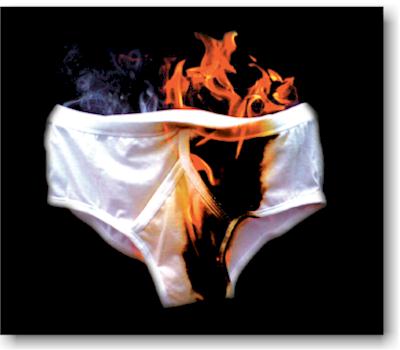


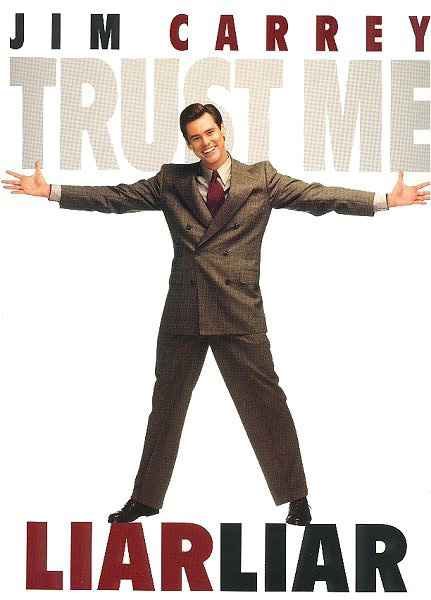

In the commercial, Congressman JOHN L. NICA speaks of his father dying 36 years in a crowded VA hospital, stating that he fights for veterans.
MICA had a zero rating by the Disabled American Veterans three years in a row.
MICA's advertising is materially false and misleading. While he supported a VA facility being built in his district, that's hardly fighting for veterans.
MICA is attmpting to re-brand himself as if he were a Democrat.
MICA is not fit for public office. See below.
Will TV stations kindly take the false MICA advertisements off the air?
Tuesday, October 28, 2008


SUN-SENTINEL: Barack Obama's coattails could help Democrats solidify control of Congress
sun-sentinel.com/services/newspaper/printedition/sunday/nationworld/sfl-flacongress1026sboct26,0,3162579.story
South Florida Sun-Sentinel.com
Barack Obama's coattails could help Democrats solidify control of Congress
Congressional races in Florida may be deciding factors
By William E. Gibson
Washington Bureau Chief
October 26, 2008
WASHINGTON
Democrats have bright prospects this year to not only win the White House but strengthen their control of Congress.
The outcome may depend on three hard-fought congressional races in South Florida, two toss-ups in Central Florida and about three dozen others in play across the country.
In South Florida, Republicans have an excellent opportunity to oust scandal-tainted Tim Mahoney of Palm Beach Gardens, who may be one of few incumbent Democrats to lose a House seat this year. Democrats have high hopes of defeating Republican Reps. Mario and Lincoln Diaz-Balart in two suspenseful races in the Miami area.
Poll results across the country point to Democratic gains in Congress as voters turn against President Bush, look for a way out of the Iraq war and seek an economic revival.
Control of the White House and Congress under one party could transform Washington by breaking a partisan standoff on a range of issues and allowing the new president to carry out his campaign promises. It also would give the winning party the burden of power with no one to blame if the public remains dissatisfied.
Much depends on whether newly registered Democrats and independents turn out in droves to help elect presidential candidate Barack Obama and then cast votes for other Democrats. A clear Obama victory could help fellow Democrats win close House and Senate races to pad their narrow majorities.
"We could see a wave election, which would sweep in Democrats all the way down the ballot," said Alan Abramowitz, a political scientist at Emory University in Atlanta, who tracks congressional races across the country. "If there's a surge in turnout and a big influx of new voters, which looks likely, we could see a real coattail effect that would benefit Democratic candidates for the House and Senate."
Abramowitz estimates that Democrats will gain 25 to 30 House seats and eight to 10 Senate seats.
Democrats outnumber Republicans 235 to 199 in the House, with one seat vacant. The Senate has 49 Democrats and 49 Republicans, but two independent senators side with the Democrats.
Majority control would not guarantee results. Former Democratic President Bill Clinton failed to enact health-care reforms in 1994 even when his party controlled Congress.
Nevertheless, Democratic control would pave the way for Obama's plans to expand health-care coverage, stimulate the economy and adjust tax rates. Congress and the new president, however, would have to find ways to pay for their plans while the government props up financial institutions.
"Democrats have learned from the last go-around," Abramowitz said. "It's a much more unified Democratic Party."
With the future of Congress, as well as the presidency, at stake, Democrats hope their big gains in voter registration will tip close races to their candidates and upset some long-established Republican incumbents.
In Central Florida, Republican Reps. Ric Keller of Orlando and Tom Feeney of Oviedo face well-funded opponents and a rising tide of Democratic voters. Both races are rated toss ups by The Cook Political Report, a newsletter prepared by an independent research group that rates political campaigns.
In Palm Beach County and rural areas surrounding it, Mahoney appeared headed for re-election until he was forced to acknowledge an affair with a former campaign aide and to fend off accusations that he paid her hush money. Now that race is leaning to Republican Tom Rooney.
Farther south, the Diaz-Balart brothers are struggling to overcome strong challengers.
"The fact that these races are even competitive shows that things are falling apart for Republicans," said George Gonzalez, a political scientist at the University of Miami.
"We are seeing a shift that is reminiscent of the Great Depression," he said. "The Republicans are in danger of being routed politically. And it may be that way for quite a while."
William E. Gibson can be reached at wgibson@SunSentinel.com or 202-824-8256 in Washington.
Copyright © 2008, South Florida Sun-Sentinel
South Florida Sun-Sentinel.com
Barack Obama's coattails could help Democrats solidify control of Congress
Congressional races in Florida may be deciding factors
By William E. Gibson
Washington Bureau Chief
October 26, 2008
WASHINGTON
Democrats have bright prospects this year to not only win the White House but strengthen their control of Congress.
The outcome may depend on three hard-fought congressional races in South Florida, two toss-ups in Central Florida and about three dozen others in play across the country.
In South Florida, Republicans have an excellent opportunity to oust scandal-tainted Tim Mahoney of Palm Beach Gardens, who may be one of few incumbent Democrats to lose a House seat this year. Democrats have high hopes of defeating Republican Reps. Mario and Lincoln Diaz-Balart in two suspenseful races in the Miami area.
Poll results across the country point to Democratic gains in Congress as voters turn against President Bush, look for a way out of the Iraq war and seek an economic revival.
Control of the White House and Congress under one party could transform Washington by breaking a partisan standoff on a range of issues and allowing the new president to carry out his campaign promises. It also would give the winning party the burden of power with no one to blame if the public remains dissatisfied.
Much depends on whether newly registered Democrats and independents turn out in droves to help elect presidential candidate Barack Obama and then cast votes for other Democrats. A clear Obama victory could help fellow Democrats win close House and Senate races to pad their narrow majorities.
"We could see a wave election, which would sweep in Democrats all the way down the ballot," said Alan Abramowitz, a political scientist at Emory University in Atlanta, who tracks congressional races across the country. "If there's a surge in turnout and a big influx of new voters, which looks likely, we could see a real coattail effect that would benefit Democratic candidates for the House and Senate."
Abramowitz estimates that Democrats will gain 25 to 30 House seats and eight to 10 Senate seats.
Democrats outnumber Republicans 235 to 199 in the House, with one seat vacant. The Senate has 49 Democrats and 49 Republicans, but two independent senators side with the Democrats.
Majority control would not guarantee results. Former Democratic President Bill Clinton failed to enact health-care reforms in 1994 even when his party controlled Congress.
Nevertheless, Democratic control would pave the way for Obama's plans to expand health-care coverage, stimulate the economy and adjust tax rates. Congress and the new president, however, would have to find ways to pay for their plans while the government props up financial institutions.
"Democrats have learned from the last go-around," Abramowitz said. "It's a much more unified Democratic Party."
With the future of Congress, as well as the presidency, at stake, Democrats hope their big gains in voter registration will tip close races to their candidates and upset some long-established Republican incumbents.
In Central Florida, Republican Reps. Ric Keller of Orlando and Tom Feeney of Oviedo face well-funded opponents and a rising tide of Democratic voters. Both races are rated toss ups by The Cook Political Report, a newsletter prepared by an independent research group that rates political campaigns.
In Palm Beach County and rural areas surrounding it, Mahoney appeared headed for re-election until he was forced to acknowledge an affair with a former campaign aide and to fend off accusations that he paid her hush money. Now that race is leaning to Republican Tom Rooney.
Farther south, the Diaz-Balart brothers are struggling to overcome strong challengers.
"The fact that these races are even competitive shows that things are falling apart for Republicans," said George Gonzalez, a political scientist at the University of Miami.
"We are seeing a shift that is reminiscent of the Great Depression," he said. "The Republicans are in danger of being routed politically. And it may be that way for quite a while."
William E. Gibson can be reached at wgibson@SunSentinel.com or 202-824-8256 in Washington.
Copyright © 2008, South Florida Sun-Sentinel
HUMAN EVENTS: Rocking the House (Conservative Party Organ Predicts Republican Debacle in House, Senate Races)
Campaign Crawlers
Rocking the House
By W. James Antle, III on 10.24.08 @ 6:09AM
As the 2008 campaign reaches the final stretch, the National Republican Congressional Campaign Committee (NRCC) is pulling the plug -- on advertising funding for GOP House members whose races seem beyond hope. With many seats to defend and limited cash on hand, House Republicans are being very careful about how they spend their campaign dollars. If only they had been as tightfisted with taxpayer money while they were in charge.
One of the victims is Michelle Bachmann, a freshman congresswoman representing Minnesota's Sixth District. While cruising to what should have been an easy re-election, her Hardball comments that the media should investigate anti-American sentiment among members of Congress filled her Democratic challenger's campaign coffers with more than $1.3 million.
The Cook Political Report changed its assessment of the race from likely Republican to toss-up after the flap. The publication's House editor wrote, "Bachmann’s comments likely changed the complexion of her reelection race overnight and helped to turn the race into even more of a referendum on her." The NRCC appears to agree, reportedly stopping its ad buys in the district, though Bachmann does still have a significant amount of her own campaign funds.
According to an Associated Press report, Reps. Marilyn Musgrave of Colorado, Tom Feeney of Florida, and Joe Knollenberg of Michigan have all been left to fend for themselves as well. In none of these cases does the decision seem to have been based on the party's confidence that the incumbents no longer needed help.
Social conservative leaders are particularly displeased to see Musgrave and Bachmann defunded. "The left is attacking both of these outstanding women because they are true conservatives," Tony Perkins of the Family Research Council wrote in a letter to NRCC chairman Tom Cole. "They vote pro-life and pro-family."
More revealing is where the House Republicans are going to spend their campaign money. The Washington Post reported that the NRCC is concentrating on twelve districts. Only two of them are currently represented by a Democrat. Seven of them gave George W. Bush at least 55 percent of the vote in 2004. Indiana's Third Congressional District, where the GOP is defending incumbent Republican Mark Souder, went 68 percent for Bush four years ago.
The news for House Republicans isn't all bad, however. Democratic Congressman Tim Mahoney of Florida is reeling as his wife leaves him for living down the standard for personal morality set by his GOP predecessor, the disgraced Mark Foley. Before the sex scandals broke, even polls taken by Mahoney's Republican challenger showed the Democrat ahead. Now he is trailing by 26 points, winning just 29 percent of the vote.
Democratic Congressman John Murtha, a trusted lieutenant of House Speaker Nancy Pelosi, is also in trouble after remarks suggesting his West Pennsylvania constituents might be racists. One poll found Murtha just four points ahead of his Republican challenger, Iraq war veteran William Russell. The same survey found that 54 percent of voters thought it was time someone else represented them in Congress. Only 35 percent said Murtha should be re-elected.
Another Keystone State Democrat is also at risk of being booted from office. Twelve-term Congressman Paul Kanjorski is trailing Republican Hazelton Mayor Lou Barletta. Although the latest polling shows Kanjorski cutting Barletta's lead in half, it is never a good sign for an incumbent to be winning just 35 percent of the vote.
But Republicans didn't enter this election cycle facing the same structural disadvantages in the House as they do in the Senate. The Democrats picked much of the low-hanging fruit in 2006. For every Chris Shays Republican left representing a blue district, there is a Brad Ellsworth or Heath Shuler Democrat in a red one. About a third of GOP losses two years ago occurred in Republican districts where the Republican lost due to scandal. With cleaner candidates, most if not all of these seats could have been won back.
House Republicans have also occasionally flirted with winning issues. They are mostly responsible for the "Drill, baby, drill!" chants on the campaign trail. They (at least initially) stood up to their own president and their Senate counterparts on such unpopular legislation as the immigration amnesty and the bailout. Yet they have never seemed interested in putting together a coherent national message, preferring to outsource that job to presidential nominee John McCain. Neither has the House GOP found it easy to recruit top-flight candidates or raise money in this political climate. The need to play defense in so many places erased what might have been.
The Democrats' potential for major gains in the Senate is well documented. Now Pelosi's party seems poised to bring down the House as well.
Rocking the House
By W. James Antle, III on 10.24.08 @ 6:09AM
As the 2008 campaign reaches the final stretch, the National Republican Congressional Campaign Committee (NRCC) is pulling the plug -- on advertising funding for GOP House members whose races seem beyond hope. With many seats to defend and limited cash on hand, House Republicans are being very careful about how they spend their campaign dollars. If only they had been as tightfisted with taxpayer money while they were in charge.
One of the victims is Michelle Bachmann, a freshman congresswoman representing Minnesota's Sixth District. While cruising to what should have been an easy re-election, her Hardball comments that the media should investigate anti-American sentiment among members of Congress filled her Democratic challenger's campaign coffers with more than $1.3 million.
The Cook Political Report changed its assessment of the race from likely Republican to toss-up after the flap. The publication's House editor wrote, "Bachmann’s comments likely changed the complexion of her reelection race overnight and helped to turn the race into even more of a referendum on her." The NRCC appears to agree, reportedly stopping its ad buys in the district, though Bachmann does still have a significant amount of her own campaign funds.
According to an Associated Press report, Reps. Marilyn Musgrave of Colorado, Tom Feeney of Florida, and Joe Knollenberg of Michigan have all been left to fend for themselves as well. In none of these cases does the decision seem to have been based on the party's confidence that the incumbents no longer needed help.
Social conservative leaders are particularly displeased to see Musgrave and Bachmann defunded. "The left is attacking both of these outstanding women because they are true conservatives," Tony Perkins of the Family Research Council wrote in a letter to NRCC chairman Tom Cole. "They vote pro-life and pro-family."
More revealing is where the House Republicans are going to spend their campaign money. The Washington Post reported that the NRCC is concentrating on twelve districts. Only two of them are currently represented by a Democrat. Seven of them gave George W. Bush at least 55 percent of the vote in 2004. Indiana's Third Congressional District, where the GOP is defending incumbent Republican Mark Souder, went 68 percent for Bush four years ago.
The news for House Republicans isn't all bad, however. Democratic Congressman Tim Mahoney of Florida is reeling as his wife leaves him for living down the standard for personal morality set by his GOP predecessor, the disgraced Mark Foley. Before the sex scandals broke, even polls taken by Mahoney's Republican challenger showed the Democrat ahead. Now he is trailing by 26 points, winning just 29 percent of the vote.
Democratic Congressman John Murtha, a trusted lieutenant of House Speaker Nancy Pelosi, is also in trouble after remarks suggesting his West Pennsylvania constituents might be racists. One poll found Murtha just four points ahead of his Republican challenger, Iraq war veteran William Russell. The same survey found that 54 percent of voters thought it was time someone else represented them in Congress. Only 35 percent said Murtha should be re-elected.
Another Keystone State Democrat is also at risk of being booted from office. Twelve-term Congressman Paul Kanjorski is trailing Republican Hazelton Mayor Lou Barletta. Although the latest polling shows Kanjorski cutting Barletta's lead in half, it is never a good sign for an incumbent to be winning just 35 percent of the vote.
But Republicans didn't enter this election cycle facing the same structural disadvantages in the House as they do in the Senate. The Democrats picked much of the low-hanging fruit in 2006. For every Chris Shays Republican left representing a blue district, there is a Brad Ellsworth or Heath Shuler Democrat in a red one. About a third of GOP losses two years ago occurred in Republican districts where the Republican lost due to scandal. With cleaner candidates, most if not all of these seats could have been won back.
House Republicans have also occasionally flirted with winning issues. They are mostly responsible for the "Drill, baby, drill!" chants on the campaign trail. They (at least initially) stood up to their own president and their Senate counterparts on such unpopular legislation as the immigration amnesty and the bailout. Yet they have never seemed interested in putting together a coherent national message, preferring to outsource that job to presidential nominee John McCain. Neither has the House GOP found it easy to recruit top-flight candidates or raise money in this political climate. The need to play defense in so many places erased what might have been.
The Democrats' potential for major gains in the Senate is well documented. Now Pelosi's party seems poised to bring down the House as well.
AP: Democrats headed toward big gains in House, Senate
Democrats headed toward big gains in House, Senate
By DAVID ESPO – 3 days ago
WASHINGTON (AP) — Democrats are on track for sizable gains in both houses of Congress on Nov. 4, according to strategists in both parties, although only improbable Southern victories can produce the 60-vote Senate majority they covet to help them pass priority legislation.
A poor economy, President Bush's unpopularity, a lopsided advantage in fundraising and Barack Obama's robust organizational effort in key states are all aiding Democrats in the final days of the congressional campaign.
"I don't think anybody realized it was going to be this tough" for Republicans, Sen. John Ensign, chairman of the party's senatorial campaign committee said recently. "We're dealing with an unpopular president (and) we have a financial crisis," he added.
"You've got Republican incumbent members of the Congress" trying to run away from Bush's economic policies, said Maryland Rep. Chris Van Hollen, who chairs the House Democratic campaign committee. "And they can't run fast enough. I think it will catch up with many of them."
Speaker Nancy Pelosi of California predicted recently that Democrats would win at least 14 House seats in Republican hands.
But numerous strategists in both parties agreed a gain of at least 20 seems likely and a dozen or more GOP-held seats are in doubt. Only a handful of Democratic House seats appear in any sort of jeopardy. They spoke only on condition of anonymity, saying they were relying on confidential polling data.
In the Senate, as in the House, only the magnitude of the Democratic gains is in doubt.
New York Sen. Chuck Schumer, head of the Democratic committee, said his party would have to win seats in "deeply red states" to amass a 60-seat majority, but added, "We're close."
Obama's methodical voter registration efforts in the primary season and his current get-out-the-vote efforts are aiding Democratic candidates in several Southern races. They start with North Carolina, where GOP Sen. Elizabeth Dole trails in the polls, and include Georgia and Mississippi, where Sens. Saxby Chambliss and Roger Wicker respectively are in unexpectedly close races.
"Overall, I think Obama will help us in the South because, first, his economic message resonates with Southerners, both white and black, and obviously there will be an increased African-American turnout," Schumer said.
Also in a close race is the Republican leader, Sen. Mitch McConnell of Kentucky, although that is not a state where Obama has made much of an effort.
Compounding Republican woes, the same economy that has soured voters on their candidates is causing some of the nation's wealthiest conservative donors to stay on the campaign sidelines.
Freedom's Watch, a conservative group that once looked poised to spend tens of millions of dollars to help elect Republicans, had spent roughly $3 million as of midweek. Its largest single contributor is Sheldon Adelson, a billionaire with gambling interests in the United States and China.
Democrats hold a 51-49 majority in the current Senate, counting two independents who vote with them. In the House, Democrats have 235 seats to 199 for Republicans, with one vacancy.
It has long been apparent that Democrats would retain control of both houses of Congress, and in recent weeks, the party's leaders have mounted a concerted drive to push their Senate majority to 60. That's the number needed to overcome a filibuster, the technique of killing legislation by preventing a final vote. If Obama were to win the White House, it would be the Republicans' last toehold in power.
In reality, Ensign noted this week that even if Democrats merely draw close to 60 seats, they will find it easier to pick up a Republican or two on individual bills and move ahead with portions of their agenda that might otherwise be stalled.
Democrats are overwhelmingly favored to pick up seats in Virginia, New Mexico and Colorado where Republicans are retiring.
Additionally, GOP Sens. John Sununu of New Hampshire, Norm Coleman of Minnesota and Gordon Smith of Oregon are in jeopardy. So, too, Alaska Sen. Ted Stevens, whose fate may rest on the outcome of his corruption trial, now in the hands of a jury in a courthouse a few blocks from the Capitol.
Even if they win all four of those races — a tall order — Democrats would be two seats shy of 60 and looking South to get them.
In the House, Democrats are so flush with cash that they have spent nearly $1 million to capture a seat centered on Maryland's Eastern Shore that has been in Republican hands for two decades.
It is one of 27 races where the Democratic Congressional Campaign Committee has spent $1 million or more — a total that the counterpart Republican group has yet to match anywhere.
"We've had to hold most of our resources for the final two weeks and that's beginning to make a difference," said Rep. Tom Cole of Oklahoma, chairman of the GOP House committee.
Cole declined to make an overall prediction. "A lot depends on what happens presidentially in the next 10 days. We're very closely tied with John McCain and we got a lot of open seats and a strong financial disadvantage," he said. He predicted the party's Republican presidential candidate would mount a strong finish and help other candidates on the ballot.
Still, the party's campaign committee recently pulled back from plans to advertise on behalf of incumbents in Michigan, Florida, Colorado and Minnesota who face competitive challenges.
For its part, the Democratic Congressional Campaign Committee recently invested in a race in the Lincoln, Neb., area held by Republican Rep. Lee Terry. Obama has a dozen or more paid staff as well as volunteers there hoping to win one electoral vote.
Democrats express confidence they will pick up at least two and possibly three Republican-held New York seats where incumbents decided against running again and at least one each in Illinois, Virginia, Ohio, New Mexico and Arizona. There are additional opportunities in at least a half-dozen other states.
Republican incumbents in greatest jeopardy include Reps. Don Young in Alaska, Tom Feeney and Ric Keller in Florida, Joe Knollenberg and Tim Walberg in Michigan, Marilyn Musgrave in Colorado, Jon Porter in Nevada and Robin Hayes in North Carolina.
Among the few Democrats in close races are Reps. Nick Lampson in Texas, who is in a solidly Republican district; Tim Mahoney in Florida, who recently admitted to having two extramarital affairs; Carol Shea-Porter in New Hampshire and Paul Kanjorski in Pennsylvania.
By DAVID ESPO – 3 days ago
WASHINGTON (AP) — Democrats are on track for sizable gains in both houses of Congress on Nov. 4, according to strategists in both parties, although only improbable Southern victories can produce the 60-vote Senate majority they covet to help them pass priority legislation.
A poor economy, President Bush's unpopularity, a lopsided advantage in fundraising and Barack Obama's robust organizational effort in key states are all aiding Democrats in the final days of the congressional campaign.
"I don't think anybody realized it was going to be this tough" for Republicans, Sen. John Ensign, chairman of the party's senatorial campaign committee said recently. "We're dealing with an unpopular president (and) we have a financial crisis," he added.
"You've got Republican incumbent members of the Congress" trying to run away from Bush's economic policies, said Maryland Rep. Chris Van Hollen, who chairs the House Democratic campaign committee. "And they can't run fast enough. I think it will catch up with many of them."
Speaker Nancy Pelosi of California predicted recently that Democrats would win at least 14 House seats in Republican hands.
But numerous strategists in both parties agreed a gain of at least 20 seems likely and a dozen or more GOP-held seats are in doubt. Only a handful of Democratic House seats appear in any sort of jeopardy. They spoke only on condition of anonymity, saying they were relying on confidential polling data.
In the Senate, as in the House, only the magnitude of the Democratic gains is in doubt.
New York Sen. Chuck Schumer, head of the Democratic committee, said his party would have to win seats in "deeply red states" to amass a 60-seat majority, but added, "We're close."
Obama's methodical voter registration efforts in the primary season and his current get-out-the-vote efforts are aiding Democratic candidates in several Southern races. They start with North Carolina, where GOP Sen. Elizabeth Dole trails in the polls, and include Georgia and Mississippi, where Sens. Saxby Chambliss and Roger Wicker respectively are in unexpectedly close races.
"Overall, I think Obama will help us in the South because, first, his economic message resonates with Southerners, both white and black, and obviously there will be an increased African-American turnout," Schumer said.
Also in a close race is the Republican leader, Sen. Mitch McConnell of Kentucky, although that is not a state where Obama has made much of an effort.
Compounding Republican woes, the same economy that has soured voters on their candidates is causing some of the nation's wealthiest conservative donors to stay on the campaign sidelines.
Freedom's Watch, a conservative group that once looked poised to spend tens of millions of dollars to help elect Republicans, had spent roughly $3 million as of midweek. Its largest single contributor is Sheldon Adelson, a billionaire with gambling interests in the United States and China.
Democrats hold a 51-49 majority in the current Senate, counting two independents who vote with them. In the House, Democrats have 235 seats to 199 for Republicans, with one vacancy.
It has long been apparent that Democrats would retain control of both houses of Congress, and in recent weeks, the party's leaders have mounted a concerted drive to push their Senate majority to 60. That's the number needed to overcome a filibuster, the technique of killing legislation by preventing a final vote. If Obama were to win the White House, it would be the Republicans' last toehold in power.
In reality, Ensign noted this week that even if Democrats merely draw close to 60 seats, they will find it easier to pick up a Republican or two on individual bills and move ahead with portions of their agenda that might otherwise be stalled.
Democrats are overwhelmingly favored to pick up seats in Virginia, New Mexico and Colorado where Republicans are retiring.
Additionally, GOP Sens. John Sununu of New Hampshire, Norm Coleman of Minnesota and Gordon Smith of Oregon are in jeopardy. So, too, Alaska Sen. Ted Stevens, whose fate may rest on the outcome of his corruption trial, now in the hands of a jury in a courthouse a few blocks from the Capitol.
Even if they win all four of those races — a tall order — Democrats would be two seats shy of 60 and looking South to get them.
In the House, Democrats are so flush with cash that they have spent nearly $1 million to capture a seat centered on Maryland's Eastern Shore that has been in Republican hands for two decades.
It is one of 27 races where the Democratic Congressional Campaign Committee has spent $1 million or more — a total that the counterpart Republican group has yet to match anywhere.
"We've had to hold most of our resources for the final two weeks and that's beginning to make a difference," said Rep. Tom Cole of Oklahoma, chairman of the GOP House committee.
Cole declined to make an overall prediction. "A lot depends on what happens presidentially in the next 10 days. We're very closely tied with John McCain and we got a lot of open seats and a strong financial disadvantage," he said. He predicted the party's Republican presidential candidate would mount a strong finish and help other candidates on the ballot.
Still, the party's campaign committee recently pulled back from plans to advertise on behalf of incumbents in Michigan, Florida, Colorado and Minnesota who face competitive challenges.
For its part, the Democratic Congressional Campaign Committee recently invested in a race in the Lincoln, Neb., area held by Republican Rep. Lee Terry. Obama has a dozen or more paid staff as well as volunteers there hoping to win one electoral vote.
Democrats express confidence they will pick up at least two and possibly three Republican-held New York seats where incumbents decided against running again and at least one each in Illinois, Virginia, Ohio, New Mexico and Arizona. There are additional opportunities in at least a half-dozen other states.
Republican incumbents in greatest jeopardy include Reps. Don Young in Alaska, Tom Feeney and Ric Keller in Florida, Joe Knollenberg and Tim Walberg in Michigan, Marilyn Musgrave in Colorado, Jon Porter in Nevada and Robin Hayes in North Carolina.
Among the few Democrats in close races are Reps. Nick Lampson in Texas, who is in a solidly Republican district; Tim Mahoney in Florida, who recently admitted to having two extramarital affairs; Carol Shea-Porter in New Hampshire and Paul Kanjorski in Pennsylvania.
USA TODAY: Voter 'anger' has Dems set for big gains in Congress
Voter 'anger' has Dems set for big gains in Congress
By John Fritze, USA TODAY
WASHINGTON — Out of money and down by double digits in the polls a month ago, Georgia Democrat Jim Martin's campaign for U.S. Senate was all but dead. Now, those polls show, it's dead even.
The race for the Georgia Senate seat should have been as comforting as peach cobbler for Republicans, but this month the non-partisan Cook Political Report changed its outlook for Sen. Saxby Chambliss' re-election from a safe bet to a tossup.
"The mood across the country is not particularly good right now," says Chambliss, a first-term senator who adds that he suspected the early lead wouldn't stick. "We knew it was going to be very close."
An unpopular president, fundraising doldrums and the burden of defending 27 more open seats than the Democrats are factors forcing GOP leaders to play defense in congressional races across the USA, as the Democrats angle for even wider majorities. Open seats do not have an incumbent.
Democrats have a 38-seat advantage in Congress now and, despite their own low approval ratings, the party could add as many as 28 seats in the House and seven to nine in the Senate, according to Cook.
As late as September, many Republicans thought the energy created by vice presidential pick Sarah Palin and the party's populist response of drilling to reduce gas prices could stem the losses.
But that was before the economic meltdown sent financial markets — and GOP poll numbers — tumbling as Americans linked the downturn to the Bush White House.
Even once-safe Republican seats — such as in North Carolina where Sen. Elizabeth Dole faces Democrat Kay Hagan — have become the focus of tight races.
In Minnesota, Republican Sen. Norm Coleman is in a contentious contest with Democrat Al Franken, the writer and comedian. Others, such as Chambliss and Senate Minority Leader Mitch McConnell, R-Ky., still have leads, but narrow ones.
Democrats seized control of Congress in 2006, picking up 36 seats. Usually when a party wins big one year it has to defend the gains in the next election, notes Rep. Rahm Emanuel, D-Ill.
This year, however, polls indicate Democrats are en route to bucking that trend.
"Republicans are still hung over from 2006, and they're about to get kicked in the gut again," says David Wasserman, who tracks House races for Cook.
"Voters are intent on taking out their anger on the party they perceive to have mishandled the economy."
Battling for open seats
Northern Virginia sent Republican Rep. Tom Davis to Congress for 14 years. This year, Davis is retiring, and his voters are flirting with a Democrat.
"The district is turning bluer by the hour," says Democratic candidate Gerry Connolly, who faces Republican Keith Fimian for Davis' seat. "The Republican label is a tough label this year."
The race, which Cook predicts is likely to go Connolly's way, illustrates a major problem Republicans face: a high number of hard-to-defend seats left open by retirements.
Republicans are leaving open five Senate seats; Democrats, one. In the House, 29 Republican seats are open, and Cook predicts 16 of those are in jeopardy of going Democratic.
Six Democratic seats are vacant in the House, but the GOP appears to have a shot at winning just one, in northern Alabama.
Defending an open seat is harder, in part because challengers lack the visibility and fundraising muscle that come with elected office. In 2006, 94% of House incumbents and 79% of senators won re-election, according to the non-partisan Center for Responsive Politics.
Open seats also cost more to win.
First-time winners in open House races two years ago spent an average $700,000 more than successful incumbents, the center reports. This year, polls show Democrats ahead for open Republican Senate seats in Virginia, New Mexico and Colorado.
"People really do want change," says Democratic Rep. Mark Udall, who the non-partisan Rothenberg Political Report forecasts to win the Colorado Senate seat being vacated by Republican Sen. Wayne Allard.
Hoping to defy conventional wisdom, Republicans are pressing on. In Northern Virginia, Fimian says he believes his race against Connolly will be closer than predicted.
"The more people I get in front of, the better my chances," he says.
Republican Bob Schaffer, who is trailing Udall in Colorado's Senate race, says his polling shows 10% of voters are undecided. He expects many of those voters to break his way Election Day.
"People are making their minds up that the economy and pocketbook issues are the driving force behind their decision-making," says Schaffer, a former energy executive who describes himself as the low-tax candidate.
"If this race is about the economy, I'm going to win."
Like many Republican candidates, Schaffer acknowledges Democrats will pick up seats. But, he says, "we don't intend for it to be in Colorado."
For Democrats, the challenge is different.
They need to defend incumbents who won in Republican-leaning districts two years ago. Four freshmen House Democrats are in races Cook calls tossups.
Democrats boost spending
Democrat Larry Kissell, a North Carolina social studies teacher who has never held public office, came within 329 votes of Republican Rep. Robin Hayes in 2006.
This year, Kissell's party isn't taking any chances.
The Democratic Party's national fundraising arm is helping Kissell overcome his financial disadvantage by pumping $1.7 million into his campaign — one of the biggest infusions of party support in the nation.
"The money itself controls the volume knob on a lot of things," Kissell spokesman Thomas Thacker says.
Outside cash has paid for TV ads that link Hayes to President Bush.
"Robin Hayes must have his head in the clouds," the narrator of one ad says as a picture of Hayes floats in the sky. "He seems to think George Bush's economic policy is working."
The party that controls Congress typically has an advantage in fundraising. So far in this general election, Democratic candidates have spent 29% more than Republicans — a reversal from 2006, when Republicans outspent Democrats, according to the center's analysis.
The Democratic Congressional Campaign Committee (DCCC) has spent $52 million on "independent expenditures" to help its candidates, according to the congressional newspaper Roll Call.
By contrast, the National Republican Congressional Committee has spent $12 million.
"The fact the DCCC is bankrolling this race is very telling that Larry Kissell needs Washington to run this race for him," Hayes said in a statement.
"The effect is that the voters are being bombarded with negative attacks that come from Washington, D.C."
Democrats poured $1.5 million into central Arizona's 3rd District, where Democrat Bob Lord is running against seven-term Republican Rep. John Shadegg.
And in Ohio's 15th District, the Democratic Party has spent $1.5 million to back Mary Jo Kilroy, who is seeking an open seat.
"Democrats are more energized, organized and well-funded than the Republicans," says Nathan Gonzales, political editor at Rothenberg.
"Republicans either don't have the money to respond in some districts or can't respond at the same levels."
'Blame the Republicans'
As bad as the political climate was for Republicans during the summer, it got worse in September when the financial crisis forced the Bush administration to ask Congress for a $700 billion bailout of Wall Street.
Incumbents in both parties said they received thousands of phone calls from constituents angry that the government would consider using taxpayer money to bail out private institutions. Many members in tight elections voted against the measure.
Sen. Gordon Smith, R-Ore., supported the bill and came under fire from his Democratic opponent, Oregon House Speaker Jeff Merkley, who called it "incredibly fiscally irresponsible."
The two are locked in a tight race that Congressional Quarterly says has no clear favorite.
"It goes right to the heart of Gordon Smith's view that you let the big boys do what they want, this willingness to put your hands over your eyes," says Merkley, who aired a TV ad criticizing Smith over the bailout just before Congress approved it.
Smith's campaign manager, Brooks Kochvar, argues that Merkley's message is not resonating.
"Sen. Gordon Smith faced a decision to do something, though not perfect, to help Main Street, or to do nothing at all," Kochvar says. "Our opponent's message is to do nothing at all."
Anger over the economy is likely to hurt Republican incumbents no matter how they voted on the bailout, says David Rohde, a political science professor at Duke University.
That resentment explains the Democrats' momentum, he says.
"The negative perceptions of Bush and the Republican administration have spilled over to Republicans more generally in Congress," he says.
"Here, more than anywhere, people tend to blame the Republicans because they blame Wall Street."
Turnout may change the game
Another factor that could drive House and Senate races has nothing to do with the congressional candidates: turnout in the historic presidential race.
Nearly 590,000 new voters have registered in Georgia in the past year, for instance, and both Senate candidates there say they are watching the effect Democratic presidential nominee Barack Obama's candidacy may have on black voters, who tend to choose Democrats.
Most polls have given Republican presidential nominee John McCain a slight lead in Georgia, which could help Chambliss.
So far, however, African Americans are casting a disproportionately high number of early voting ballots. Black turnout for Obama also could affect congressional races in North Carolina and Mississippi.
"Our challenge is for those first-time voters who are coming out to say 'I want to vote for Barack Obama for president' is to make sure they stay in the booth long enough and vote for the congressional candidates," says Rep. Chris Van Hollen, D-Md., chairman of the DCCC.
Davis, a former chairman of the National Republican Campaign Committee, says high voter registration does not necessarily translate into turnout on Election Day.
"But there is no question that there is going to be an enhanced African-American turnout in this," he says.
"They are unlikely to vote for Obama and come back in significant numbers for Republicans at the congressional level."
Martin, the Democratic Senate candidate in Georgia, says it is not just an increase in black voters that will shape the election.
"People are coming from all different sectors of our society to exercise their rights as citizens to vote," he says.
"They're demanding change, and they're participating in numbers that we've not seen in many, many years."
Find this article at:
http://www.usatoday.com/news/politics/election2008/2008-10-26-congress_N.htm
By John Fritze, USA TODAY
WASHINGTON — Out of money and down by double digits in the polls a month ago, Georgia Democrat Jim Martin's campaign for U.S. Senate was all but dead. Now, those polls show, it's dead even.
The race for the Georgia Senate seat should have been as comforting as peach cobbler for Republicans, but this month the non-partisan Cook Political Report changed its outlook for Sen. Saxby Chambliss' re-election from a safe bet to a tossup.
"The mood across the country is not particularly good right now," says Chambliss, a first-term senator who adds that he suspected the early lead wouldn't stick. "We knew it was going to be very close."
An unpopular president, fundraising doldrums and the burden of defending 27 more open seats than the Democrats are factors forcing GOP leaders to play defense in congressional races across the USA, as the Democrats angle for even wider majorities. Open seats do not have an incumbent.
Democrats have a 38-seat advantage in Congress now and, despite their own low approval ratings, the party could add as many as 28 seats in the House and seven to nine in the Senate, according to Cook.
As late as September, many Republicans thought the energy created by vice presidential pick Sarah Palin and the party's populist response of drilling to reduce gas prices could stem the losses.
But that was before the economic meltdown sent financial markets — and GOP poll numbers — tumbling as Americans linked the downturn to the Bush White House.
Even once-safe Republican seats — such as in North Carolina where Sen. Elizabeth Dole faces Democrat Kay Hagan — have become the focus of tight races.
In Minnesota, Republican Sen. Norm Coleman is in a contentious contest with Democrat Al Franken, the writer and comedian. Others, such as Chambliss and Senate Minority Leader Mitch McConnell, R-Ky., still have leads, but narrow ones.
Democrats seized control of Congress in 2006, picking up 36 seats. Usually when a party wins big one year it has to defend the gains in the next election, notes Rep. Rahm Emanuel, D-Ill.
This year, however, polls indicate Democrats are en route to bucking that trend.
"Republicans are still hung over from 2006, and they're about to get kicked in the gut again," says David Wasserman, who tracks House races for Cook.
"Voters are intent on taking out their anger on the party they perceive to have mishandled the economy."
Battling for open seats
Northern Virginia sent Republican Rep. Tom Davis to Congress for 14 years. This year, Davis is retiring, and his voters are flirting with a Democrat.
"The district is turning bluer by the hour," says Democratic candidate Gerry Connolly, who faces Republican Keith Fimian for Davis' seat. "The Republican label is a tough label this year."
The race, which Cook predicts is likely to go Connolly's way, illustrates a major problem Republicans face: a high number of hard-to-defend seats left open by retirements.
Republicans are leaving open five Senate seats; Democrats, one. In the House, 29 Republican seats are open, and Cook predicts 16 of those are in jeopardy of going Democratic.
Six Democratic seats are vacant in the House, but the GOP appears to have a shot at winning just one, in northern Alabama.
Defending an open seat is harder, in part because challengers lack the visibility and fundraising muscle that come with elected office. In 2006, 94% of House incumbents and 79% of senators won re-election, according to the non-partisan Center for Responsive Politics.
Open seats also cost more to win.
First-time winners in open House races two years ago spent an average $700,000 more than successful incumbents, the center reports. This year, polls show Democrats ahead for open Republican Senate seats in Virginia, New Mexico and Colorado.
"People really do want change," says Democratic Rep. Mark Udall, who the non-partisan Rothenberg Political Report forecasts to win the Colorado Senate seat being vacated by Republican Sen. Wayne Allard.
Hoping to defy conventional wisdom, Republicans are pressing on. In Northern Virginia, Fimian says he believes his race against Connolly will be closer than predicted.
"The more people I get in front of, the better my chances," he says.
Republican Bob Schaffer, who is trailing Udall in Colorado's Senate race, says his polling shows 10% of voters are undecided. He expects many of those voters to break his way Election Day.
"People are making their minds up that the economy and pocketbook issues are the driving force behind their decision-making," says Schaffer, a former energy executive who describes himself as the low-tax candidate.
"If this race is about the economy, I'm going to win."
Like many Republican candidates, Schaffer acknowledges Democrats will pick up seats. But, he says, "we don't intend for it to be in Colorado."
For Democrats, the challenge is different.
They need to defend incumbents who won in Republican-leaning districts two years ago. Four freshmen House Democrats are in races Cook calls tossups.
Democrats boost spending
Democrat Larry Kissell, a North Carolina social studies teacher who has never held public office, came within 329 votes of Republican Rep. Robin Hayes in 2006.
This year, Kissell's party isn't taking any chances.
The Democratic Party's national fundraising arm is helping Kissell overcome his financial disadvantage by pumping $1.7 million into his campaign — one of the biggest infusions of party support in the nation.
"The money itself controls the volume knob on a lot of things," Kissell spokesman Thomas Thacker says.
Outside cash has paid for TV ads that link Hayes to President Bush.
"Robin Hayes must have his head in the clouds," the narrator of one ad says as a picture of Hayes floats in the sky. "He seems to think George Bush's economic policy is working."
The party that controls Congress typically has an advantage in fundraising. So far in this general election, Democratic candidates have spent 29% more than Republicans — a reversal from 2006, when Republicans outspent Democrats, according to the center's analysis.
The Democratic Congressional Campaign Committee (DCCC) has spent $52 million on "independent expenditures" to help its candidates, according to the congressional newspaper Roll Call.
By contrast, the National Republican Congressional Committee has spent $12 million.
"The fact the DCCC is bankrolling this race is very telling that Larry Kissell needs Washington to run this race for him," Hayes said in a statement.
"The effect is that the voters are being bombarded with negative attacks that come from Washington, D.C."
Democrats poured $1.5 million into central Arizona's 3rd District, where Democrat Bob Lord is running against seven-term Republican Rep. John Shadegg.
And in Ohio's 15th District, the Democratic Party has spent $1.5 million to back Mary Jo Kilroy, who is seeking an open seat.
"Democrats are more energized, organized and well-funded than the Republicans," says Nathan Gonzales, political editor at Rothenberg.
"Republicans either don't have the money to respond in some districts or can't respond at the same levels."
'Blame the Republicans'
As bad as the political climate was for Republicans during the summer, it got worse in September when the financial crisis forced the Bush administration to ask Congress for a $700 billion bailout of Wall Street.
Incumbents in both parties said they received thousands of phone calls from constituents angry that the government would consider using taxpayer money to bail out private institutions. Many members in tight elections voted against the measure.
Sen. Gordon Smith, R-Ore., supported the bill and came under fire from his Democratic opponent, Oregon House Speaker Jeff Merkley, who called it "incredibly fiscally irresponsible."
The two are locked in a tight race that Congressional Quarterly says has no clear favorite.
"It goes right to the heart of Gordon Smith's view that you let the big boys do what they want, this willingness to put your hands over your eyes," says Merkley, who aired a TV ad criticizing Smith over the bailout just before Congress approved it.
Smith's campaign manager, Brooks Kochvar, argues that Merkley's message is not resonating.
"Sen. Gordon Smith faced a decision to do something, though not perfect, to help Main Street, or to do nothing at all," Kochvar says. "Our opponent's message is to do nothing at all."
Anger over the economy is likely to hurt Republican incumbents no matter how they voted on the bailout, says David Rohde, a political science professor at Duke University.
That resentment explains the Democrats' momentum, he says.
"The negative perceptions of Bush and the Republican administration have spilled over to Republicans more generally in Congress," he says.
"Here, more than anywhere, people tend to blame the Republicans because they blame Wall Street."
Turnout may change the game
Another factor that could drive House and Senate races has nothing to do with the congressional candidates: turnout in the historic presidential race.
Nearly 590,000 new voters have registered in Georgia in the past year, for instance, and both Senate candidates there say they are watching the effect Democratic presidential nominee Barack Obama's candidacy may have on black voters, who tend to choose Democrats.
Most polls have given Republican presidential nominee John McCain a slight lead in Georgia, which could help Chambliss.
So far, however, African Americans are casting a disproportionately high number of early voting ballots. Black turnout for Obama also could affect congressional races in North Carolina and Mississippi.
"Our challenge is for those first-time voters who are coming out to say 'I want to vote for Barack Obama for president' is to make sure they stay in the booth long enough and vote for the congressional candidates," says Rep. Chris Van Hollen, D-Md., chairman of the DCCC.
Davis, a former chairman of the National Republican Campaign Committee, says high voter registration does not necessarily translate into turnout on Election Day.
"But there is no question that there is going to be an enhanced African-American turnout in this," he says.
"They are unlikely to vote for Obama and come back in significant numbers for Republicans at the congressional level."
Martin, the Democratic Senate candidate in Georgia, says it is not just an increase in black voters that will shape the election.
"People are coming from all different sectors of our society to exercise their rights as citizens to vote," he says.
"They're demanding change, and they're participating in numbers that we've not seen in many, many years."
Find this article at:
http://www.usatoday.com/news/politics/election2008/2008-10-26-congress_N.htm
WASHINGTON POST: OBAMA WILL SWEEP "SO MANY DEMOCRATS" INTO CONGRESS
Journalists Name 44th President
By Howard Kurtz
Washington Post Staff Writer
Tuesday, October 28, 2008; 10:17 AM
Barack Obama has a problem: He's going to sweep so many Democrats into Congress that he will "face high expectations," as the New York Times put it, to deliver on his promises.
Obama will attempt to fashion a "new New Deal," most likely with Larry Summers as his Treasury secretary, New York magazine says.
"John McCain's defeat will be a lonely one," Newsweek reports, but Sarah Palin could revive the Republican Party for 2012.
So much for the formality of next week's election. Many pundits and publications seem so certain of a big Democratic win that they're exploring the intricacies of an Obama administration and whether the party will have a filibuster-proof 60 votes in the Senate.
"If the mainstream media are wrong about Obama and the voters pull a Truman, that is going to be the end of whatever shred of credibility they have left," says Tobe Berkovitz, associate dean of Boston University's College of Communication.
Cokie Roberts says she resisted a request to talk about Palin and the GOP's future on National Public Radio yesterday because it was premature. For journalists, she says, "you're kind of at the point where you've said everything there is to say. We've gone through the voter groups, the issues, the running mates, the profiles of the spouses. Now you get to the last week, the polls don't seem to be budging, and it becomes: 'What else am I going to talk about?' "
If, as a former McCain strategist put it to Politico, "the cake is baked" for his man's defeat, it's fair to ask whether the media have provided the flour, the frosting and the candles.
To be sure, the forward-looking pieces in the Times, New York magazine, Newsweek and elsewhere are sprinkled with caveats about "if" Obama wins and the "possibility" of a Democratic sweep. But the lack of similar speculation about a McCain administration makes clear which way the journalism world is leaning.
"Everyone wants to be the first to call it, to see the next thing around the corner," says Slate correspondent John Dickerson.
Given mounting signs of the Democratic nominee's strength in key battleground states, he says, "we're not crazy to think it's all going Obama's way." But, Dickerson says, "we've seen how this can go horribly wrong when you call the thing too early, and voters find it offensive when journalists skip over the event the voters are supposed to be taking part in."
Reporters and commentators invariably point to polls that have given Obama a comfortable lead nationwide and in such previously red states as Virginia, Iowa and New Hampshire.
But there has been great variation in the plethora of polls financed by media organizations, and several have been tightening. A Washington Post-ABC tracking poll yesterday had Obama ahead by seven percentage points, down from an 11-point margin one week ago. The latest Rasmussen and Zogby surveys give Obama a five-point edge.
"The media still misunderstand and, to a great degree, still misrepresent polls," veteran pollster John Zogby says. "It's a cliche, but what we offer is a snapshot in time. We don't predict, can't predict." He says the greatest differences among pollsters is the way they select and weight their voter samples. Zogby, for instance, reports figures only for likely voters -- which requires projections based on turnout models -- while others include all registered voters or all adults.
Polls have led journalists astray before. As recently as the middle of last December, Hillary Clinton led Obama by 30 points in a Post poll, while Rudy Giuliani was the GOP front-runner. Weeks later, the polls led many pundits to predict that Clinton would lose the New Hampshire primary, which would leave the former first lady's campaign "gasping for breath," as The Post put it on the morning of the primary. Clinton won and revived her candidacy.
Pack journalism also plays a role. When McCain ran into fundraising and staffing problems in the summer of 2007, virtually the entire press corps agreed that his chances of winning the GOP nomination were nil.
Critics, including many conservatives, say the media have been too easy on Obama, and bias cannot be discounted as a factor. A study by the Project for Excellence in Journalism found that from the end of the conventions through the debates, McCain's coverage was more than three times as negative than Obama's.
Journalists say it would be a disservice to readers and viewers to ignore, in the name of balance, the trends that prompted even former White House aide Karl Rove to declare Sunday on Fox News that McCain has "got a very steep hill to climb."
"The Republican nominee's path to the presidency is now extremely precarious and may depend on something unexpected taking control of a contest that appears to have swung hard toward Barack Obama," Dan Balz wrote in The Post on Friday.
The Boston Globe's Scott Helman reported Sunday that "there is an unmistakable sense among Obama's aides, many supporters, pundits, and people around the nation that, barring something dramatic, he will be the 44th president of the United States," but quickly questioned whether "the flock of polls that show Obama well ahead [are] simply wrong, as polls sometimes are." In the Times, Adam Nagourney took pains to note last week that McCain's aides, "as well as some outside Republicans and even a few Democrats, argue that he still has a viable path to victory."
The punditry about Palin also sends a not-so-subtle signal. New Republic columnists have been arguing about whether the Alaska governor will win the GOP nomination in 2012. Others in the media have given a megaphone to unnamed sources to attack or defend Palin without having their names attached. Politico quoted an unnamed Palin ally as saying that she feels "completely mismanaged and mishandled and ill-advised" by campaign officials. CNN quoted an unnamed McCain adviser as calling Palin a "diva." The underlying assumption is that blame must be parceled out for the ticket's defeat next week.
Still, cautionary tales abound. On the eve of the 2004 election, Zogby predicted that John Kerry would beat President Bush, a move he now attributes to "hubris and naivete."
After Bush won, Zogby says, "I wasn't in a fetal position, but I vowed I wouldn't do that again. And I haven't."
Footnote: The Boston Globe examines why various pollsters are all over the place.
Meanwhile, the Republicans are practically in a state of civil war. On the Daily Beast, Mark McKinnon, the Democrat-turned-McCain adviser who quit rather than help run a campaign against Obama, wants an end to the circular firing squad:
"The bloody harpooning of the McCain campaign has begun: 'Why didn't they let McCain be McCain?' 'The campaign was all tactics and no strategy.' 'The Palin pick was a disaster.' 'The message was unfocused and campaign poorly executed.' 'Why haven't they produced ads attacking Jeremiah Wright?' 'The campaign isn't positive enough.' 'The campaign isn't negative enough.'
"Of course almost all the shots come from consultants and hacks who didn't get hired, or were fired by the McCain campaign. Or were part of some past presidential campaign in which they still revel in the glory and clink toasts to one another as if they cured the measles. Many of these people, who profess to 'love McCain,' are firing blistering shots at the campaign through the press, which serves only one purpose. And it ain't to help McCain . . .
"Only nine percent of respondents think the country is headed in the right direction . . . So, by this measure, John McCain should be polling at about nine percent. And yet, Schmidt and company ran a good enough campaign that McCain went into the Republican Convention tied. And came out of it ahead. The only real surprise in this race is that it was ever close."
Ex-GOP operative Patrick Ruffini has a similar message for all the finger-pointers:
"There is nothing to be gained by second-guessing the McCain strategy at this point. In ten days, we'll get to have a discussion about where we go next -- about Sarah Palin, Bobby Jindal, Mitt Romney, Mike Huckabee, or Eric Cantor . . .
"What is striking about 2008 is how little the campaigns have mattered in comparison to the fundamental nature of the two men running.
"Nothing the McCain campaign did could change the reality of McCain the candidate's poor management instincts and his tendency to fidget around and not stay on message. When the economic crisis hit, this reality flew in the face of the McCain campaign's message of steadiness versus inexperience. Whether by design or the candidate's nature, Obama's caution and deliberation was a living, breathing talking point against the experience card.
"Likewise, I think it will be said that the McCain campaign has yet to really lay a glove on Obama character-wise because Obama himself simply does not project the cloying, insecure, effete tendencies of past nominees like Gore and Kerry, though the only two times he's come close (Wright and bitter/cling) have barely figured in the general election campaign."
At the Weekly Standard, Bill Kristol wants it known that he's going down with the ship, if indeed it is sinking:
"We hope for a McCain-Palin victory, for the sake of the country. And also for the pleasure of seeing the dejection of the mainstream media, the incredulity of the leftwing triumphalists, and the humiliation of the pathetically opportunistic 'conservatives' who've been desperately clambering on board the Obama juggernaut. We're proud to stay off that juggernaut. We're proud, in our modest way, to stand with John McCain and Sarah Palin against it.
"An Obama-Biden administration -- working with a Democratic Congress -- would mean a more debilitating nanny state at home and a weaker nation facing our enemies abroad. We, of course, have confidence that the nation would survive such an interlude, and we would even hope that a President Obama might adjust course from the path he's advertised, especially in foreign policy. But the risk of real damage is great, especially when compared with the prospect of a tough-minded center-right McCain-Palin administration that could lead the country sensibly through these difficult times.
"Reading the endorsements of Obama in the liberal media should strengthen the determination of all believers in American self-government and greatness to fight this election campaign to the end."
Now we've gone beyond predicting defeat for McCain to predicting bad things in the Obama administration.
The usual post-election chatter -- who's getting what job? -- is fully underway, as we see in this Politico piece:
"No subject is more avidly considered in the corridors of Democratic power than the future role of his chief adviser, political consultant David Axelrod. Democrats who know the Chicago-based political consultant, the key architect of Obama's campaign and of his public image, say Axelrod has signaled that he'll seriously consider taking on a job in the administration.
"That decision would be a central choice in shaping an Obama White House, and determining the relationship between his style of governance and political strategy. 'I think he'll do it,' said James Carville, Bill Clinton's 1992 campaign manager, who never joined that administration."
Marc Ambinder even has a job-by-job rundown for the president who hasn't been elected yet.
More on Palin supposedly going rogue, from the New Republic's Eve Fairbanks:
"Palin's Tampa rally Sunday kicked off with an extended, sarcastic, eye-rolling diss at the $150,000 wardrobe supposedly foisted on her by others, particularly -- and this is important -- the evil RNC. 'I grabbed a jacket this morning -- my own jacket,' she told the whooping crowd. 'Away from the filter of the media, I get to tell you the whole clothes thing. Those clothes, they are not my property. They're like the lighting and the stage, like everything else the RNC purchased.' She then went on to proudly show off her earrings from First Dude Todd's Eskimo mom and '$35 wedding ring from Hawaii that I bought myself.'
"On the one hand, the 'evil bureaucratic RNC made her do it' storyline is probably the least damaging way Team McCain can finesse the Palin wardrobe debacle, so it's not altogether a digression that only benefits Palin and not McCain.
"But you can see Palin's post-November-4 narrative beginning to take shape: The Republican party structure is irretrievably broken, as evidenced by the '08 blowout and poignantly symbolized by the RNC's wasteful, politically tone-deaf Neiman Marcus shopping spree. But Palin, the breath of fresh air from Alaska, rolls her eyes at the old rules, disdains all the ossified ways of doing things, etc. etc."
Sean Hannity didn't ask about that last night in his fourth interview with Palin, and her daughter, on the trail, plus Sarah cheerleader Elizabeth Hasselback.
Would McCain be in better shape if he hadn't picked Palin? Adam Nagourney concludes the answer is yes.
The L.A. Times ran a story last April about a 2003 party at which Obama said nice things about Palestinian rights advocate and Israel critic Rashid Khalidi, who he said reminds him "of my own blind spots and my own biases. . . . It's for that reason that I'm hoping that, for many years to come, we continue that conversation -- a conversation that is necessary not just around Mona and Rashid's dinner table [but around] this entire world."
The McCain camp tells me the paper refused to release a videotape of the remarks that it had obtained. Little Green Footballs calls that "media malfeasance of an almost astounding degree. They have a video that could change the stakes in this election and they're hiding it."
"We're not a video service," Doyle McManus, the Times Washington bureau chief, tells me. "We're not suppressing anything. We were the first to report on these facts." He declines to say whether the paper considered posting the video.
Drudge goes big with this headline: "2001 Obama: Tragedy That 'Redistribution Of Wealth' Not Pursued By Supreme Court." McCain picks up the charge about the seven-year-old Obama radio interview. But Andrew Sullivan reports: "Here's what it's based on: the 'tragedy,' in Obama's telling, is that the civil rights movement was too court-focused. He was making a case against using courts to implement broad social goals -- which is, last time I checked, the conservative position." He's got the full quote.
I got a message from Ralph Nader yesterday, complaining about the virtual media blackout of his candidacy. "It's pretty extraordinary, even in a two-party duopoly, to have this kind of witting or unwitting political bigotry," he said.
Nader deserved the coverage he got in 2000, when he was a factor. Perhaps he deserved a bit more earlier in this campaign, in which he's not much of a factor. But in the final stretch, it makes perfect sense that the media would focus on the two men who could be the next president.
Still, in honor of Ralph, here's a new piece in the Nation:
"Ralph Nader is a man of political substance trapped in an era of easy lies. He pierces the fog of propaganda with hard facts and reason, but the smoke rolls over him and he disappears from public view. A lesser man might go crazy or get the message and give it up. Nader instead runs for president again, as he is doing this year, campaigning in fifty states and addressing crowds wherever he finds them, smaller crowds this time but still eager to feed on his idealism. Ralph is not delusional. He knows the story. He is stubborn about the facts and honest with himself."
Christopher Buckley goes after Rush Limbaugh, and finishes with this flourish:
"Let me add a personal, affectionately-intended note: Rush, I knew William F. Buckley, Jr. William F. Buckley, Jr. was a father of mine. Rush, you're no William F. Buckley, Jr."
Finally, I didn't name Naftali Bendavid, the latest departing Washington bureau chief of the Chicago Tribune, in yesterday's column, but an editor inserted Benvadid's name and depicted he as a she. My apologies, sir.
By Howard Kurtz
Washington Post Staff Writer
Tuesday, October 28, 2008; 10:17 AM
Barack Obama has a problem: He's going to sweep so many Democrats into Congress that he will "face high expectations," as the New York Times put it, to deliver on his promises.
Obama will attempt to fashion a "new New Deal," most likely with Larry Summers as his Treasury secretary, New York magazine says.
"John McCain's defeat will be a lonely one," Newsweek reports, but Sarah Palin could revive the Republican Party for 2012.
So much for the formality of next week's election. Many pundits and publications seem so certain of a big Democratic win that they're exploring the intricacies of an Obama administration and whether the party will have a filibuster-proof 60 votes in the Senate.
"If the mainstream media are wrong about Obama and the voters pull a Truman, that is going to be the end of whatever shred of credibility they have left," says Tobe Berkovitz, associate dean of Boston University's College of Communication.
Cokie Roberts says she resisted a request to talk about Palin and the GOP's future on National Public Radio yesterday because it was premature. For journalists, she says, "you're kind of at the point where you've said everything there is to say. We've gone through the voter groups, the issues, the running mates, the profiles of the spouses. Now you get to the last week, the polls don't seem to be budging, and it becomes: 'What else am I going to talk about?' "
If, as a former McCain strategist put it to Politico, "the cake is baked" for his man's defeat, it's fair to ask whether the media have provided the flour, the frosting and the candles.
To be sure, the forward-looking pieces in the Times, New York magazine, Newsweek and elsewhere are sprinkled with caveats about "if" Obama wins and the "possibility" of a Democratic sweep. But the lack of similar speculation about a McCain administration makes clear which way the journalism world is leaning.
"Everyone wants to be the first to call it, to see the next thing around the corner," says Slate correspondent John Dickerson.
Given mounting signs of the Democratic nominee's strength in key battleground states, he says, "we're not crazy to think it's all going Obama's way." But, Dickerson says, "we've seen how this can go horribly wrong when you call the thing too early, and voters find it offensive when journalists skip over the event the voters are supposed to be taking part in."
Reporters and commentators invariably point to polls that have given Obama a comfortable lead nationwide and in such previously red states as Virginia, Iowa and New Hampshire.
But there has been great variation in the plethora of polls financed by media organizations, and several have been tightening. A Washington Post-ABC tracking poll yesterday had Obama ahead by seven percentage points, down from an 11-point margin one week ago. The latest Rasmussen and Zogby surveys give Obama a five-point edge.
"The media still misunderstand and, to a great degree, still misrepresent polls," veteran pollster John Zogby says. "It's a cliche, but what we offer is a snapshot in time. We don't predict, can't predict." He says the greatest differences among pollsters is the way they select and weight their voter samples. Zogby, for instance, reports figures only for likely voters -- which requires projections based on turnout models -- while others include all registered voters or all adults.
Polls have led journalists astray before. As recently as the middle of last December, Hillary Clinton led Obama by 30 points in a Post poll, while Rudy Giuliani was the GOP front-runner. Weeks later, the polls led many pundits to predict that Clinton would lose the New Hampshire primary, which would leave the former first lady's campaign "gasping for breath," as The Post put it on the morning of the primary. Clinton won and revived her candidacy.
Pack journalism also plays a role. When McCain ran into fundraising and staffing problems in the summer of 2007, virtually the entire press corps agreed that his chances of winning the GOP nomination were nil.
Critics, including many conservatives, say the media have been too easy on Obama, and bias cannot be discounted as a factor. A study by the Project for Excellence in Journalism found that from the end of the conventions through the debates, McCain's coverage was more than three times as negative than Obama's.
Journalists say it would be a disservice to readers and viewers to ignore, in the name of balance, the trends that prompted even former White House aide Karl Rove to declare Sunday on Fox News that McCain has "got a very steep hill to climb."
"The Republican nominee's path to the presidency is now extremely precarious and may depend on something unexpected taking control of a contest that appears to have swung hard toward Barack Obama," Dan Balz wrote in The Post on Friday.
The Boston Globe's Scott Helman reported Sunday that "there is an unmistakable sense among Obama's aides, many supporters, pundits, and people around the nation that, barring something dramatic, he will be the 44th president of the United States," but quickly questioned whether "the flock of polls that show Obama well ahead [are] simply wrong, as polls sometimes are." In the Times, Adam Nagourney took pains to note last week that McCain's aides, "as well as some outside Republicans and even a few Democrats, argue that he still has a viable path to victory."
The punditry about Palin also sends a not-so-subtle signal. New Republic columnists have been arguing about whether the Alaska governor will win the GOP nomination in 2012. Others in the media have given a megaphone to unnamed sources to attack or defend Palin without having their names attached. Politico quoted an unnamed Palin ally as saying that she feels "completely mismanaged and mishandled and ill-advised" by campaign officials. CNN quoted an unnamed McCain adviser as calling Palin a "diva." The underlying assumption is that blame must be parceled out for the ticket's defeat next week.
Still, cautionary tales abound. On the eve of the 2004 election, Zogby predicted that John Kerry would beat President Bush, a move he now attributes to "hubris and naivete."
After Bush won, Zogby says, "I wasn't in a fetal position, but I vowed I wouldn't do that again. And I haven't."
Footnote: The Boston Globe examines why various pollsters are all over the place.
Meanwhile, the Republicans are practically in a state of civil war. On the Daily Beast, Mark McKinnon, the Democrat-turned-McCain adviser who quit rather than help run a campaign against Obama, wants an end to the circular firing squad:
"The bloody harpooning of the McCain campaign has begun: 'Why didn't they let McCain be McCain?' 'The campaign was all tactics and no strategy.' 'The Palin pick was a disaster.' 'The message was unfocused and campaign poorly executed.' 'Why haven't they produced ads attacking Jeremiah Wright?' 'The campaign isn't positive enough.' 'The campaign isn't negative enough.'
"Of course almost all the shots come from consultants and hacks who didn't get hired, or were fired by the McCain campaign. Or were part of some past presidential campaign in which they still revel in the glory and clink toasts to one another as if they cured the measles. Many of these people, who profess to 'love McCain,' are firing blistering shots at the campaign through the press, which serves only one purpose. And it ain't to help McCain . . .
"Only nine percent of respondents think the country is headed in the right direction . . . So, by this measure, John McCain should be polling at about nine percent. And yet, Schmidt and company ran a good enough campaign that McCain went into the Republican Convention tied. And came out of it ahead. The only real surprise in this race is that it was ever close."
Ex-GOP operative Patrick Ruffini has a similar message for all the finger-pointers:
"There is nothing to be gained by second-guessing the McCain strategy at this point. In ten days, we'll get to have a discussion about where we go next -- about Sarah Palin, Bobby Jindal, Mitt Romney, Mike Huckabee, or Eric Cantor . . .
"What is striking about 2008 is how little the campaigns have mattered in comparison to the fundamental nature of the two men running.
"Nothing the McCain campaign did could change the reality of McCain the candidate's poor management instincts and his tendency to fidget around and not stay on message. When the economic crisis hit, this reality flew in the face of the McCain campaign's message of steadiness versus inexperience. Whether by design or the candidate's nature, Obama's caution and deliberation was a living, breathing talking point against the experience card.
"Likewise, I think it will be said that the McCain campaign has yet to really lay a glove on Obama character-wise because Obama himself simply does not project the cloying, insecure, effete tendencies of past nominees like Gore and Kerry, though the only two times he's come close (Wright and bitter/cling) have barely figured in the general election campaign."
At the Weekly Standard, Bill Kristol wants it known that he's going down with the ship, if indeed it is sinking:
"We hope for a McCain-Palin victory, for the sake of the country. And also for the pleasure of seeing the dejection of the mainstream media, the incredulity of the leftwing triumphalists, and the humiliation of the pathetically opportunistic 'conservatives' who've been desperately clambering on board the Obama juggernaut. We're proud to stay off that juggernaut. We're proud, in our modest way, to stand with John McCain and Sarah Palin against it.
"An Obama-Biden administration -- working with a Democratic Congress -- would mean a more debilitating nanny state at home and a weaker nation facing our enemies abroad. We, of course, have confidence that the nation would survive such an interlude, and we would even hope that a President Obama might adjust course from the path he's advertised, especially in foreign policy. But the risk of real damage is great, especially when compared with the prospect of a tough-minded center-right McCain-Palin administration that could lead the country sensibly through these difficult times.
"Reading the endorsements of Obama in the liberal media should strengthen the determination of all believers in American self-government and greatness to fight this election campaign to the end."
Now we've gone beyond predicting defeat for McCain to predicting bad things in the Obama administration.
The usual post-election chatter -- who's getting what job? -- is fully underway, as we see in this Politico piece:
"No subject is more avidly considered in the corridors of Democratic power than the future role of his chief adviser, political consultant David Axelrod. Democrats who know the Chicago-based political consultant, the key architect of Obama's campaign and of his public image, say Axelrod has signaled that he'll seriously consider taking on a job in the administration.
"That decision would be a central choice in shaping an Obama White House, and determining the relationship between his style of governance and political strategy. 'I think he'll do it,' said James Carville, Bill Clinton's 1992 campaign manager, who never joined that administration."
Marc Ambinder even has a job-by-job rundown for the president who hasn't been elected yet.
More on Palin supposedly going rogue, from the New Republic's Eve Fairbanks:
"Palin's Tampa rally Sunday kicked off with an extended, sarcastic, eye-rolling diss at the $150,000 wardrobe supposedly foisted on her by others, particularly -- and this is important -- the evil RNC. 'I grabbed a jacket this morning -- my own jacket,' she told the whooping crowd. 'Away from the filter of the media, I get to tell you the whole clothes thing. Those clothes, they are not my property. They're like the lighting and the stage, like everything else the RNC purchased.' She then went on to proudly show off her earrings from First Dude Todd's Eskimo mom and '$35 wedding ring from Hawaii that I bought myself.'
"On the one hand, the 'evil bureaucratic RNC made her do it' storyline is probably the least damaging way Team McCain can finesse the Palin wardrobe debacle, so it's not altogether a digression that only benefits Palin and not McCain.
"But you can see Palin's post-November-4 narrative beginning to take shape: The Republican party structure is irretrievably broken, as evidenced by the '08 blowout and poignantly symbolized by the RNC's wasteful, politically tone-deaf Neiman Marcus shopping spree. But Palin, the breath of fresh air from Alaska, rolls her eyes at the old rules, disdains all the ossified ways of doing things, etc. etc."
Sean Hannity didn't ask about that last night in his fourth interview with Palin, and her daughter, on the trail, plus Sarah cheerleader Elizabeth Hasselback.
Would McCain be in better shape if he hadn't picked Palin? Adam Nagourney concludes the answer is yes.
The L.A. Times ran a story last April about a 2003 party at which Obama said nice things about Palestinian rights advocate and Israel critic Rashid Khalidi, who he said reminds him "of my own blind spots and my own biases. . . . It's for that reason that I'm hoping that, for many years to come, we continue that conversation -- a conversation that is necessary not just around Mona and Rashid's dinner table [but around] this entire world."
The McCain camp tells me the paper refused to release a videotape of the remarks that it had obtained. Little Green Footballs calls that "media malfeasance of an almost astounding degree. They have a video that could change the stakes in this election and they're hiding it."
"We're not a video service," Doyle McManus, the Times Washington bureau chief, tells me. "We're not suppressing anything. We were the first to report on these facts." He declines to say whether the paper considered posting the video.
Drudge goes big with this headline: "2001 Obama: Tragedy That 'Redistribution Of Wealth' Not Pursued By Supreme Court." McCain picks up the charge about the seven-year-old Obama radio interview. But Andrew Sullivan reports: "Here's what it's based on: the 'tragedy,' in Obama's telling, is that the civil rights movement was too court-focused. He was making a case against using courts to implement broad social goals -- which is, last time I checked, the conservative position." He's got the full quote.
I got a message from Ralph Nader yesterday, complaining about the virtual media blackout of his candidacy. "It's pretty extraordinary, even in a two-party duopoly, to have this kind of witting or unwitting political bigotry," he said.
Nader deserved the coverage he got in 2000, when he was a factor. Perhaps he deserved a bit more earlier in this campaign, in which he's not much of a factor. But in the final stretch, it makes perfect sense that the media would focus on the two men who could be the next president.
Still, in honor of Ralph, here's a new piece in the Nation:
"Ralph Nader is a man of political substance trapped in an era of easy lies. He pierces the fog of propaganda with hard facts and reason, but the smoke rolls over him and he disappears from public view. A lesser man might go crazy or get the message and give it up. Nader instead runs for president again, as he is doing this year, campaigning in fifty states and addressing crowds wherever he finds them, smaller crowds this time but still eager to feed on his idealism. Ralph is not delusional. He knows the story. He is stubborn about the facts and honest with himself."
Christopher Buckley goes after Rush Limbaugh, and finishes with this flourish:
"Let me add a personal, affectionately-intended note: Rush, I knew William F. Buckley, Jr. William F. Buckley, Jr. was a father of mine. Rush, you're no William F. Buckley, Jr."
Finally, I didn't name Naftali Bendavid, the latest departing Washington bureau chief of the Chicago Tribune, in yesterday's column, but an editor inserted Benvadid's name and depicted he as a she. My apologies, sir.
POLITICO: 10 moments that rattled race for Congress
10 moments that rattled race for Congress
By: Josh Kraushaar
October 28, 2008 06:37 AM EST
A case can be made that Rep. Michele Bachmann (R-Minn.) made the gaffe of the election when she went on MSNBC’s “Hardball” and suggested that Barack Obama and other Democratic members of Congress held anti-American views. Her comments changed what looked like an easy path to victory into a political dogfight with a very uncertain outcome.
Her little-known opponent, Elwyn Tinklenberg, raised more than $1.3 million in a week — more money than most Democratic challengers raise in an entire year. And a newly released poll shows that a whopping 40 percent of voters in Bachmann’s district said they were less likely to support her after she made the comments.
Here at Politico, we picked the next 10 moments on the congressional campaign trail that either changed the state of a race or the overall political climate this election year. While none has had the sudden and severe impact of Bachmann’s comments, each has played a role in changing the nature of the campaign.
• Special election losses for House Republicans. When Republicans couldn’t hold the seat of former House Speaker Dennis Hastert of Illinois, they knew storm clouds were on the horizon. When, three months later, the party lost two House seats in the heart of the deep South, recriminations against the House GOP leadership began.
Now, Democrats are in position to pick up House seats in some unlikely places: Wyoming, Louisiana and rural Kentucky. But the warning signs were foreshadowed much earlier in the cycle with those special elections.
• Sali’s shenanigans. It’s generally not a good idea to give your opponent’s campaign staff bunny ears in the middle of a televised interview. Or to consider turning in a fourth-grade book report late as one of the pivotal moments of your life. But this GOP freshman class president has turned into the class clown and is facing the wrath from voters back home.
Bill Sali’s embarrassments have single-handedly given Democrat Walt Minnick an even chance to unseat him in an Idaho district that is one of the most Republican in the country.
• Feeney’s apology ad. Any time a member of Congress has to publicly apologize on television, it’s done out of desperation. (Even Bachmann couldn’t muster the magic words in her ad.)
And Tom Feeney, one of the most outspoken conservatives in Congress, looked downright somber when he apologized for a junket he took to Scotland on Jack Abramoff’s dime. His insistence that he made a “rookie mistake” was not judged as credible by critics, given that he was Florida’s influential House speaker before running for Congress.
The apology seems unlikely to save his flagging campaign and, if anything, may have made his situation worse. Before airing the ad, Feeney held a 1-point lead over Democrat Suzanne Kosmas in one Democratic poll. The same poll now shows him trailing her by 23 points, and Republicans are already close to writing off his seat.
• Coleman’s “Angry Al” ad. Sen. Norm Coleman’s campaign telegraphed its campaign strategy against former “Saturday Night Live” funnyman Al Franken early on: Make Franken an unacceptable alternative for Minnesota voters. So Coleman ringed together Franken’s angriest and most expletive-filled moments in recent years for the public to see.
The strategy backfired — though the ad brought down Franken’s favorability ratings, it also cost Coleman in a state where “Minnesota nice” prevails. Once polling showed Coleman losing ground, he decided to take down all his negative ads.
• Erickson’s personal foibles. It’s hard to find many prominent Oregon Republicans backing Mike Erickson, who was once viewed as one of the GOP’s promising congressional candidates. But incidents in Erickson’s personal life have all but guaranteed this wealthy businessman will not be coming to Congress.
Erickson’s troubles began when The Oregonian reported that he paid for an ex-girlfriend’s abortion. He denied the allegations, even as she reluctantly came out and told the press otherwise. The state’s leading anti-abortion group said it couldn’t endorse him, accusing Erickson of lying to it about the incident.
Then newspapers revealed that the self-described humanitarian trip to Cuba he mentioned on the campaign trail was really a weeklong fiesta, complete with drinking, cigar smoking and cockfighting.
When you alienate social conservatives and foreign policy conservatives — two key elements of the Republican Party base — it’s near impossible to win.
• Mahoney’s sex scandal. First sign a member of Congress won’t be getting much help from his own party: when the people ratting him out to the press are his own former staffers.
Tim Mahoney couldn’t count on much Democratic goodwill after ABC News revealed that he paid $121,000 to cover up an affair he had with a former mistress and campaign staffer. Democrats simply have too many pickup opportunities to pour valuable resources on behalf of an ethically troubled incumbent. So Mahoney, whose prospects against Republican Tom Rooney in Florida once looked promising, is now fending for himself.
• Fossella’s DUI, Powers’ death. Sometimes truth is stranger than fiction. In May, Staten Island voters saw their congressman, Republican Vito Fossella, busted for driving under the influence. That arrest led to the revelation that he had secretly fathered a child, which earned him banner headlines in the New York tabloids, and he chose to retire at the end of his term.
But Republicans’ luck only went downhill from there. The GOP’s favored choice to succeed Fossella, Frank Powers, died suddenly. After a desperate search for a replacement, Republicans nominated a candidate who was openly disliked by members of the party’s leadership.
• Dole’s “rocking chair voters” ad. Who knew two folksy, elderly men in rocking chairs would be the advertising stars of the cycle? The two have been all over the North Carolina airwaves as part of the Democratic Senatorial Campaign Committee’s campaign against Republican Sen. Elizabeth Dole. The ads have criticized her lack of clout in Congress, accused her of not spending enough time in the state and blasted her for supporting free trade agreements that send local jobs to China.
The ad campaign against Dole quickly changed voter perception of her from a personally popular figure into an ineffective senator. She now is trailing Democrat Kay Hagan and has spent her own money in a last-ditch attempt to save the seat.
• Murtha’s racist/redneck comments. Note to members of Congress: It’s never a good idea to demean your constituents as racists. But that’s precisely what longtime Pennsylvania Democrat John P. Murtha did in explaining why Barack Obama was struggling in his rural, blue-collar southwestern Pennsylvania district. Murtha later dug himself in a deeper hole in trying to defend himself by saying that most of the area used to be really redneck.
Murtha, who isn’t a household name outside Pennsylvania or Washington, saw himself parodied on “Saturday Night Live” less than two weeks before the election — hardly the kind of publicity he wanted. He now faces a tougher-than-expected challenge in a year when very few Democrats are at risk.
• Stevens’ conviction. Alaska Sen. Ted Stevens was convicted Monday on all seven counts of falsifying financial disclosure forms, making his reelection very unlikely. Against the odds, Stevens handily won the Republican nomination, and he had a good chance of defeating Democrat Mark Begich had he been acquitted.
At press time, Stevens had given no indication whether he would step down or continue his reelection bid. But with one week left, it’s hard to see how he could return to the Senate.
© 2008 Capitol News Company, LLC
By: Josh Kraushaar
October 28, 2008 06:37 AM EST
A case can be made that Rep. Michele Bachmann (R-Minn.) made the gaffe of the election when she went on MSNBC’s “Hardball” and suggested that Barack Obama and other Democratic members of Congress held anti-American views. Her comments changed what looked like an easy path to victory into a political dogfight with a very uncertain outcome.
Her little-known opponent, Elwyn Tinklenberg, raised more than $1.3 million in a week — more money than most Democratic challengers raise in an entire year. And a newly released poll shows that a whopping 40 percent of voters in Bachmann’s district said they were less likely to support her after she made the comments.
Here at Politico, we picked the next 10 moments on the congressional campaign trail that either changed the state of a race or the overall political climate this election year. While none has had the sudden and severe impact of Bachmann’s comments, each has played a role in changing the nature of the campaign.
• Special election losses for House Republicans. When Republicans couldn’t hold the seat of former House Speaker Dennis Hastert of Illinois, they knew storm clouds were on the horizon. When, three months later, the party lost two House seats in the heart of the deep South, recriminations against the House GOP leadership began.
Now, Democrats are in position to pick up House seats in some unlikely places: Wyoming, Louisiana and rural Kentucky. But the warning signs were foreshadowed much earlier in the cycle with those special elections.
• Sali’s shenanigans. It’s generally not a good idea to give your opponent’s campaign staff bunny ears in the middle of a televised interview. Or to consider turning in a fourth-grade book report late as one of the pivotal moments of your life. But this GOP freshman class president has turned into the class clown and is facing the wrath from voters back home.
Bill Sali’s embarrassments have single-handedly given Democrat Walt Minnick an even chance to unseat him in an Idaho district that is one of the most Republican in the country.
• Feeney’s apology ad. Any time a member of Congress has to publicly apologize on television, it’s done out of desperation. (Even Bachmann couldn’t muster the magic words in her ad.)
And Tom Feeney, one of the most outspoken conservatives in Congress, looked downright somber when he apologized for a junket he took to Scotland on Jack Abramoff’s dime. His insistence that he made a “rookie mistake” was not judged as credible by critics, given that he was Florida’s influential House speaker before running for Congress.
The apology seems unlikely to save his flagging campaign and, if anything, may have made his situation worse. Before airing the ad, Feeney held a 1-point lead over Democrat Suzanne Kosmas in one Democratic poll. The same poll now shows him trailing her by 23 points, and Republicans are already close to writing off his seat.
• Coleman’s “Angry Al” ad. Sen. Norm Coleman’s campaign telegraphed its campaign strategy against former “Saturday Night Live” funnyman Al Franken early on: Make Franken an unacceptable alternative for Minnesota voters. So Coleman ringed together Franken’s angriest and most expletive-filled moments in recent years for the public to see.
The strategy backfired — though the ad brought down Franken’s favorability ratings, it also cost Coleman in a state where “Minnesota nice” prevails. Once polling showed Coleman losing ground, he decided to take down all his negative ads.
• Erickson’s personal foibles. It’s hard to find many prominent Oregon Republicans backing Mike Erickson, who was once viewed as one of the GOP’s promising congressional candidates. But incidents in Erickson’s personal life have all but guaranteed this wealthy businessman will not be coming to Congress.
Erickson’s troubles began when The Oregonian reported that he paid for an ex-girlfriend’s abortion. He denied the allegations, even as she reluctantly came out and told the press otherwise. The state’s leading anti-abortion group said it couldn’t endorse him, accusing Erickson of lying to it about the incident.
Then newspapers revealed that the self-described humanitarian trip to Cuba he mentioned on the campaign trail was really a weeklong fiesta, complete with drinking, cigar smoking and cockfighting.
When you alienate social conservatives and foreign policy conservatives — two key elements of the Republican Party base — it’s near impossible to win.
• Mahoney’s sex scandal. First sign a member of Congress won’t be getting much help from his own party: when the people ratting him out to the press are his own former staffers.
Tim Mahoney couldn’t count on much Democratic goodwill after ABC News revealed that he paid $121,000 to cover up an affair he had with a former mistress and campaign staffer. Democrats simply have too many pickup opportunities to pour valuable resources on behalf of an ethically troubled incumbent. So Mahoney, whose prospects against Republican Tom Rooney in Florida once looked promising, is now fending for himself.
• Fossella’s DUI, Powers’ death. Sometimes truth is stranger than fiction. In May, Staten Island voters saw their congressman, Republican Vito Fossella, busted for driving under the influence. That arrest led to the revelation that he had secretly fathered a child, which earned him banner headlines in the New York tabloids, and he chose to retire at the end of his term.
But Republicans’ luck only went downhill from there. The GOP’s favored choice to succeed Fossella, Frank Powers, died suddenly. After a desperate search for a replacement, Republicans nominated a candidate who was openly disliked by members of the party’s leadership.
• Dole’s “rocking chair voters” ad. Who knew two folksy, elderly men in rocking chairs would be the advertising stars of the cycle? The two have been all over the North Carolina airwaves as part of the Democratic Senatorial Campaign Committee’s campaign against Republican Sen. Elizabeth Dole. The ads have criticized her lack of clout in Congress, accused her of not spending enough time in the state and blasted her for supporting free trade agreements that send local jobs to China.
The ad campaign against Dole quickly changed voter perception of her from a personally popular figure into an ineffective senator. She now is trailing Democrat Kay Hagan and has spent her own money in a last-ditch attempt to save the seat.
• Murtha’s racist/redneck comments. Note to members of Congress: It’s never a good idea to demean your constituents as racists. But that’s precisely what longtime Pennsylvania Democrat John P. Murtha did in explaining why Barack Obama was struggling in his rural, blue-collar southwestern Pennsylvania district. Murtha later dug himself in a deeper hole in trying to defend himself by saying that most of the area used to be really redneck.
Murtha, who isn’t a household name outside Pennsylvania or Washington, saw himself parodied on “Saturday Night Live” less than two weeks before the election — hardly the kind of publicity he wanted. He now faces a tougher-than-expected challenge in a year when very few Democrats are at risk.
• Stevens’ conviction. Alaska Sen. Ted Stevens was convicted Monday on all seven counts of falsifying financial disclosure forms, making his reelection very unlikely. Against the odds, Stevens handily won the Republican nomination, and he had a good chance of defeating Democrat Mark Begich had he been acquitted.
At press time, Stevens had given no indication whether he would step down or continue his reelection bid. But with one week left, it’s hard to see how he could return to the Senate.
© 2008 Capitol News Company, LLC
CREATIVE LOAFING (TAMPA): Are the Republicans done for in Florida? It’s looking that way
Are the Republicans done for in Florida? It’s looking that way
October 22, 2008 at 3:00 pm by Wayne Garcia
I got a call this afternoon from an old buddy from my consulting days, Neil Brickfield, a Republican party vice chairman who is running for County Commission in Pinellas. He won a very tough primary race and now faces an unknown Democrat who couldn’t even manage to get the liberal St. Petersburg TImes‘ editorial recommendation. Brickfield has raised nearly $90,000 to his opponent Paul Matton’s $10,000.
So you would think that in a GOP-dominated county like Pinellas, Brickfield wouldn’t have a worry.
You’d be wrong.
Brickfield said he is running hard to the end, something you will hear from every good candidate, but he was genuinely not taking the race for granted because of the incredible wave against Republicans that seems to be hitting the state of Florida. He said he had been down campaigning at the St. Petersburg early voting site, where votes were going 10-1 against him. Barack Obama’s strategy of getting (especially African-American) voters to the polls for early voting has flooded the locations already. He then spent part of the day at the Largo early voting site and reported a much stronger pro-Republican turnout there, something to be expected in that part of the county.
With John McCain atop the ticket running double-digits behind Obama, according to an NBC News/Wall Street Journal poll released today, it is starting to look like the bad news for Republicans is trickling down the ballot. Late yesterday, Congressional Quarterly moved two targeted Republican congressional seats in Central Florida in and around Orlando from the undecided column to “leans Democratic.” It wrote in the race for the seat held by Ric Keller:
• Florida’s 8th District (New Rating: Leans Democrat. Previous Rating: No Clear Favorite)
In his past races, Keller had been able to count on a consistent, though diminishing, Republican voter registration advantage in his central Florida district, which includes part of Orlando. But there have been demographic changes to the district, including a growing number of Hispanic residents, and the GOP registration lead is no more. Closing figures for voter registration in Florida were released Sunday and indicate that Democrats officially hold a registration edge in the 8th, 39 to 37 percent.
That spells major trouble for the four-term Republican incumbent, according to political scientist Aubrey Jewett of the University of Central Florida.
After winning easily in his 2002 and 2004 contests, Keller had to campaign hard to achieve a 7-point victory in 2006 over a Democratic challenger, Charlie Stuart. And this year’s Democratic candidate, lawyer Alan Grayson, is much better-funded that was Stuart, having poured millions in personal funds into his campaign. A chunk of his money has gone into a battery of TV ads. “It’s certainly starting to look like Grayson might win this thing,” Jewett said.
Keller just narrowly won his Aug. 26 Republican primary over a conservative political newcomer, lawyer Todd Long, which was widely seen as a sign of increased vulnerability.
Democrats think this is one place where Obama’s coattails could help produce a House upset for the Democratic candidate. Obama visited Orlando this week and is believed to be contributing to the increased Democratic registration in the district.
And in the bitterly fought race against incumbent Tom Feeney, CQ found:
• Florida’s 24th District (New Rating: Leans Democratic. Previous Rating: No Clear Favorite)
Democrat Suzanne Kosmas, a former state representative who once appeared a long-shot challenger to Republican Feeney, now appears to hold an edge in their race in Florida’s 24th District — a swath of the east-central part of the state which includes Orlando suburbs and part of the Space Coast.
This might have seemed a highly unlikely scenario as recently as 2004, when Bush was taking 56 percent in the 24th — and Feeney, who helped design the district in his previous role as state House Speaker, was running unopposed for re-election.
But that was before the name of Jack Abramoff, the convicted Washington influence peddler, became part of the political conversation in the district. Feeney was one of several House members who took golfing trips to Scotland that they later learned were financed by Abramoff.
After long stating that he had done nothing unethical and paying reimbursement for the trip, Feeney was unable to tamp down criticisms by Kosmas and other Democrats. So he took the unusual step of apologizing to his constituents in a paid ad this summer, labeling the trip a “rookie mistake.” Yet the Orlando Sentinel’s editorial board noted the Abramoff flap in its recent endorsement of Kosmas.
“It was always almost on the front burner and it was easy to move it to the front burner,” Susan MacManus, political scientist at the University of South Florida, said of the Abramoff connection.
Republicans also now hold just a 3 percentage-point voter registration edge in the district. “I think it leans Democrat for the Feeney race,” MacManus said.
The mounting fear may have been behind Gov. Charlie Crist (continuing to slowly emerge from his post-”I-got-my-ass-whupped-by-Sarah-Palin-for-veep” isolation) yesterday headlining a conference call with reporters reiterating that John’s His Man. “It’s Florida, Florida, Florida for sure,” he told reporters.
And finally, down in South Florida, where three Cuban Republican congressmen are under heavy mortar fire, the Democrat Annette Taddeo has released a campaign-financed poll that shows her closing to within a few points of incumbent Ileana Ros-Lehtinen. Take that one with a grain of salt, but still, it shows the relative strength of down-ballot Democrats as they benefit from an anti-Palin backlash and lackluster performance by McCain.
October 22, 2008 at 3:00 pm by Wayne Garcia
I got a call this afternoon from an old buddy from my consulting days, Neil Brickfield, a Republican party vice chairman who is running for County Commission in Pinellas. He won a very tough primary race and now faces an unknown Democrat who couldn’t even manage to get the liberal St. Petersburg TImes‘ editorial recommendation. Brickfield has raised nearly $90,000 to his opponent Paul Matton’s $10,000.
So you would think that in a GOP-dominated county like Pinellas, Brickfield wouldn’t have a worry.
You’d be wrong.
Brickfield said he is running hard to the end, something you will hear from every good candidate, but he was genuinely not taking the race for granted because of the incredible wave against Republicans that seems to be hitting the state of Florida. He said he had been down campaigning at the St. Petersburg early voting site, where votes were going 10-1 against him. Barack Obama’s strategy of getting (especially African-American) voters to the polls for early voting has flooded the locations already. He then spent part of the day at the Largo early voting site and reported a much stronger pro-Republican turnout there, something to be expected in that part of the county.
With John McCain atop the ticket running double-digits behind Obama, according to an NBC News/Wall Street Journal poll released today, it is starting to look like the bad news for Republicans is trickling down the ballot. Late yesterday, Congressional Quarterly moved two targeted Republican congressional seats in Central Florida in and around Orlando from the undecided column to “leans Democratic.” It wrote in the race for the seat held by Ric Keller:
• Florida’s 8th District (New Rating: Leans Democrat. Previous Rating: No Clear Favorite)
In his past races, Keller had been able to count on a consistent, though diminishing, Republican voter registration advantage in his central Florida district, which includes part of Orlando. But there have been demographic changes to the district, including a growing number of Hispanic residents, and the GOP registration lead is no more. Closing figures for voter registration in Florida were released Sunday and indicate that Democrats officially hold a registration edge in the 8th, 39 to 37 percent.
That spells major trouble for the four-term Republican incumbent, according to political scientist Aubrey Jewett of the University of Central Florida.
After winning easily in his 2002 and 2004 contests, Keller had to campaign hard to achieve a 7-point victory in 2006 over a Democratic challenger, Charlie Stuart. And this year’s Democratic candidate, lawyer Alan Grayson, is much better-funded that was Stuart, having poured millions in personal funds into his campaign. A chunk of his money has gone into a battery of TV ads. “It’s certainly starting to look like Grayson might win this thing,” Jewett said.
Keller just narrowly won his Aug. 26 Republican primary over a conservative political newcomer, lawyer Todd Long, which was widely seen as a sign of increased vulnerability.
Democrats think this is one place where Obama’s coattails could help produce a House upset for the Democratic candidate. Obama visited Orlando this week and is believed to be contributing to the increased Democratic registration in the district.
And in the bitterly fought race against incumbent Tom Feeney, CQ found:
• Florida’s 24th District (New Rating: Leans Democratic. Previous Rating: No Clear Favorite)
Democrat Suzanne Kosmas, a former state representative who once appeared a long-shot challenger to Republican Feeney, now appears to hold an edge in their race in Florida’s 24th District — a swath of the east-central part of the state which includes Orlando suburbs and part of the Space Coast.
This might have seemed a highly unlikely scenario as recently as 2004, when Bush was taking 56 percent in the 24th — and Feeney, who helped design the district in his previous role as state House Speaker, was running unopposed for re-election.
But that was before the name of Jack Abramoff, the convicted Washington influence peddler, became part of the political conversation in the district. Feeney was one of several House members who took golfing trips to Scotland that they later learned were financed by Abramoff.
After long stating that he had done nothing unethical and paying reimbursement for the trip, Feeney was unable to tamp down criticisms by Kosmas and other Democrats. So he took the unusual step of apologizing to his constituents in a paid ad this summer, labeling the trip a “rookie mistake.” Yet the Orlando Sentinel’s editorial board noted the Abramoff flap in its recent endorsement of Kosmas.
“It was always almost on the front burner and it was easy to move it to the front burner,” Susan MacManus, political scientist at the University of South Florida, said of the Abramoff connection.
Republicans also now hold just a 3 percentage-point voter registration edge in the district. “I think it leans Democrat for the Feeney race,” MacManus said.
The mounting fear may have been behind Gov. Charlie Crist (continuing to slowly emerge from his post-”I-got-my-ass-whupped-by-Sarah-Palin-for-veep” isolation) yesterday headlining a conference call with reporters reiterating that John’s His Man. “It’s Florida, Florida, Florida for sure,” he told reporters.
And finally, down in South Florida, where three Cuban Republican congressmen are under heavy mortar fire, the Democrat Annette Taddeo has released a campaign-financed poll that shows her closing to within a few points of incumbent Ileana Ros-Lehtinen. Take that one with a grain of salt, but still, it shows the relative strength of down-ballot Democrats as they benefit from an anti-Palin backlash and lackluster performance by McCain.
Daytona Beach News Journal: GOP pulls ads for Feeney
GOP pulls ads for Feeney
Daytona Beach News Journal, 10/25/2008
Associated Press
WASHINGTON -- National Republicans have pulled television advertising for four of the party's incumbents, including Tom Feeney in Florida.
Feeney is among the at-risk Republican incumbents left to fend for themselves by a cash-strapped House of Representatives campaign arm in the crucial final days of the campaign amid a tough political environment for President George W. Bush's party.
The National Republican Campaign Committee also has canceled planned TV ads to help Reps. Marilyn Musgrave in Colorado, Michele Bachmann in Minnesota and Joe Knollenberg in Michigan, spokeswoman Karen Hanretty confirmed.
Musgrave, Feeney and Knollenberg are extremely vulnerable. Democrats, who are eyeing double-digit gains in their House majority, have been targeting them heavily. Feeney is battling Democrat Suzanne Kosmas of New Smyrna Beach.
Neither Feeney nor Kosmas responded to requests for comment Friday.
Bachmann, whose district is solidly conservative, has only recently emerged as a prime target after her controversial remarks on MSNBC's 'Hardball,' which sparked a flood of campaign contributions to her Democratic opponent and reshaped the race.
She said Democratic presidential candidate Barack Obama may have 'anti-American' views and urged an investigation of unpatriotic lawmakers.
The Democrats' House campaign is dumping $1 million on TV ads in the district in hopes of helping Bachmann's challenger, Elwyn Tinklenberg, unseat her.
In a statement, Carrie James, a spokeswoman for the Democratic Congressional Campaign Committee, said Bachmann 'crossed the line by launching negative and divisive personal attacks.'Bachmann told the St. Cloud Times newspaper on Wednesday that she regretted using the term 'anti-American' about Obama, saying her appearance on 'Hardball' was 'a big mistake.'Earlier, she told the St. Cloud Rotary Club that she wished she could take back the statement, and she denied that she had said Obama was anti-American or suggested an investigation of members of Congress.But during her 'Hardball' appearance Friday, Bachmann said of Obama: 'I'm very concerned that he may have anti-American views.'Of lawmakers, she said: 'I wish the American media would take a great look at the views of the people in Congress and find out, are they pro-America or anti-America?'Defending her TV comments Wednesday at the Rotary Club, Bachmann said Obama 'loves his country, just as everyone in this room does.'However, she reiterated her worries about him. 'I'm very concerned about Barack Obama's views. I don't believe that socialism is a good thing for America,' Bachmann said.Republicans played down the decision to abandon Bachmann, noting she still has more than $1 million to get her through until Election Day.
The party's House campaign committee, far behind its Democratic counterpart in fundraising, already had pared its advertising substantially in competitive races. It scaled back planned television buys in the districts of Reps. Jon Porter of Nevada and Bill Sali of Idaho.
Also reduced were ads for candidates in southern Minnesota and central New Mexico who are in close contests with Democrats seeking to replace retiring Republicans, and districts in Florida, Kansas, Louisiana and Texas that are home to vulnerable Democrats.
Daytona Beach News Journal, 10/25/2008
Associated Press
WASHINGTON -- National Republicans have pulled television advertising for four of the party's incumbents, including Tom Feeney in Florida.
Feeney is among the at-risk Republican incumbents left to fend for themselves by a cash-strapped House of Representatives campaign arm in the crucial final days of the campaign amid a tough political environment for President George W. Bush's party.
The National Republican Campaign Committee also has canceled planned TV ads to help Reps. Marilyn Musgrave in Colorado, Michele Bachmann in Minnesota and Joe Knollenberg in Michigan, spokeswoman Karen Hanretty confirmed.
Musgrave, Feeney and Knollenberg are extremely vulnerable. Democrats, who are eyeing double-digit gains in their House majority, have been targeting them heavily. Feeney is battling Democrat Suzanne Kosmas of New Smyrna Beach.
Neither Feeney nor Kosmas responded to requests for comment Friday.
Bachmann, whose district is solidly conservative, has only recently emerged as a prime target after her controversial remarks on MSNBC's 'Hardball,' which sparked a flood of campaign contributions to her Democratic opponent and reshaped the race.
She said Democratic presidential candidate Barack Obama may have 'anti-American' views and urged an investigation of unpatriotic lawmakers.
The Democrats' House campaign is dumping $1 million on TV ads in the district in hopes of helping Bachmann's challenger, Elwyn Tinklenberg, unseat her.
In a statement, Carrie James, a spokeswoman for the Democratic Congressional Campaign Committee, said Bachmann 'crossed the line by launching negative and divisive personal attacks.'Bachmann told the St. Cloud Times newspaper on Wednesday that she regretted using the term 'anti-American' about Obama, saying her appearance on 'Hardball' was 'a big mistake.'Earlier, she told the St. Cloud Rotary Club that she wished she could take back the statement, and she denied that she had said Obama was anti-American or suggested an investigation of members of Congress.But during her 'Hardball' appearance Friday, Bachmann said of Obama: 'I'm very concerned that he may have anti-American views.'Of lawmakers, she said: 'I wish the American media would take a great look at the views of the people in Congress and find out, are they pro-America or anti-America?'Defending her TV comments Wednesday at the Rotary Club, Bachmann said Obama 'loves his country, just as everyone in this room does.'However, she reiterated her worries about him. 'I'm very concerned about Barack Obama's views. I don't believe that socialism is a good thing for America,' Bachmann said.Republicans played down the decision to abandon Bachmann, noting she still has more than $1 million to get her through until Election Day.
The party's House campaign committee, far behind its Democratic counterpart in fundraising, already had pared its advertising substantially in competitive races. It scaled back planned television buys in the districts of Reps. Jon Porter of Nevada and Bill Sali of Idaho.
Also reduced were ads for candidates in southern Minnesota and central New Mexico who are in close contests with Democrats seeking to replace retiring Republicans, and districts in Florida, Kansas, Louisiana and Texas that are home to vulnerable Democrats.
MIAMI HERALD: GOP incumbents suddenly in danger
BY MARY ELLEN KLAS
Orlando Congressman Tom Feeney, a former speaker of the Florida House and one-time running mate of former Gov. Jeb Bush, has become the poster child for the declining fortunes of the Republican Party in Florida.
In 2002, Feeney carved a Congressional district for himself from a Republican-leaning swath of Orlando. Now, after three terms in Congress and a barrage of bad publicity, the National Republican Congressional Committee this week pulled plans to advertise on Feeney's behalf -- proof of their concern that he could lose his seat to Democrats on Nov. 4.
It's the coattail effect to the max: If Barack Obama draws record numbers of Democrats to the polls, Feeney and other Republicans fear a Democratic surge could hurt their chances in races all the way down the ballot.
Also at risk are Orlando Republican Ric Keller, Miami's Diaz-Balart brothers, Lincoln and Mario, six to 10 competitive state House seats and three state Senate districts -- all once considered safe for Republicans.
''I would not want to be a Republican in a close race in South Florida right now,'' said Democratic pollster Tom Eldon, of Schroth Eldon Associates.
The reasons: voter dissatisfaction with the national economy, an electorate seeking change and a massive voter registration drive by Democrats that gives them a 657,000-vote edge over Republicans -- including 308,000 in Miami-Dade, Broward and Palm Beach counties alone.
''It's commendable to the Democratic Party, the kind of registration numbers they've been able to produce this year,'' said Gov. Charlie Crist this week.
But the Republican governor wouldn't speculate on what impact those numbers will have on the Republican majority in the state Legislature or Congressional delegation except to say that Floridians have a tendency ``to be very well focused on individual races.''
He noted that when he was elected two years ago, Floridians also reelected Democratic Sen. Bill Nelson by a wide margin.
''Floridians, I think, vote the person more than they do the party,'' Crist told the Associated Press.
A Miami Herald poll released Thursday found that Floridians are distinguishing between state and national politics. While Florida voters favor Barack Obama over John McCain 49-42 percent, most voters -- 52 percent -- view Crist favorably, compared to 43 percent who view his performance unfavorably.
''Charlie Crist appears to be immune from the ill-will voters have toward the Republican Party and the national scene,'' said Kellyanne Conway of The Polling Company, which also conducted the Miami Herald poll.
Because ''voters are viewing the presidential race as a singular event,'' it is likely to have little effect on state legislative races, she said. There will be more of an effect on Congressional districts, ''because McCain has been hanging out there,'' Conway said.
Eldon predicted however, that in ``some situations in some districts where, because of a massive Obama turnout, there is an effect.''
Crist, while confident that Florida is still a red state, isn't taking any chances.
The governor spent Monday barnstorming the state at get-out-the-vote rallies in three regions where Senate Republicans are in trouble:
• Melbourne, where Rep. Thad Altman is battling Democrat Kendall Moore, a Rockledge attorney;
• Sarasota, where Democrat Morgan Bentley is trying to capture the long-held Republican district from Republican Nancy Detert of Venice, and;
• West Palm Beach, where incumbent Sen. Jeff Atwater, the Republican pick for Senate president, faces newcomer Linda Bird in a district where only 39 percent of the voters are registered Republican.
The governor traveled with Atwater and Republican Rep. Ray Sansom of Destin, who will be the next House speaker. In the House, the coattail effect on the Republican's 77-43 majority will be minimal, Sansom predicts.
''We've done a lot of polling, and it does appear that voters understand they can separate [state] House races from Congress and national politics,'' he said.
U.S. House Speaker Nancy Pelosi sees it differently. ''This is a whole new day in politics, and in no place is it more obvious than Florida,'' the Democrat said in an interview Wednesday.
Pelosi and other Democrats acknowledge, however, that they could lose one Congressional seat: that of incumbent Congressman Tim Mahoney of West Palm Beach, who was leading in his Republican-leaning district until allegations surfaced that he paid settlement money to a former mistress.
In the state House, where districts were drawn in 2002 to give the advantage to Republicans, voter registration has tightened the margins in once-heavy Republican districts held by Republicans Gayle Harrell, Rob Schenck, Joe Pickens, Carl Domino and Ellyn Bogdanoff, according to a Miami Herald analysis.
The districts remain Republican but, since 2004, have increased the number of voters registered either Democratic or no party affiliation.
Only one House district, held by Democratic Rep. Luis Garcia of Miami Beach, has flipped from marginally Republican to marginally Democrat.
Still, Democrats concede they can only go so far in shifting the balance of power in the state Legislature. Sen. Al Lawson of Tallahassee, the incoming Senate Democratic leader, spent the week in South Florida raising money and steering it into the tight Senate seats, including funding ads that target Atwater for his vote on insurance.
Lawson predicts that Democratic gains in 2008 won't bring them a majority, but will bring them closer to parity by 2012 -- when legislators redraw the political maps during the once-a-decade reapportionment process.
''People are realizing that a Legislature dominated by Republicans is not good for business or the economy, but when those numbers are closer, it's better for everybody,'' Lawson said.
Miami Herald staff writers Rob Barry, Marc Caputo and Lesley Clark contributed to this report.
Orlando Congressman Tom Feeney, a former speaker of the Florida House and one-time running mate of former Gov. Jeb Bush, has become the poster child for the declining fortunes of the Republican Party in Florida.
In 2002, Feeney carved a Congressional district for himself from a Republican-leaning swath of Orlando. Now, after three terms in Congress and a barrage of bad publicity, the National Republican Congressional Committee this week pulled plans to advertise on Feeney's behalf -- proof of their concern that he could lose his seat to Democrats on Nov. 4.
It's the coattail effect to the max: If Barack Obama draws record numbers of Democrats to the polls, Feeney and other Republicans fear a Democratic surge could hurt their chances in races all the way down the ballot.
Also at risk are Orlando Republican Ric Keller, Miami's Diaz-Balart brothers, Lincoln and Mario, six to 10 competitive state House seats and three state Senate districts -- all once considered safe for Republicans.
''I would not want to be a Republican in a close race in South Florida right now,'' said Democratic pollster Tom Eldon, of Schroth Eldon Associates.
The reasons: voter dissatisfaction with the national economy, an electorate seeking change and a massive voter registration drive by Democrats that gives them a 657,000-vote edge over Republicans -- including 308,000 in Miami-Dade, Broward and Palm Beach counties alone.
''It's commendable to the Democratic Party, the kind of registration numbers they've been able to produce this year,'' said Gov. Charlie Crist this week.
But the Republican governor wouldn't speculate on what impact those numbers will have on the Republican majority in the state Legislature or Congressional delegation except to say that Floridians have a tendency ``to be very well focused on individual races.''
He noted that when he was elected two years ago, Floridians also reelected Democratic Sen. Bill Nelson by a wide margin.
''Floridians, I think, vote the person more than they do the party,'' Crist told the Associated Press.
A Miami Herald poll released Thursday found that Floridians are distinguishing between state and national politics. While Florida voters favor Barack Obama over John McCain 49-42 percent, most voters -- 52 percent -- view Crist favorably, compared to 43 percent who view his performance unfavorably.
''Charlie Crist appears to be immune from the ill-will voters have toward the Republican Party and the national scene,'' said Kellyanne Conway of The Polling Company, which also conducted the Miami Herald poll.
Because ''voters are viewing the presidential race as a singular event,'' it is likely to have little effect on state legislative races, she said. There will be more of an effect on Congressional districts, ''because McCain has been hanging out there,'' Conway said.
Eldon predicted however, that in ``some situations in some districts where, because of a massive Obama turnout, there is an effect.''
Crist, while confident that Florida is still a red state, isn't taking any chances.
The governor spent Monday barnstorming the state at get-out-the-vote rallies in three regions where Senate Republicans are in trouble:
• Melbourne, where Rep. Thad Altman is battling Democrat Kendall Moore, a Rockledge attorney;
• Sarasota, where Democrat Morgan Bentley is trying to capture the long-held Republican district from Republican Nancy Detert of Venice, and;
• West Palm Beach, where incumbent Sen. Jeff Atwater, the Republican pick for Senate president, faces newcomer Linda Bird in a district where only 39 percent of the voters are registered Republican.
The governor traveled with Atwater and Republican Rep. Ray Sansom of Destin, who will be the next House speaker. In the House, the coattail effect on the Republican's 77-43 majority will be minimal, Sansom predicts.
''We've done a lot of polling, and it does appear that voters understand they can separate [state] House races from Congress and national politics,'' he said.
U.S. House Speaker Nancy Pelosi sees it differently. ''This is a whole new day in politics, and in no place is it more obvious than Florida,'' the Democrat said in an interview Wednesday.
Pelosi and other Democrats acknowledge, however, that they could lose one Congressional seat: that of incumbent Congressman Tim Mahoney of West Palm Beach, who was leading in his Republican-leaning district until allegations surfaced that he paid settlement money to a former mistress.
In the state House, where districts were drawn in 2002 to give the advantage to Republicans, voter registration has tightened the margins in once-heavy Republican districts held by Republicans Gayle Harrell, Rob Schenck, Joe Pickens, Carl Domino and Ellyn Bogdanoff, according to a Miami Herald analysis.
The districts remain Republican but, since 2004, have increased the number of voters registered either Democratic or no party affiliation.
Only one House district, held by Democratic Rep. Luis Garcia of Miami Beach, has flipped from marginally Republican to marginally Democrat.
Still, Democrats concede they can only go so far in shifting the balance of power in the state Legislature. Sen. Al Lawson of Tallahassee, the incoming Senate Democratic leader, spent the week in South Florida raising money and steering it into the tight Senate seats, including funding ads that target Atwater for his vote on insurance.
Lawson predicts that Democratic gains in 2008 won't bring them a majority, but will bring them closer to parity by 2012 -- when legislators redraw the political maps during the once-a-decade reapportionment process.
''People are realizing that a Legislature dominated by Republicans is not good for business or the economy, but when those numbers are closer, it's better for everybody,'' Lawson said.
Miami Herald staff writers Rob Barry, Marc Caputo and Lesley Clark contributed to this report.
Subscribe to:
Posts (Atom)