City raises millage rate in proposed 2009 budget
By KATI BEXLEY
kati.bexley@staugustine.com
Publication Date: 07/15/08
For the first time in more than a decade, St. Augustine's millage rate could be going up to combat state budget cuts and decreased property values.
City Commissioners voted Monday to bump up the millage less than half a mill in the city's tentative budget. The increase from 6.31 mills to 6.82 would be a slight increase to taxpayers.
Mark Litzinger, city comptroller, said that, for example, a resident with a home of $250,000 taxable value would see an increase of $100 in his property taxes. That number would be lower if he had Homestead Exemption, Litzinger said.
The higher millage rate is needed to maintain the same budget and services as last year after state budget cuts and decreased property values. There is a deficit in the city's $21-million general fund this year of $800,000, Litzinger said.
Commissioners said they hope to find other ways to make up that revenue than raising the millage rate.
"We're going to have to tighten our belts," said Commissioner Don Crichlow.
The tentative higher rate is a 0 percent boost in the roll-back rate, or the amount needed to provide the same revenue and services as the previous year.
Last year, the city lowered the millage rate from 6.6 mills to 6.3864 mills, and St. Augustine's general fund budget was $21 million.
Commissioners will work on the budget during workshops in late August.
Click here to return to story:
http://staugustine.com/stories/071508/news_071508_023.shtml
© The St. Augustine Record
Tuesday, July 15, 2008


City joins Council on Homelessness
City joins Council on Homelessness
By KATI BEXLEY
kati.bexley@staugustine.com
Publication Date: 07/15/08
St. Augustine joined hundreds of other cities Monday in a national program that works to eradicate homelessness.
The City Commission adopted a resolution to become part of the United States Interagency Council on Homelessness, which says it will partner with St. Johns County to create a 10-year plan to address homelessness.
Commissioner George Gardner was skeptical that will happen any time soon.
"We all know we've had this political rift between the city and county (over who needs to step in and address problems with the homeless)," he said. "I want this resolution adopted by the county, too."
John Regan, city chief operations officer, said that would be the next step.
Regan said the resolution shows the city is committed to the problem to motivate residents to give funds for homeless programs.
The U.S. Council of Homelessness plan says the city will pursue 12 points to help the homeless, including getting the chronic homeless off the streets, especially veterans, and recognizing punitive responses are often expensive and ineffective.
Click here to return to story:
http://staugustine.com/stories/071508/news_071508_039.shtml
© The St. Augustine Record
Airport board OKs pay raise for Wuellner Executive director gets new contract
Airport board OKs pay raise for Wuellner
Executive director gets new contract
By DOUGLAS JORDAN
Special to The Record
Publication Date: 07/15/08
The St. Augustine/St. Johns County Airport Authority voted 4-1 Monday to approve a pay raise for Airport Executive Director Ed Wuellner that will include a provision for an additional financial reward for accomplishing goals to be determined by the board.
Wuellner currently makes just under $114,000 annually. Under the new contract, his base salary would increase to $128,000, with added incentive payments from the board.
"Ed knows what he's doing," member Jack Gorman said. "And he's done a good job. He should be rewarded for that."
Citing a desire to provide a "carrot" for Wuellner, Gorman initially proposed a flat incentive amount of $20,000 "for completing a board-determined task."
Board member Wayne George agreed that an incentive program was a good idea. He also praised Wuellner for his efforts to keep the airport on track for getting off the tax roll by the 2010-11 fiscal year.
"What does it cost to keep him?" George asked. "And what would it cost us if he were to leave?"
George said Wuellner deserves more than "just a cost-of-living increase," adding that he should be rewarded for achieving goals set forth by the board.
"Incentives inspire performance," George said. "Let's make sure this well-oiled machine keeps running."
Member Randy Brunson, who was the lone dissenting vote against the contract, said he too believed that Wuellner should get a raise, but that he did not agree with the particular wording of the contract.
"It should be somewhat more than the cost of living," Brunson said. "But we have to be responsible."
Member Kelly Barrera and chairwoman Suzanne Green both supported the idea of merit pay, and Barrera pointed out that at similar-sized airports in the state, Wuellner's salary was on the low side.
George motioned for the passage of the increase, seconded by Gorman.
The contract will be retroactive from July 1.
Click here to return to story:
http://staugustine.com/stories/071508/news_071508_065.shtml
© The St. Augustine Record
Manuel: Remark 'inappropriate' County commissioner 'saddened' that he called Sheriff David Shoar a liar
Manuel: Remark 'inappropriate'
County commissioner 'saddened' that he called Sheriff David Shoar a liar
By MARCIA LANE
marcia.lane@staugustine.com
Publication Date: 07/15/08
St. Johns County Commission Chairman Tom Manuel said it was "inappropriate" for him to have called Sheriff David Shoar a liar when the sheriff said Manuel was the subject of an FBI investigation.
"I was saddened I called anybody a name. ... I don't do that," Manuel said Monday.
Manuel made the remark in June after Shoar said the commissioner has been the target of a year-long corruption investigation by the Federal Bureau of Investigation. Manuel said the allegation was "a political hatchet job" and said he had not been questioned or arrested by the FBI.
On Monday, Manuel would not directly confirm any role in the FBI investigation, saying only, "Obviously the FBI confirmed there was an investigation."
"Now it's in their hands. I'd prefer to see us focus on issues that are significant to this county's future," Manuel said.
He rejected other questions about the investigation.
"I'd love to speak to you on other (matters), but no more on this one," Manuel said.
Non-partisan voting, campaign financing, term limits and charter government are issues he said need to be discussed.
Manuel hasn't directly apologized to the Sheriff.
"I haven't seen him, no. I would be more than happy to tell him. I was saddened I called anybody a name," Manuel said.
He did apologize to a St. Johns County Sheriff's Office deputy for the remark, however.
St. Johns Deputy Tres Edenfield e-mailed Manuel to say it was "absolutely shocking that a commissioner of this county ... would call our Sheriff a 'liar' so blatantly and disrespectfully."
Manuel on Thursday sent the deputy a reply agreeing it was "inappropriate for me to have called the Sheriff a 'liar.' Please understand it was said when I was under great stress and I regret the comment."
He thanked Edenfield for "having the fortitude to call me on the carpet."
Edenfield said his e-mail was "in no way being sent to you with any knowledge whatsoever into this inquiry. I have no idea what it is about and it is none of my concern. What this email is in regards to is the quote referenced in the article that you called Sheriff David Shoar a liar."
Edenfield said there was no political motivation behind the e-mail. He said as a deputy sheriff it was his duty "not to just stand up for the citizens and property of this county but to stand up for (the Sheriff) and the well known fact that he is in no way a liar or deceitful."
Edenfield has been a deputy in St. Johns for about six-and-a-half years.
Click here to return to story:
http://staugustine.com/stories/071508/news_071508_063.shtml
© The St. Augustine Record
Monday, July 14, 2008
In 2006, St. Augustine Commissioners Responded to Environmental Crimes By Awarding City Manager WILLIAM B. HARRISS A Plaque
arch 27, 2006
Taxpayer-purchased plaque publicly presented to HARRISS by all five City Commissioners, lavishing praise. Mayor GARDNER, Vice Mayor BURK and Commissioners CRICHLOW, JONES and BOLES are photographed with HARRISS, expressing confidence in him, discouraging cooperation with ongoing criminal investigation and may constitute obstruction of justice. The proclamation stated: P R O C L A M A T I O N
WHEREAS, the CITY OF ST. AUGUSTINE is extraordinary among places in the world and is fortunate to have William B. “Bill” Harriss as its City Manager, a person whose passion for the City and professional commitment to the City is unmatched; and
WHEREAS, in his more than two decades of service to the people of St. Augustine as Chief Financial Officer, General Services Director, Assistant City Manager and now as City Manager, Mr. Harriss’ philosophy (sic) of administration through strong team-building consistently inspires the City’s more than 350 employees to aspire to do their best, and
WHEREAS, through responsible fiscal planning, Mr. Harriss has ensured the City’s solid financial standing and earned its sound management the highest respect; and
WHEREAS, with honest enthusiasm for the highest level of proficiency in every aspect of his work, Mr. Harriss’ prudent (sic) management has resulted in improved reliability of service for the City’s 10,000 utility customers while continually upgrading infrastructure, and
WHEREAS, by making public safety a high priority, Mr. Harriss has lead (sic) the fire and police departments to create a safe community for the City’s 14,000 residents and millions of annual visitors.
NOW, THEREFORE, it is with great pride (sic) that the St. Augustine City Commission recognizes the outstanding contributions made by William B. “Bill” Harriss to the people of St. Augustine, commends him for his professional commitment, and expresses its full confidence in his management of the City.
IN WITNESS WHEREOF, we have hereunto set our signatures and caused the Seal of the CITY OF ST. AUGUSTINE to be affixed this 27th day of March in the year of our Lord two thousand six and the four hundred fortieth year of the founding of St. Augustine, the Nation’s Oldest City.
George Gardner, Mayor, Susan Burk, Vice Mayor, Joseph Boles, Commissioner,
Donald Crichlow, Commissioner, Errol Jones, Commissioner
Friday, July 11, 2008
CITY MANAGER WILLIAM B. HARRISS: WHY IS THIS MAN SMIRKING? BECAUSE NO MATTER WHAT HE POLLUTES, HE THINKS THAT HE CAN'T BE FIRED OR PROSECUTED

WILLIAM. B. HARRISS Photo credit: J.D. Pleasant
WILLIAM. B. HARRISS Photo credit: J.D. Pleasant
PEER: NEW FLORIDA ENVIRONMENT CHIEF HAS POOR ENFORCEMENT RECORD — Latest Numbers Show Fewer New Cases but More Fines than Historic Lows in 2005


PEER
April 26, 2007
NEW FLORIDA ENVIRONMENT CHIEF HAS POOR ENFORCEMENT RECORD
— Latest Numbers Show Fewer New Cases but More Fines than Historic Lows in 2005
News Releases
Contact: Carol Goldberg (202) 265-7337
http://www.peer.org/news/news_id.php?row_id=848
Alarmingly low pollution enforcement rates in Florida improved slightly in 2006 although big weaknesses remain, according to an analysis of agency data released today by Public Employees for Environmental Responsibility (PEER). Overall, pollution prosecutions by the Florida Department of Environmental Protection (DEP) continued to decline throughout the term of former Governor Jeb Bush.
The state’s figures for 2006 pollution enforcement reveal that –
* DEP opened fewer new enforcement cases than in 2005;
* Civil penalties assessed and collected were up significantly from 2005 but this increase was due entirely to just five big penalty cases, with one case accounting for half of total civil assessments for the entire state; and
* Reliance upon short-form consent orders that carry small fines, no clean-up requirements and no follow-up by the state, increased to a record high.
Significantly, DEP enforcement has been under the supervision of Mike Sole, the new Environment Secretary-designate. Prior to being appointed by Governor Crist to head the agency, Secretary Sole served as the Deputy Secretary over Regulatory Programs—the same programs that produced weak results. “In Florida, it pays to pollute because the small fines and lax oversight do little to deter future violations,” stated Florida PEER Director Jerry Phillips, a former DEP enforcement attorney. “Pollution violations are treated like parking infractions.”
Only three out of thirteen enforcement programs, Asbestos, Waste Cleanup and Beaches and Coastal Systems, showed increased activity in 2006. In all other program areas, such as Air Pollution and Hazardous Waste, the number of enforcement cases actually dropped from the abysmal 2005 totals.
The PEER analysis also breaks down the performance of each of DEP’s five regional offices (called “districts”) by violation type, with comparisons of recent performance to historic averages. In 2006, the DEP Southwest District, located in Tampa, had the strongest enforcement record while the Northwest District, in Pensacola, and the Central District, based in Orlando, had the weakest. Even in enforcement areas that showed some increases, progress was thin and uneven. For example, asbestos cases showed a slight rise but two of the DEP’s six districts district brought no asbestos violation cases and another district brought only one case garnering a $4,000 fine.
“We hope that Governor Charlie Crist will aspire to do better than the dismal pollution enforcement record compiled by the Jeb Bush team,” Phillips added. “The choice of Mike Sole to run DEP suggests that the Crist administration has not intention of embracing tough prosecutions as a strategy for combating pollution.”
###
See the PEER analysis of 2006 enforcement data
http://peer.org/docs/fl/07_26_4_analysis.pdf
Trace the seven-year decline in Florida environmental enforcement
http://www.peer.org/news/news_id.php?row_id=664
View the 2006 DEP law enforcement survey results showing "fear of reprisal"
http://www.peer.org/news/news_id.php?row_id=655
BLEEDING OBVIOUSNESS AWARD GOES TO JOHN REGAN, ST. AUGUSTINE CITY CHIEF OPERATIONS OFFICER: "It is self-evident the pipe needs to be replaced,"


Will these environmental crimes be punished? Or will this case be fixed?
What do you reckon?
Thursday, July 10, 2008
Our Nation's Oldest City's Government May Not Even Discuss Replacing Shredded Sewage Outfall Pipe at its July 14, 2008 Meeting at 5 PM, 75 King St.
because it's on the "Consent Agenda" -- government-speak for "they won't talk about it" because we don't have to -- they're cognitive misers and they have contempt for the people.
The Consent Agenda item is demurely listed as "Authorization for appropriation from the Utility Fund Reserves for the WWTP Outfall Pipe Replacement." To you and me, WWTP is the City's Waste Water Treatment Plant, a/k/a the stinky sewage plant in the historically African-American community of Lincolnville.
Look at the "pipe" (below). It's way beyond being called a "pipe" now. Calling it "Swiss cheese" is damning with faint praise.
Our City Manager needs to be hailed before a Grand Jury. People responsible for intentional pollution must be investigated,indicted, arrested and jailed.
No more lies.
No more attaboys.
No more winks snd nudges.
It's time for them to go.

WILLIAM. B. HARRISS Photo credit: J.D. Pleasant
WILLIAM. B. HARRISS Photo credit: J.D. Pleasant
WILLIAM. B. HARRISS Photo credit: J.D. Pleasant
WILLIAM. B. HARRISS Photo credit: J.D. Pleasant
The Consent Agenda item is demurely listed as "Authorization for appropriation from the Utility Fund Reserves for the WWTP Outfall Pipe Replacement." To you and me, WWTP is the City's Waste Water Treatment Plant, a/k/a the stinky sewage plant in the historically African-American community of Lincolnville.
Look at the "pipe" (below). It's way beyond being called a "pipe" now. Calling it "Swiss cheese" is damning with faint praise.
Our City Manager needs to be hailed before a Grand Jury. People responsible for intentional pollution must be investigated,indicted, arrested and jailed.
No more lies.
No more attaboys.
No more winks snd nudges.
It's time for them to go.
WILLIAM. B. HARRISS Photo credit: J.D. Pleasant
WILLIAM. B. HARRISS Photo credit: J.D. Pleasant
WILLIAM. B. HARRISS Photo credit: J.D. Pleasant
WILLIAM. B. HARRISS Photo credit: J.D. Pleasant
Big bucks in the pipeline -- Corrosion eats through pipeline in Lincolnville
Big bucks in the pipeline
Corrosion eats through pipeline in Lincolnville
By KATI BEXLEY
kati.bexley@staugustine.com
Publication Date: 07/10/08
The city has determined it will have to spend about $1 million to replace a 1,600-foot pipeline behind its Waste Water Treatment Plant in Lincolnville that has been leaking for years.
After only an hour of digging up a 40-foot section of the pipe it was "self-evident the pipe needs to be replaced," said John Regan, city chief operations officer. The section of the corroded metal pipe that the city unearthed from the muddy marsh along the Intracoastal Waterway ranged from having large gashes to several golf ball-sized holes.
"We were hoping the pipe would have a little more integrity and could be repaired, but that's not the case," Regan said. "The Swiss-cheese nature (with the holes) at the top of the pipe alone shows there is extension corrosion."
City staff will now go before the St. Augustine City Commission on Monday to move forward in finding a company to install a new pipe. The project also will call for a new Florida Department of Environmental Protection permit.
Regan is hoping the entire process of putting in the new pipeline will take no more than six weeks and cost no more than roughly $1 million.
He said the money will come from surplus funds in the city's utility budget.
The city has known about the damaged pipe at least since 2004, and millions of gallons of treated fresh water have drained into salt-water marshlands.
This has disrupted the ecosystem and caused the area to become a vibrant green compared to the surrounding brown marsh, according to DEP. Environmental Protection's water program administrator has said the department is discussing with its attorney whether or not the city will be fined for the violation.
DEP also is expected to issue a consent order to the city mandating the problem be corrected and creating an expedited time line for the work to be completed.
The city manager has admitted the city put off replacing the pipeline because it cost too much. He said the original estimate was more than $3 million for the project.
Last week, the city received an Environmental Protection permit to repair the pipe, but both the department and city staff knew the pipeline likely would need to be replaced.
Leaks aren't the only problem. A February 2006 diver inspection report, conducted by the city, showed the pipeline is missing the last 120 feet. The city also repaired two major breaks in the pipeline in June 2007.
City staff found a way to cut costs in the new pipe's construction using technology and equipment common in the oil industry, Regan said. The new pipe would be fused together in the Intracoastal Waterway and then floated across the marsh during high tide and pulled into place.
"I'm glad to see (the city) did our very best to come up with the right answer for the community," Regan said. "We are doing the right thing replacing the pipeline."
Click here to return to story:
http://staugustine.com/stories/071008/news_071008_047.shtml
© The St. Augustine Record
St. Augustine Beach settles rental dispute
St. Augustine Beach settles rental dispute
By DOUGLAS JORDAN
Homeowners on St. Augustine Beach who wish to use their properties as short-term vacation rentals got some good news and some bad news at the City Commission meeting.
After more than a year of debate, the city seemed ready to settle the controversy with an ordinance governing the rental use of properties.
It would affect those in the medium-density neighborhood along the east and west sides of A1A Beach Boulevard between 16th and F streets.
But the process was delayed once again as the commission came up with still more modifications to the ordinance.
The good news: Under those revisions, the effective date for those wishing to be licensed will be removed, and the number of allowable properties will be increased to 100.
The bad news: City Attorney Geoff Dobson told the City Commission that, because of the significant modifications to the ordinance, it would need one more reading and public comment before it can be enacted.
Early in Monday's discussion, Patricia Gill spoke for the city's Comprehensive Planning and Zoning Board, which had been reviewing the proposed ordinance since the City Commission sent a draft over in May.
Gill said Planning and Zoning had voted to recommend to the City Commission the removal of a key component of the proposed ordinance. That component limited permits to property owners who were licensed by the state to operate resort dwellings before Dec. 31, 2007.
Planning and Zoning suggested that anybody who meets the requirements should be permitted.
Several property owners who had not previously approached the City Commission spoke, and all of them stressed that the city had not given adequate notification of the requirements.
"A lot of people did purchase these properties with this use in mind," said Carol Alfred, who owns a house on Sixth Street. "I feel like I should have been notified.
"If you take away short-term rentals, then you're taking away dollars from our community."
Some of the property owners also suggested that Mayor Rich O'Brien, who owns a hotel and a bed and breakfast on the beach, should remove himself from voting on the issue. They speculated that denying short-term rentals could send more clientele to his businesses.
O'Brien did not address that criticism directly.
"I would like to have the rights that all of my neighbors have," said Michael Pounds of St. Augustine Beach. "Mayor O'Brien shouldn't even be sitting here tonight.
"If this ordinance goes through as written, you definitely will profit."
After the public comment, the commissioners decided they would remove the effective date for compliance and increase the number of allowable permits to 100.
The modified ordinance will be given one more reading at the City Commission's special meeting on July 28.
"Nobody here is conspiring against your property rights," Vice Mayor Brud Helhoski told the owners. "We'll continue to work on it."
(c) 2008 St. Augustine Record
http://staugustine.com/stories/071008/news_071008_051.shtml
Sheriff apologizes for shirt flap

Sheriff apologizes for shirt flap
By CHAD SMITH
chad.smith@staugustine.com
Publication Date: 07/10/08
Sheriff David Shoar made peace with a local anti-war group after its members were incensed by a T-shirt he handed out at a meeting of veterans a few months ago.
When Shoar held up the shirt at the May meeting in Elkton it drew a lot of laughter and applause, said Mary Lawrence, a member of St. Augustine People for Peace and Justice who was in attendance.
Lawrence was in the back and couldn't see what the audience was cheering about. She later won one of the shirts in a raffle but didn't look at it until she got home.
When she did, she was appalled at what she read on the back: "If you can't stand behind our troops, do us all a favor and stand in front of them."
On the front was a silhouette of a soldier down on one knee holding a gun.
Lawrence and other members of People For Peace and Justice read the shirt as inciting violence against anti-war protesters.
She said when the group protests the Iraq war on street corners around town, "People yell stuff at us that I don't even want to repeat to you."
"And we don't need people coming by with a gun taking advantage of that sentiment on the T-shirt," she said.
At a People for Peace and Justice meeting Tuesday night, Shoar, who is a veteran of the Florida National Guard, apologized for the misstep and said he has also opposed the war since its inception.
He told the eight members in attendance that he perceived the shirt to mean those who don't support the troops should "get out there and do the job for them."
It wasn't until a week later, when friends e-mailed him to ask about the shirt, that he realized some interpreted it as encouraging violence, he said.
"Really what the damn shirt should have said is honor the warrior, not the war," the sheriff said.
He bought about 10 of the shirts from a person in his office who was selling them for a fundraiser.
He didn't pay much attention to the message at the time, and when it came time to speak to the veterans he wondered what he could bring to hand out. Then he remembered the shirts.
Before Shoar explained what happened, members voiced their concerns.
Sue Davis, of St. Augustine, fought back tears as she told of her son, who joined the Army in 2004 but hurt his back in training and couldn't serve in Iraq.
"We have lived with seeing his guilt because he couldn't go to seeing him cry when another friend is killed or maimed," Davis said. "At least our family doesn't have to worry about something terrible happening to him.
"To think," she said, "that our highest elected peacekeeping official would even chuckle when seeing this shirt makes me ill."
Tom Santoni, a member who was drafted into the Army and served from 1970 to 1972, had concerns about the message the shirt sent to veterans who returned from the Middle East with mental-health issues.
"It wouldn't take a whole lot to trigger, excuse the pun, a violent response if these veterans who served their country felt that the sheriff was endorsing a stand against peaceful war protesters," Santoni said.
Shoar's apology and explanation appeased the members. And he assured them he didn't have any more of the shirts.
"I'm out of the T-shirt business," he said.
Click here to return to story:
http://staugustine.com/stories/071008/news_071008_046.shtml
© The St. Augustine Record
Holes in Sewage Pipeline, Holes in Their Stories, Holes in the Bulwark of Freedom
Take a look at the photos of the "pipe" in today's St. Augustine Record (below).
You have to hand it to the City Hall in St. Augustine, Florida and the Florida Department of Environmental Protection (DEP, or as my friend David Thundershield Queen correctly calls it, "Don't Expect Protection").
Legendary for political corruption, St. Augustine denizens will say and do anything to the environment or the people.
The City of St. Augustine illegally dumped 40,000 cubic yards of solid waste in our Old City Reservoir. (We reported 'em to the feds in February 2006.)
The City of St. Augustine and their f(r)iends in DEP then wanted to move 40,000 cubic yards of illegally dumped solid waste back to Linconlville. (We stopped 'em).
Now the City of St. Augustine waited years to replace a badly leaking pipe -- so leaky it can no longer be called a pipe. That pipe is destroying our City's salt water marshes.
How interesting that the City of St. Augustine opted out of the Guana Tolomato Matanzas Estuarine Research Reserve (GTM NERR) at the behest of developers circa 1998, leaving it the only NERR in the Nation to be split in two.
Now FDEP wants the City of St. Augustine to sign another consent decree, instead of going to a Grand Jury and to criminal court.
Environmental crimes have been committed. Will they be covered up again?
Meanwhile, there are holes in the stories of the Sheriff and those who would have us believe that Commissioner Tom Manuel is corrupt (rather than Commissioner JAMES BRYANT and former Commissioners BRUCE MAGUIRE and KAREN STERN). See 2006 article, below, showing former Sheriff NEAL PERRY fairly radiating animus against Manuel, and Manuel returning the favor by talking about MAGUIRE's conflicts of interest.
We've not yet heard the full story on this. Was the St. Augustine Record used and abused by Sheriff Shoar spreading the story?
Point/Counterpoint -- August 2006 article re: Former Sheriff's Accusations Against Tom Manuel, Manuel's Charges of Conflict of Interest re: Maguire
Accusations fly
County Commission race heats up during news conference
RICHARD PRIOR
richard.prior@staugustinerecord.com
Publication Date: 08/23/06
More fuel was added to an already fiery District 4 County Commission primary campaign Tuesday as two candidates released documents accusing the other of unethical behavior.
Insisting that a news conference he called was not politically motivated, retired St. Johns County Sheriff Neil Perry said he was "concerned" about challenger Tom Manuel's "long-term associations with people associated with organized crime."
Manuel replied that the "false accusation" was politically motivated.
Incumbent Bruce Maguire "has constantly attacked my integrity, character, honor and my ethical behavior," said Manuel, standing in the spot Perry occupied moments earlier.
"I have taken it," Manuel added. "But today is the day I'm no longer going to take it."
For four years, Manuel said, he had been a business partner of Clifford Perlman, former chief executive officer of Caesars Palace in Las Vegas.
Perlman was later declared "unsuitable" for a gaming license in New Jersey.
"Did (Perlman) know mobsters?" Manuel asked. "Trust me. If you ran a casino in Vegas in the '60s, I'm going to bet you knew mobsters.
"Did I know mobsters? I never had that privilege."
His accusers, Manuel added, were trying to paint him as "guilty of association by association by association."
A spokesman with the New Jersey Gaming Commission confirmed Manuel's denials.
"I don't recall the name of Tom Manuel ever coming up," said Dan Heneghan, public information officer at the Casino Control Commission in Trenton, N.J.
As a reporter, Heneghan said, he covered the commission's 1980 hearings that resulted in a denial of Clifford Perlman's gaming application.
"The commission was unable to determine (Perlman) could be trusted," Heneghan said. "We never identified Clifford Perlman as a mobster."
Standing under a blistering sun in front of the St. Johns County Sheriff's Office, Perry said he wasn't directly accusing Manuel or his business associates of being gangsters.
However, he said it was up to the media to look into those relationships.
With three retired law enforcement officers at his side, Perry said they were all "concerned about (Manuel's) connections his past associations, his failed business opportunities and his continuous operation in some areas.
"Oftentimes, he has made very light of this. I don't see anything funny about it -- the long-term associations with people associated with organized crime."
Perry was accompanied by retired Sheriff Francis O'Loughlin; George Thornton, retired St. Augustine police chief; and Gene Farnell, a retired special agent with the Bureau of Alcohol Tobacco and Firearms.
Perry was the only one of the four to speak.
He also distributed a packet of documents and two newspaper articles to the assembled reporters.
The material was intended to show Manuel's poor business skills and reputed connections to organized crime.
The packet included information about a 1992 default judgment against Manuel and 10 other investors over a failed gambling casino and hotel in the Netherlands Antilles.
Manuel said he was never ordered to pay on the $6.5 million judgment.
"(Manuel) was a good guy," said Miami attorney Harry Payton, who represented most of the investors in the failed operation. "He cooperated with us and was assisting in working this out.
"Somebody should find the dirt somewhere else."
Perry declined to say who gave him the material for review, other than "some friends of mine, individuals in the Fire Service."
"This is not a political thing at all," Perry said. "This is strictly about getting the information out in the public.
"Mr. Manuel is putting himself up for public scrutiny, and this is what happens."
Maguire said his strategists had been looking into Manuel's background for the past two months.
Perry's focus "was not on endorsing me," Maguire said. "The focus was to say, 'Here are the facts. These are not accusations, not allegations.'
"It wasn't (done by) my origin or thought. I was told they would not endorse me, just expose the facts of Tom Manuel. He scares a lot of people."
Maguire insisted Manuel had ties to the Mafia. Even if his opponent wasn't personally involved in organized crime, Maguire said, "It tells me he accepts (doing business) with it. He had an operational relationship. It's more than an association."
Scoffing at Perry's claim of political neutrality, Manuel changed the focus to what he said are Maguire's ethical lapses.
"I have maintained we have serious problems here in St. Johns County, and we have the fox in the henhouse," Manuel said. "Mr. Maguire and his family own huge pieces of land. They sell that land to developers.
"The developers finance Mr. Maguire's campaign. Mr. Maguire approves the developments."
Manuel distributed a packet of his own to show how members of Maguire's family benefited by selling land for the SilverLeaf Plantation development northwest of World Golf Village.
"This is a document that raises serious concerns about the ethical conduct of Mr. Maguire during his term as commissioner," Manuel said.
"I'm not accusing Mr. Maguire of personally profiting from sales," he added. "I'm saying it raises serious ethical concerns.
"The appearance of impropriety is impropriety. He should have recused himself."
Maguire said the SilverLeaf documents presented by Manuel proved nothing.
"It was just a straight land sale," Maguire said. "If you look at it closely, my family members sold too cheap. I told them that."
He said that if a questionable vote comes up, "I always ask (County Attorney) Dan Bosanko about it."
Maguire said he has recused himself on several votes, such as choosing the Pink Route for the new bridge connection, a vote on a Vilano Beach property and another when his brother's property was involved.
Maguire said he questioned "anything that profited my family."
Craig Maguire said his brother "never had an interest of any kind" in the three parcels sold to the SilverLeaf developers.
He and his brother, Mike, owned two of the parcels, Craig Maguire said. Their aunt owned the third.
"Bruce legally could not recuse himself from a decision that had absolutely no need for recusal," Craig Maguire said. "The sale took place several years prior to SilverLeaf's application.
"For those who want to argue that the value of our other parcels has increased because of SilverLeaf, I would say all development in Northeast Florida has increased the value of all land owned by everyone in Northeast Florida."
Commissioner Ben Rich, who has endorsed Manuel, watched Perry's presentation and Manuel's response.
His reaction suggested that the accusations generated more heat than illumination.
"Never have I been involved in such a bunch of poppycock as I saw here today with these people conducting what amounts to character assassination of Tom Manuel," Rich said.
"Did they say Clifford Perlman was a crook?" he asked. "No.
"Did they say Tom Manuel was a crook? No.
"This is a desperate attempt by an individual about to lose his seat and multiple, multiple, multiple millions of dollars."
Manuel had been the longest-serving member of the county Planning & Zoning Agency when he resigned in April to contend for Maguire's seat on the county commission.
Maguire has been on the commission since 2002.
Republican voters will choose between the two in the Sept. 5 primary.
The victor is virtually assured of election on Nov. 7 because of what will be nominal opposition.
Click here to return to story:
http://staugustine.com/stories/082306/news_4034897.shtml
© The St. Augustine Record
Big bucks in the pipeline Corrosion eats through pipeline in Lincolnville By KATI BEXLEY
Big bucks in the pipeline
Corrosion eats through pipeline in Lincolnville
By KATI BEXLEY
kati.bexley@staugustine.com
Publication Date: 07/10/08
The city has determined it will have to spend about $1 million to replace a 1,600-foot pipeline behind its Waste Water Treatment Plant in Lincolnville that has been leaking for years.
After only an hour of digging up a 40-foot section of the pipe it was "self-evident the pipe needs to be replaced," said John Regan, city chief operations officer. The section of the corroded metal pipe that the city unearthed from the muddy marsh along the Intracoastal Waterway ranged from having large gashes to several golf ball-sized holes.
"We were hoping the pipe would have a little more integrity and could be repaired, but that's not the case," Regan said. "The Swiss-cheese nature (with the holes) at the top of the pipe alone shows there is extension corrosion."
City staff will now go before the St. Augustine City Commission on Monday to move forward in finding a company to install a new pipe. The project also will call for a new Florida Department of Environmental Protection permit.
Regan is hoping the entire process of putting in the new pipeline will take no more than six weeks and cost no more than roughly $1 million.
He said the money will come from surplus funds in the city's utility budget.
The city has known about the damaged pipe at least since 2004, and millions of gallons of treated fresh water have drained into salt-water marshlands.
This has disrupted the ecosystem and caused the area to become a vibrant green compared to the surrounding brown marsh, according to DEP. Environmental Protection's water program administrator has said the department is discussing with its attorney whether or not the city will be fined for the violation.
DEP also is expected to issue a consent order to the city mandating the problem be corrected and creating an expedited time line for the work to be completed.
The city manager has admitted the city put off replacing the pipeline because it cost too much. He said the original estimate was more than $3 million for the project.
Last week, the city received an Environmental Protection permit to repair the pipe, but both the department and city staff knew the pipeline likely would need to be replaced.
Leaks aren't the only problem. A February 2006 diver inspection report, conducted by the city, showed the pipeline is missing the last 120 feet. The city also repaired two major breaks in the pipeline in June 2007.
City staff found a way to cut costs in the new pipe's construction using technology and equipment common in the oil industry, Regan said. The new pipe would be fused together in the Intracoastal Waterway and then floated across the marsh during high tide and pulled into place.
"I'm glad to see (the city) did our very best to come up with the right answer for the community," Regan said. "We are doing the right thing replacing the pipeline."
Click here to return to story:
http://staugustine.com/stories/071008/news_071008_047.shtml
© The St. Augustine Record
Wednesday, July 09, 2008


POLICY TODAY: Puffy Piece on Representative John Mica on Infrastructure

Q&A: US Congressman John Mica
“Not since 1954 when President Eisenhower began the interstate system has there been a grand plan for even one mode of transportation, let alone a national strategic infrastructure policy.”
US Congressman John Mica
PT Speaks with Congressman John Mica (FL), Ranking Member: House Committee on Transportation and Infrastructure
PT: What are the most pressing infrastructure problems facing the country today that average American’s might not consider?
Mica: They might not think about it, but congestion is probably the biggest issue we’re dealing with from the Atlantic to the Pacific. Whether it’s highways, airports, seaports or rail, all of our infrastructure is stretched to the limit.
PT: What are the biggest roadblocks to a cohesive infrastructure policy? Are they institutional, systemic or predominately political?
Mica: It’s a combination of things. We don’t have a clear policy or set of objectives when it comes to infrastructure on a national basis. It’s done sort of piecemeal and through different jurisdictions. We’re also lacking a cohesive funding process. The third thing is the process of approval. It takes a very long time for projects to be approved, and that’s a real systemic issue.
Why is it so hard to articulate a national vision?
PT: Why is it so difficult to articulate a national vision when it comes to infrastructure?
Mica: The federal government hasn’t decided what it wants to do, or what it wants to provide in the process. Not since 1954, when President Eisenhower began the interstate system has there been a grand plan for even one mode of transportation, let alone a national strategic infrastructure policy. Right now, it’s done completely piecemeal, while our two main competitors—China Inc. and EU Inc.—are investing staggering amounts of money on infrastructure on a planned and coordinated basis.
PT: Obviously, China has a different political apparatus through which they can institute their strategic policy, but the EU has even more bureaucratic hurdles than the United States. What’s preventing us from doing more?
Mica: Well, yes, China has an extremely centralized system and they’ll just run a bulldozer over anyone who gets in their way. The EU isn’t dissimilar though. They prioritize, coordinate and build. It also creates a lot of jobs for them, so they’ve tried to speed the process up a bit to get more accomplished.
PT: So, where does the breakdown happen? Why can’t the United States articulate a clear vision?
The Federal government doesn’t know what it wants
Mica: The federal government really doesn’t know how involved it wants or needs to be. For example, in the past the federal government has participated at different levels in the interstate system, mass transit, ports and airports, but none of it is coordinated. The definition of the participation is very clouded.
Now we are seeing various schemes to deal with a lack of infrastructure and deteriorating infrastructure, but the federal government can’t really tell what its policy is right now. Let’s just take one mode: what is the federal interstate system going to look like 30, 40 years from now? Nobody has a clue. There’s not a plan. We don’t have a single high-speed rail system in the United States. We have a Soviet-style long-distance passenger service called Amtrak, which tried to take high-speed in one quarter and ended up with a complete disaster. It goes 82 miles-per-hour and they bought the wrong equipment. They closed it down for six months because they didn’t have the right brakes. The European design they chose for the cabs was mis-engineered for the American rails so they wouldn’t go around the curves without hitting other trains. It’s just a typical government operation. I joke that even the Romanians are privatizing their rail service now.
We should be moving much more freight and commodities by maritime, but our ports are inadequate. The mega-liners are coming soon, and we have only one or two ports on the east coast that can accommodate them. Freight rail moves an average of 23 miles-per-hour in the United States. Whether it’s freight, passenger, service or ports, we have no plan. Our airports are a disaster. Again, there’s no strategic plan to deal with expansion.
It’s not a very pretty picture.
PT: I’m very curious about the root of our inability to put forward a national vision. You’ve outlined the problems in great detail, but why can’t we accomplish some of the great things we’ve done in the past?
Mica: We can still do those things, but we need a plan and we need to decide who is responsible for what. Second, we need to decide how to finance it. We’re going to have to use bonding, public/private partnerships and other creative financing. Third, because the process takes so long, you have to streamline it. I have what I call my 437-day plan for progress. I chose 437 days because that was the number of days given to a contractor to replace the collapsed Minnesota bridge over I-35. I asked my staff how long it would take to build a bridge like that through the normal process, and they said 7-8 years.
The downside of ethanol
PT: Some people say that infrastructure doesn’t get a fair shake politically because “infrastructure” doesn’t vote. Would you agree?
Mica: I’m telling you though, if you talk to the members of Congress, it’s an issue that’s becoming more and more vital. Communities are clogged, the cost of doing business is rising. Gas taxes aren’t going to fix it either, because as we get more efficient cars, our revenue will only decrease. The other item that distorts the financing scheme is our encouragement of alternative fuels. When it costs you 51 cents to produce a gallon of ethanol and you lose gas tax on that, you’ve got to find a new way to finance the system.
PT: It seems like the biggest issue is still the fact that we don’t have a coherent plan though. What’s changed since the 1930s when we were able to complete the Golden Gate and Bay Bridges simultaneously in only 3-4 years?
Mica: Again, it’s all of the hoops that you have to go through. Cottage industries have been created just to do reports on these things.
PT: So, what kinds of reforms need to happen to pare down some of those institutional or bureaucratic obstacles? Where do you begin?
Mica: Well, we need a plan and a goal at the federal level, and then we need to decide who is responsible for what. We have to sort out the rules of the game, and then we need to determine a sustainable financing structure.
We need a plan
PT: Many people forget that “infrastructure” also refers to our broadband, wireless and cable networks across the country. What are we doing to keep pace in these critical areas?
Mica: These are critical areas for the future of our economy, so it wouldn’t hurt to set the goals and come up with a plan in that area as well.
PT: In your experience, do you see infrastructure policy as something that lends itself to bipartisanship?
Mica: Yes, absolutely. I don’t think it’s a partisan issue at all. It’s a national survival issue. It transcends party lines.
PT: Right. That’s why I find it so interesting that we have such a difficult time coming up with a clear strategy.
Mica: Well, I think the Bush Administration has been rather short sighted in looking at these issues. I think they’ve misjudged the situation. I’m a big private sector proponent, but this is one of the things the government has to do. If you look back at the history of this country, there’s a whole host of examples of the federal government driving the strategic infrastructure policy of the nation. I point to the example of when President Eisenhower sent his vice president, Richard Nixon to the governors’ conference at Lake George where he proposed a $1-$2 trillion interstate system when the federal budget was only $78billion. It’s pretty mind boggling to look at, but if you stop and close your eyes and ask what the interstate is going to look like in 25-30 years, nobody has a long-term vision for it.
PT: Congressman, thank you for your time.
Letter: Appreciates attention on renewable energy
Letter: Appreciates attention on renewable energy
Gail Dean
St. Augustine
Publication Date: 07/09/08
Editor: I wish to comment on two letters in the July 6 Record.
It is very good that at last more attention is being paid to all forms of renewable energy.
"Big Oil" has thousands of acres under lease (much of these are owned by foreign companies) that are not being developed or drilled. Why not? Is it just plain greed that they want even more leases?
"Big Oil" is pushing hard for offshore (too near the shore for Florida's fragile beaches and vital tourist economy) oil leases through TV ads, print, etc.
What is not fully said about offshore drilling, aside from the cost, is the time factor. Allowing drilling in fragile ecosystems is not going to be a quick fix to the present energy costs because:
* It will take years of exploring to fully map an offshore oil discovery.
* It will take more years and cost to bring wells into production (assuming they choose to as noted above).
* It will take years to install the infrastructure to move oil from the wells to a refinery.
Where do you want the new needed refineries? Florida? An important point very seldom mentioned is that oil is a finite resource, once it is pumped, it is gone. The huge use of oil for thousands of products other than energy is a far more important reason to stop using oil for energy and conserve it.
The entire world and future generations will be far better off spending the time and money that will be spent finding new oil and building the required infrastructure on developing renewable energy resources and technology. Much of the technology is here, so let's use it. Last, but important: What about global warming? Air pollution?
Gail Dean
St. Augustine
Click here to return to story:
http://staugustine.com/stories/070908/opinions_070908_033.shtml
© The St. Augustine Record
Gail Dean
St. Augustine
Publication Date: 07/09/08
Editor: I wish to comment on two letters in the July 6 Record.
It is very good that at last more attention is being paid to all forms of renewable energy.
"Big Oil" has thousands of acres under lease (much of these are owned by foreign companies) that are not being developed or drilled. Why not? Is it just plain greed that they want even more leases?
"Big Oil" is pushing hard for offshore (too near the shore for Florida's fragile beaches and vital tourist economy) oil leases through TV ads, print, etc.
What is not fully said about offshore drilling, aside from the cost, is the time factor. Allowing drilling in fragile ecosystems is not going to be a quick fix to the present energy costs because:
* It will take years of exploring to fully map an offshore oil discovery.
* It will take more years and cost to bring wells into production (assuming they choose to as noted above).
* It will take years to install the infrastructure to move oil from the wells to a refinery.
Where do you want the new needed refineries? Florida? An important point very seldom mentioned is that oil is a finite resource, once it is pumped, it is gone. The huge use of oil for thousands of products other than energy is a far more important reason to stop using oil for energy and conserve it.
The entire world and future generations will be far better off spending the time and money that will be spent finding new oil and building the required infrastructure on developing renewable energy resources and technology. Much of the technology is here, so let's use it. Last, but important: What about global warming? Air pollution?
Gail Dean
St. Augustine
Click here to return to story:
http://staugustine.com/stories/070908/opinions_070908_033.shtml
© The St. Augustine Record
WHEN WILL THEY EVER LEARN? IN THE WORDS OF WINSTON CHURCHILL,, "WE SHALL FIGHT THEM ON THE BEACHES"


1993 TAMPA BAY OIL SPILL

SANTA BARBARA OIL SPILL
Here's what Florida's Division of Emergency Management reports on the 1993 Tampa Bay oil spill:
Environmental Disaster Impacts Other Industries, too!
On the morning of August 10th, 1993, Tampa Bay residents awoke to thick bellowing smoke coming from the water near the Sunshine Skyway Bridge over the bay. Two ships had collided at sea and 350,000 gallons of fuel oil had caught fire and were leaking into the pristine waters of Tampa Bay and out into the Gulf of Mexico.
Oil spill clean up While emergency responders concentrated on dowsing the fire and containing the oil spill, other groups worked feverishly to protect the areas diverse wildlife. Success stories abound with the return of over 85% of the affected animals back to their native habitat.
Unfortunately, the real victims of the accident were the Tampa Bay areas fishing and tourist industries. Negative media coverage and long-term clean up operations resulted in a 50% drop in bookings and a 2-year dip in tourism business to the Tampa Bay area. Local hotels, inns, restaurants, gift & souvenir shops, and other tourism-related businesses suffered for several years. Other local businesses were also impacted by the drop in local spending and a cascade of cancelled orders and reduced economic spending. Commercial fishing revenues dropped by 80% and 5,000 sport fishermen ended up losing their boats.
What started as a transportation accident, quickly became an environmental hazard with long-term economic impacts that affected entire industries that were unrelated to those two petroleum tankers.
Imagine how an oil spill would affect St. Augustine, our fishing, our tourists and our economy.
NEWS 4 JACKSONVILLE: July 9, 2008 The sheriff of St. Johns County apologized Tuesday night to a group of anti-war protestors re: offensive t-shirts
July 9, 2008
ST. JOHNS COUNTY, Fla. -- The sheriff of St. Johns County apologized Tuesday night to a group of anti-war protestors who said they found the message on T-shirts donated by the sheriff disturbing.
The controversy began when the Sheriff David Shoar donated several T-shirts at a gathering of military veterans. However, the slogan on the shirts upset some anti-war protesters.
The front of the shirt has a silhouette of a man with a rifle, and the back read, "If you can't stand behind our troops, do us all a favor and stand in front of them."
"We think that a message such as that coming from the sheriff of St. Johns County is inappropriate and unacceptable," said Tom Santoni, of the anti-war organization People for Peace & Justice.
"In the climate that the United States has today, with all the anger and hostility, I don't think we need anything extra," said Renee Mintz, of People for Peace & Justice.
The organization invited the sheriff to their meeting on Tuesday to hash out their concerns.
The sheriff called the controversy caused by the shirt a misunderstanding.
"There was absolutely zero malice in the T-shirts, and I humbly apologize," Shoar said.
Shoar didn't just apologize for the shirts, he also told the group that he too opposes the war.
He said he bought 10 of the T-shirts to support a co-worker's fundraiser and later raffled off the shirts at a veterans event.
"What the damn shirt should have said was, 'Honor the warrior, not the war.' That's really what the hell I meant," Shoar said.
"He didn't back off or try hide behind his badge. He didn't try to bully anybody. He said, 'I'm aware of my mistake, and I respect you people. I'm sorry.' I think that took a lot of courage," said Cindy Lauritsen, who was also at the meeting.
The sheriff said he learned a lesson from the incident that it's important that leaders know the importance of symbolism.
----
(Source: News4Jax.com)
SUCCESSFUL MOVE ON PROTEST AT FLORIDA U.S. REPRESENTATIVE MICA'S OFFICE

We will be back at Mica's office at 4:30 this afternoon. Jessica Clark and First Coast News covered our earlier protest at Mica's office (3000 North Ponce de Leon Blvd). Mica's staffer did not allow J.D. Pleasant and Judith Seraphin in the locked door. Later a sign was posted stating the staff was in Palm Coast today. :)
Page 10 of this week's Folio Weekly discusses Mica's brother, the Big Oil lobbyist. David Mica is head of the Florida affilliate of the American Petroleum Institute, which was called "the switchboard of the controlling companies" by the late Thurman Arnold, FDR's Assistant Attorney General for the Antitrust Division (and founder of the prestigious Washington, D.C. corporate law firm of Arnold, Fortas & Porter, which is now known as Arnold & Porter).
Also, here's Mica's E-mail declining to meet with us on Big Oil issues.
From: Congressman.Mica@housemail.house.gov
To: EASlavin@aol.com
Subject: Correspondence from Congressman Mica
Date: Wed, 9 Jul 2008 11:34 am
July 9, 2008
Mr. Ed Slavin
PO Box 3084
St. Augustine, FL 32085-3084
Dear Ed:
Thank you for your email on Monday requesting to meet with me today in my St. Augustine office. I appreciated you contacting me and letting me know about the planned demonstration at my office today.
As Congress is in session today, I am of course required to be in Washington and was unable to be in St. Augustine to meet with the group. However, I understand that several individuals visited today and presented their concerns to my congressional aide on duty and she has already reported back to me about the meeting.
I appreciate your continued interest.
With my regards and best wishes, I remain
Sincerely,
John L. Mica
Member of Congress
Letter: Flagler Republican Club wrong to cancel speeches Daniel Nagy Flagler County Publication Date: 07/09/08 Editor: In response to the article
Letter: Flagler Republican Club wrong to cancel speeches
Daniel Nagy
Flagler County
Publication Date: 07/09/08
Editor: In response to the article printed July 3, concerning the scheduled speeches by State Attorney John Tanner and R.J. Larizza that were cancelled by the Flagler County Republican Club.
As past chairman of the Republican Executive Committee of Flagler County, I'm disappointed in the way that the Flagler County Republican Club handled this matter. In my short stay as chairman, everyone was welcomed to speak their mind when open for discussion. Potential members and guests were permitted to attend but were not permitted to vote on party issues or participate in discussions.
If I were still chairman of the Executive Committee, I would have permitted the 20 law enforcement officers to attend the Candidate Forum as long as they were not disruptive. If the candidates do not object to the presence of these law enforcement officers why should the Republican Party?
It is understood that the Flagler County Republican Club is technically a social club. In my opinion the club did not act very socially towards those 20 law enforcement officers. The club should be able to embrace and accept all views, whether they are presented in a positive or negative manner.
Daniel Nagy
Past Chairman
Flagler County Executive Committee, Flagler County
Click here to return to story:
http://staugustine.com/stories/070908/opinions_070908_031.shtml
© The St. Augustine Record
Daniel Nagy
Flagler County
Publication Date: 07/09/08
Editor: In response to the article printed July 3, concerning the scheduled speeches by State Attorney John Tanner and R.J. Larizza that were cancelled by the Flagler County Republican Club.
As past chairman of the Republican Executive Committee of Flagler County, I'm disappointed in the way that the Flagler County Republican Club handled this matter. In my short stay as chairman, everyone was welcomed to speak their mind when open for discussion. Potential members and guests were permitted to attend but were not permitted to vote on party issues or participate in discussions.
If I were still chairman of the Executive Committee, I would have permitted the 20 law enforcement officers to attend the Candidate Forum as long as they were not disruptive. If the candidates do not object to the presence of these law enforcement officers why should the Republican Party?
It is understood that the Flagler County Republican Club is technically a social club. In my opinion the club did not act very socially towards those 20 law enforcement officers. The club should be able to embrace and accept all views, whether they are presented in a positive or negative manner.
Daniel Nagy
Past Chairman
Flagler County Executive Committee, Flagler County
Click here to return to story:
http://staugustine.com/stories/070908/opinions_070908_031.shtml
© The St. Augustine Record
Tuesday, July 08, 2008
Time to Desegregate Nearly All-White Flagler College




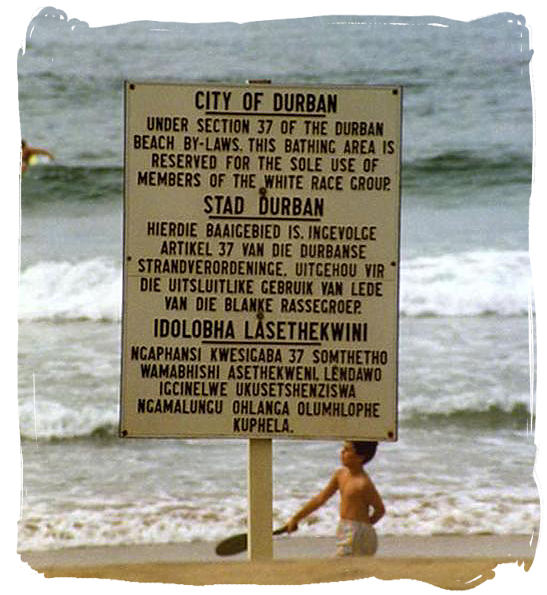


Complaints against Flagler College have been filed with the Office of Civil Rights of the U.S. Department of Education (ED).
Under color of law, has Flagler College escaped government scrutiny because of its web of political connections -- e.g., Congressman John Mica, Representative William l. Proctor (also Flagler's Chancellor)?
Collegematch: FLAGLER COLLEGE IS ALMOST ALL-WHITE AND HAS NO TENURE
Student Race Distribution: [Black: 34 White: 1,897 Hispanic: 81 Asian: 13 American Indian: 6 Unknown Race: 45]
Copyright 2008 MatchCollege.com College Search
Date: Jul 8, 2008

Student Race Distribution: [Black: 34 White: 1,897 Hispanic: 81 Asian: 13 American Indian: 6 Unknown Race: 45]
Copyright 2008 MatchCollege.com College Search
Date: Jul 8, 2008

Student Race Distribution: [Black: 34 White: 1,897 Hispanic: 81 Asian: 13 American Indian: 6 Unknown Race: 45]
Copyright 2008 MatchCollege.com College Search
Date: Jul 8, 2008

Student Race Distribution: [Black: 34 White: 1,897 Hispanic: 81 Asian: 13 American Indian: 6 Unknown Race: 45]
Copyright 2008 MatchCollege.com College Search
Date: Jul 8, 2008

Student Race Distribution: [Black: 34 White: 1,897 Hispanic: 81 Asian: 13 American Indian: 6 Unknown Race: 45]
Copyright 2008 MatchCollege.com College Search
Date: Jul 8, 2008

Student Race Distribution: [Black: 34 White: 1,897 Hispanic: 81 Asian: 13 American Indian: 6 Unknown Race: 45]
Copyright 2008 MatchCollege.com College Search
Date: Jul 8, 2008
Copyright 2008 MatchCollege.com College Search
Date: Jul 8, 2008
Student Race Distribution: [Black: 34 White: 1,897 Hispanic: 81 Asian: 13 American Indian: 6 Unknown Race: 45]
Copyright 2008 MatchCollege.com College Search
Date: Jul 8, 2008
Student Race Distribution: [Black: 34 White: 1,897 Hispanic: 81 Asian: 13 American Indian: 6 Unknown Race: 45]
Copyright 2008 MatchCollege.com College Search
Date: Jul 8, 2008
Student Race Distribution: [Black: 34 White: 1,897 Hispanic: 81 Asian: 13 American Indian: 6 Unknown Race: 45]
Copyright 2008 MatchCollege.com College Search
Date: Jul 8, 2008
Student Race Distribution: [Black: 34 White: 1,897 Hispanic: 81 Asian: 13 American Indian: 6 Unknown Race: 45]
Copyright 2008 MatchCollege.com College Search
Date: Jul 8, 2008
Student Race Distribution: [Black: 34 White: 1,897 Hispanic: 81 Asian: 13 American Indian: 6 Unknown Race: 45]
Copyright 2008 MatchCollege.com College Search
Date: Jul 8, 2008
STILL WAITING ON RESPONSE TO OPEN RECORDS REQUEST TO CONTROVERSIAL STATE REPRESENTATIVE WILLIAM L. PROCTOR, DEFIANT, DEFENDER OF ST. AUG CITY HALL

Flagler College Chancellor, former City Commissioner and Planning Commission Member William L. Proctor has a lot of explaining to do.
Subscribe to:
Posts (Atom)