Friday, July 01, 2011

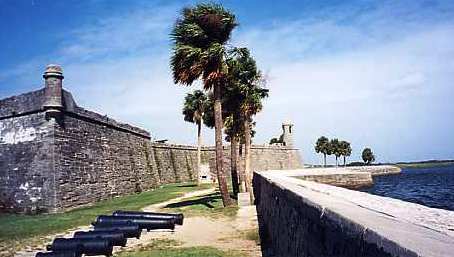
MAURINE BOLES (MAYOR'S MOTHER) ON SAVING ST. AUGUSTINE's FISH ISLAND (PART OF ST. AUGUSTINE NATIONAL HISTORICAL PARK AND SEASHORE)


See bold below

Neighbors: Pilau, Pies and Pews is an artsy good cause

BECKY GREENBERG
Downtown News
Publication Date: 07/15/09

The occasion was the annual ACCORD luncheon celebrating the 45th anniversary of the signing of the landmark Civil Rights Act of 1964. And people filled the downtown hotel Casa Monica, where police dogs had been kept in the lobby of the then-vacant building in 1964 during the civil rights demonstrations that brought Martin Luther King to St. Augustine.

Jeanette Berk was there with son Lamar and daughter Marissa, and they were thrilled to be seated at the same table as Audrey Nell Edwards, one of the St. Augustine Four, who spent six months in jail and reform school in 1963 and 1964 for asking to be served at the local Woolworth's lunch counter. As a rising freshman at St. Augustine High School, Lamar was shocked: "It is hard to believe that people our age were put in jail for ordering a hamburger from a lunch counter," he said. And Marissa added, "I'm really inspired to be here among so many influential people in one room."

This annual occasion is always joyous, celebratory and quite moving -- and we get to sing "Lift Every Voice and Sing" really loud.

Historian David Nolan's short remarks deserve to be repeated in this column, because as novelist Pearl Buck once commented, "The truth is always exciting. Life is dull without it. Speak it then."

Never-dull Nolan commented sarcastically:

"We have heard much lately about the upcoming two-year historic celebration from 2013 to 2015 -- 2013 marks the 500th anniversary of Ponce de Leon NOT landing in St. Augustine. I don't think you'll find any reputable historian who will tell you that Ponce de Leon ever set foot here.

"2015 marks the 450th anniversary of the founding of our city by Pedro Menendez, after which he executed a number of people, 'not because they were Frenchmen, but because they were Lutherans.' Nowadays when I drive down U.S. 1 South and pass by the (Memorial) Lutheran Church, I think how nice it is that we no longer execute Lutherans here, and even let them practice their religion openly. It represents a maturity on the part of St. Augustine.

"And between these two anniversaries -- one historically dubious and the other morally reprehensible -- comes in 2014 the 50th anniversary of the one morally unambiguous event in our past: the civil rights movement of the 1960s, which changed America and inspired the world.

"If we don't make that the main focus of our public celebration in 2014, we will have missed the boat, and I hope that future generations will not find us guilty of that."

*

Do you want to spend time laughing and talking to neighbors at Opus Restaurant, sipping a light summer wine, eating beautiful hors d'oeuvres and hearing the neighborhood news? Then mark your calendars and plan to attend the Flagler Model Land Neighborhood Association meeting at 7 p.m. Aug. 2 at Opus 39 Restaurant on Cordova Street.

We welcome new members who live downtown and love seeing old friends. A $2 donation is requested. There will be a cash wine bar. See you there!

*

When Flagler College bought a small, unused church building on Ovieda Street, they needed to do something with all those pews. So when Kathy Drake, director of Communities in Schools, offered the pews to Hastings OUR Center, artist Kathy Marsh and community activist Malea Guiriba loaded them up in their truck and came up with a great idea: sell the pews at a "Pilau, Pies and Pews" fundraiser at Simple Gestures on Anastasia Boulevard from noon to 5 p.m. Sunday. Local artists, including Deane Kellogg, Eleanor Hughes, Mike Mitchell, Steve Marrazzo, Kathryn Marsh, Steve Ryder, Dexter McDaniel and Dale Whaley, have painted 14 of the pews, and they're just wonderful. If you have a long, empty hall like I do, you'll get there early to buy sit-able art.

Of course, there's also the fun of being with the outlandish folks at Simple Gestures, bringing and buying pies to buy and sell, and eating Johnny's Kitchen's best-in-the-state pilau and Kathy Drake's grilled pork kabobs.

All money collected from the sale will be donated to the OUR Center and the newly formed Pie in the Sky, an organization with the mission to "create connections within the Hastings community in order to provide services and support to individuals who are underserved."

Pump up those bike tires and ride over the bridge to Simple Gestures for a deliciously artsy day.

*

Finally, regarding a recent column mentioning Fish Island, Maurine Boles says she is concerned "with the dock on Fish Island.

"When we moved here 40 years ago," says Maurine, "we explored the island and at that time the ruins of Jesse Fish's home was there, The coquina walls were still standing and the outline was clear. At the same time there was a structure made of very large coquina blocks. It was on the outer edge near the northeastern side of the property. It had rifle slits on all sides and we were told that the facility was used to protect the property from Indians and to keep the slaves from escaping. Jesse Fish's grave was also clearly there though it had been desecrated by digging, Capt. Usina said there were rumors that money had been buried with the body. Today I understand very little is left of any of the sites.

"When plans first came out concerning construction of the 312 bridge the original plans had the road and bridge going directly across the Fish homesite. Louis Arana who was the historian at the Castillo (de San Marcos) at the time and I got in touch with Tallahassee and with some help from I think Hamilton Upchurch the route was changed so as to miss the homesite. It turned out to be a hollow victory since the curve created to miss the historic sites gave much more opportunity for commercial development, but we tried. Fish Island as you know was the very first commercial orange grove in Florida ... oranges individually wrapped in paper were shipped in barrels from a coquina dock which "I think is still part of the Fish Island Marina. Unless the PUD that the city commission approved in the l990's specifically included the historic sites then I was told that condo and anything could be built directly over these historic sites which would be lost forever.

"I have also heard rumors that if the dock is approved for residents of the development that these same owners could turn around and sublease their slips to other people and make a profit. It is such a shame to think about Florida's first commercial orange grove becoming just another condo development."


Click here to return to story:
http://staugustine.com/stories/071509/community_1740875.shtml

© The St. Augustine Record

St/ Augustine Record Letter: All-embracing 'park' -- best gift for the 450th


Letter: All-embracing 'park' -- best gift for the 450th
By ED SLAVIN
Created 05/27/2011 - 12:00am
Summary:

Editor: Ken Burns' 2009 PBS documentary quoted Wallace Stegner, who called America's National Parks our "Best Idea."

For our 450th birthday, let's ask for an "emerald necklace of parks" -- St. Augustine National Historical Park, Seashore and Scenic Coastal Parkway, with a National Civil Rights Museum and Museum of Indigenous Native Americans. www.staugustgreen.com

The land is already ours -- federal, state and water management district land. Let's preserve and protect more than 130,000 acres of land, in one national park and seashore, connected with trails and battery-powered trolleys.

Take the Castillo de San Marcos, Fort Matanzas, add water (county beaches, including the beach where civil rights wade-ins and arrests occurred). Add state parks, forests and water management district land in two counties and what do you have? St. Augustine National Historical Park and Seashore, which will capture the imagination, reconnect us with our history and nature, preserve wetlands and prevent erosion, while preserving endangered and threatened species.

A 2003 National Trust for Historic Preservation study found environmental and historic tourists spent more money -- good to grow our tourist-driven economy.

Our 450th birthday is a "teachable moment": the National Park Service will share and interpret St. Augustine's 11,000 years of history, including indigenous (Native-American), African-American, Spanish, French, Minorcan, Greek, Cuban, Haitian, Roman Catholic, Jewish, Protestant, British, American, Civil War, military, nautical, Flagler-era and Civil Rights history and Northeast Florida's contribution to American history.

Finally, we need an Interstate-95 interchange for West Augustine and West King Street -- call it the "here we right a wrong" interchange, remedying 1960s discrimination.

We love St. Augustine. We're blessed to live here.

Let's preserve and protect St. Augustine forever. Your grandchildren (and their grandchildren) will say "thank you" for the 450th birthday present -- parks, preservation and teaching peaceful ways, while fully realizing this economic opportunity for our collective good.

Ed Slavin

St. Augustine

St. Augustine Underground -- We Need a St. Augustine National Historical Park and National Seashore


From the January 1, 2011 issue of St. Augustine Underground (published by the Milwaukee Journal-Sentinel, which also publishes the Ponte Vedra Recorder and Clay Today):

St. Augustine’s History is A National treasure -- The time has come to bring out the big guns and protect our nationally important local heritage with the creation of The St. Augustine National Historical Park, Seashore and Coastal Parkway.


By Ed Slavin

A famous journalism professor said
that “if you’re going to tell a
story about a bear, bring on the
bear.”
Here’s how to protect St. Johns
County’s bears – and other endangered
and threatened species – while growing
our economy and making life better for
your grandchildren (and their grandchildren).
2011 is critical to reviving our local
economy, creating jobs and preserving
our city’s and our county’s environment
and history.
How do we revive our depressed local
tourist economy? How do we get “out
of the ditch,” which Wall Street and
local speculators created?
By persuading Congress to enact a
St. Augustine National Historical Park,
Seashore and Coastal Parkway.
Let’s donate 13 large tracts: the
Florida Department of Environmental
Protection’s Guana Tolomato Matanzas
National Estuarine Research Reserve,
Anastasia State Park, Faver-Dykes
State Park and Fort Mosé State Park;
Florida Department of Agriculture’s
Deep Creek State Forest and Watson
Island State Forest; St. Johns County
beaches and the Nocatee Preserve; and
St. Johns River Water Management
District ‘s Twelve Mile Swamp, Deep
Creek, Matanzas Marsh, Moses Creek
and Stokes Landing preserves.
Let’s donate them to the federal government
for the St. Augustine National
Historical Park and Seashore. These
vast tracts of government-owned land
are suitable for a National Park and
Seashore – more than 120,000 acres.
In Woodie Guthrie’s words, “This land
is our land” already – it is our county
beaches, state parks and forests and
water management district land. Combined
with the Castillo de San Marcos
and Fort Matanzas, this land will make
one glorious National Park and Seashore,
making us all proud and properly
celebrating St. Augustine’s 450th
birthday (2015) and Spanish Florida’s
500th (2013).
Donating the land can save more than
$33 million over 10 years for state and
local governments; revive our economy;
create better-paying jobs with real
futures; protect our historic and environmental
heritage; teach our children
about history, beauty and nature; better
preserve our beaches; protect homes
from erosion; raise our property values;
and protect wildlife.
Let’s put people to work and draw
environmental and historic tourists,
who National Trust for Historic Preservation
and other studies say spend
more and visit longer, putting more
proverbial “heads in beds.” How? By
empowering our National Park Service
– America’s favorite federal agency. Ken
Burns’ PBS documentary rightly called
our National Parks “America’s Best
Idea.” We need one here.
Let’s teach history and nature to
future generations with a National Civil
Rights museum here in St. Augustine
and by celebrating all our history
-- 11,000 years of indigenous Native
American, African-American, Spanish,
Minorcan, French, English, Civil War,
Roman Catholic, Greek, Jewish, Protestant,
nautical, military, Flagler-era and
Civil Rights history.
Let’s preserve our endangered and
threatened species -- including right
whales (only 350 left, reportedly the
most endangered whales on the planet)
-- as well as turtles, bears, bald eagles,
manatees, beach mice and butterflies.
This Park and Seashore will rival Cape
Cod National Seashore, the Everglades,
Philadelphia and other tourist “hot
spots,” giving teachers and parents
tools to teach children lessons that will
keep them coming back for life.
Our state’s economy has suffered so
much since the Deepwater Horizon
disaster. We look to British Petroleum
to pay for it all as part of its economic
and environmental remediation to the
State of Florida.
The first step is for our governor and
legislature to agree to donate this land
to the federal government for one “public
park or pleasuring ground for the
benefit and enjoyment of the people,”
as Congress said in 1872 in creating
Yellowstone National Park.
Here are some frequently asked questions:
1. Will this park legislation violate
private property rights? No. The draft
legislation provides for donations of
government lands and donations or
sales from willing sellers. Condemnation
lawsuits are authorized only to
“preserve [historic buildings and land]
from destruction.”
2. How would the park affect local
businesses, tourist attractions and
churches? Very positively. Historic and
environmental tourists spend more and
stay longer, studies show. This will create
more good-paying jobs, in the Park
Service, kayaking, tour-guide
companies, restaurants, hotels
and guest houses. There’s
a list of tourist attractions
and places of worship in the
legislation that the National
Park Service could assist with
historic interpretation. It
includes churches where Rev.
Dr. Martin Luther King, Jr. and Rev.
Andrew Young spoke, working with
local residents to create our 1964 Civil
Rights Act.
3. Will this legislation take over the
government of the City of St. Augustine?
No. But St. Augustine can donate
a few parks to the cause. Our city needs
help and cannot handle the 450th celebration
alone. A greater National Park
Service presence here will help better
guide and orient millions of visitors.
The Park will help make our city a
better place – just ask the residents of
Cape Cod and Cape Hatteras.
4. What positive changes will creation
of a St. Augustine National Park and
Seashore make?
A. Increase property values and local
tax collections. Property values
increase near National Parks and Seashores.
Bed tax and sales tax receipts
will increase.
B. Grow our economy. Our local
economy is stagnant. The National
Park Service will help get us out of the
ditch.
C. Reduce spending by our state, local
and water management district government
– savings of $33 million over ten
years.
D. Increase the quality of tourism
marketing -- greatly simplified by combining
all this land into one National
Park.
E. Improve the quality of historic and
environmental interpretation, preservation
and protection. Right now, tourists
learn very little about our African-
American and Civil Rights history, for
example, or the heroic history of the
Minorcans and other immigrants to our
shores, or the endangered species that
make this area a paradise. The National
Park Service is experienced at protecting
nature and interpreting history
while stimulating tourism. A National
Civil Rights museum here in St. Augustine
will attract more school groups
and minority tourists – Rev. Dr. Martin
Luther King, Jr. is known world-wide
and his legacy here will attract tourists.
5. How will this affect historic reenactors?
Good jobs await them at the
National Park Service.
6. Is this legislation family-friendly?
Yes. Residents and tourists will thank
you for creating a wholesome place to
take children where they learn about
history and our environment, with a
classroom that is as big as all outdoors,
embracing 11,000 years of human history
on these shores.
7. How will this affect beach driving?
The legislation does not address
it, either way. Elsewhere, as in Cape
Cod, residents are licensed to drive on
National Park Service beaches after
proper training and can take tourists on
beach tours.
8. Is there a potential downside?
One. Proper transportation planning
is required to avoid congestion. The
draft bill requires a plan for “cost-effective,
sustainable, carbon-neutral,
environmentally-friendly means of
transporting visitors and residents to
and through the park’s locations, using
trolley cars resembling those in use in
St. Augustine, Florida, in 1928, with
the goal of reducing hydrocarbon consumption,
traffic congestion, air pollution
and damage to historic structures.”
9. When was the National Park idea
first proposed? Some 70 years ago,
before World War II.
10. What are we waiting for? You tell
me!
Will you please help us celebrate
11,000 years of history and protect
what deserves protecting forever inviolate?
Will you please share your suggestions
about how to improve the first
draft of the legislation? Let us work together
to accomplish something we can
all be proud of for future generations
yet unborn who will say, “thank you.”
Please see www.staugustgreen.com

St. Augustine activist Ed Slavin
(B.S.F.S., Georgetown University, J.D.
Memphis State University) first proposed
the St. Augustine National Park and
Seashore Nov. 13, 2006.

Inspired by Georgia-Pacific and the KOCH BROTHERS' POLLUTION OF THE ST. JOHNS RIVER, WE'VE INCLUDED IT IN THE ST. AUGUSTINE NATIONAL PARK LEGISLATION

See below. We've included the entire St. Johns River -- a national treasure. One of JFK's favorite stories was about Irish boys walking across Ireland, coming to a high stone wall that they didn't think they could cross -- they tossed their caps over the wall, so they'd have to cross it. Rather than writing trite legislation without meaning, we've written the best National Historical Park and Seashore legislation we could.
What do you reckon?

DRAFT Revised St. Augustine National Historical Park and Seashore Legislation Now Includes St. Johns River, Ocala National Forest

St. Augustine National Historical Park, Seashore and Scenic Coastal Parkway Act of 2011
112th Congress, 1st Session,
H.R. _____
S _____
A BILL
St. Augustine National Historical Park, Seashore and Scenic Coastal Parkway Act of 2011.
A BILL to amend Title 16, United States Code, establishing the St. Augustine National Historical Park, Seashore and Scenic Coastal Parkway and associated Advisory Commission, authorizing donations and purchase of land, authorizing appropriations and for other purposes.
Section 1: Short Title. This Act may be cited as the St. Augustine National Historical Park, Seashore and Scenic Coastal Parkway Act.
Section 2: Title 16, United States Code Section 410 is amended by adding a new section at the end thereof, as follows:
410______ St. Augustine National Historical Park, Seashore and Scenic Coastal Parkway
(a) Findings and purposes
(1) Findings
The Congress finds that—
(A) the St. Augustine National Historic District and associated historic sites, including those described in subsection (c)(2) of this section, are National Historic Landmarks and are listed on the National Register of Historic Places as historic sites associated with the history of our Nation’s Oldest continually-occupied European-founded city;
(B) the City of St. Augustine was founded by the Spanish explorer Pedro Menéndez de Avilés on September 8, 1565 and retains significant archaeological, architectural features, archival materials, and museum collections illustrative of the Spanish, Minorcan, Greek and British colonial periods;
(C) St. Augustine’s historic resources provide unique opportunities for illustrating and interpreting indigenous (Native-American), African-American, Spanish, French, Minorcan, Greek, Cuban, Haitian, Roman Catholic, Jewish, Protestant, British, American, Civil War, military, nautical, Flagler-era and Civil Rights history and Northeast Florida’s contribution to the economic, social, and environmental history of the United States and provide opportunities for public use and enjoyment;
(D) the year 2013 marks the 500th anniversary of the arrival of Spanish explorers and colonists on these shores;
(E) the year 2014 marks the 50th anniversary of the passage of the Civil Rights Act of 1964;
(F) the year 2015 marks the 450th anniversary of the City of St. Augustine;
(G) the National Park System presently contains only two small National Monuments associated with one part of St. Augustine’s 11,000 years of human history;
(H) St. Augustine and St. Johns County are imbued and blessed with great natural beauty and biodiversity, including threatened and endangered species, including turtles, right whales, beach mice, butterflies, bald eagles and manatees;
(I) the St. Augustine area’s precious environmental, historic and cultural heritage is in danger of destruction due to large-scale, rapid development and a lack of planning for parklands, preservation and public transportation;
(J) several significant properties have been lost to development forever and more are imperiled;
(K) roads are clogged and the enjoyment of the area’s beauty is marred by lack of public transportation;
(L) our coasts and our St. Johns River are imperiled by pollution and poor planning;
(M) the first proposal for a St. Augustine National Historical Park and Seashore was introduced in Congress by Florida’s United States Senators Charles O. Andrews and Claude Pepper and U.S. Rep. Joseph Handrcks in June 1939, more than seventy-two (72) years ago;
(N) there is an urgent need for action on the part of the federal government to create an “emerald necklace” of parks in Northeast Florida, to preserve the history and beauty of the area and to provide public transportation to serve the millions of visitors annually, while relieving local residents from traffic congestion, air pollution and energy waste associated with rapid development.

(2) Purposes
The purposes of this section are—
(A) to help preserve, protect, and interpret the splendid environmental and historic resources in St. Augustine and St. Johns County, including architecture, seashores, vistas, settings, and associated archival and museum collections;
(B) to collaborate with the Department of the Interior, National Park Service, State of Florida, the cities of St. Augustine and St. Augustine Beach, the Town of Hastings and the government of St. Johns County, Florida and with associated historical, cultural, environmental, tourism and preservation organizations to further the purposes of the park established under this section;
(C) to provide opportunities for the inspirational benefit and education of the American people;
(D) to protect us from hurricanes by protecting wetlands;
(E) to respond to coastal erosion with a coherent management plan;
(F) to protect endangered species and scenery forever;
(G) to grow our economy and encourage historic and environmental tourism;
(H) to preserve and protect the St. Johns River and Ocala National Forest and existing state parks and forests and water management district lands from further depredations;
(I) to preserve St. Augustine's history and natural beauty for future generations.
(J) to create an “emerald necklace of parks” and a green corridor in Northeast Florida.

(b) Definitions
For the purposes of this section—
(1) the term "park" means the St. Augustine National Historical Park, Seashore and Scenic Coastal Parkway established by subsection (c) of this section; and
(2) the term "Secretary" means the Secretary of the Interior.

(c) St. Augustine National Historical Park, Seashore and Scenic Coastal Parkway
(1) Establishment
In order to preserve "for the benefit and enjoyment of the people" of the United States as a national historical park certain districts, structures, lands, waters and relics located in and near St. Augustine, Florida, and associated with the history of indigenous (Native-American), African-American, Spanish, Minorcan, Greek, British and colonial peoples and related social and economic themes in America, there is established the St. Augustine National Historical Park, Seashore and Scenic Coastal Parkway.
(2) Boundaries
(A) The boundaries of the park shall be those generally depicted on the map numbered _____and dated _____. Such map shall be on file and available for public inspection in the appropriate offices of the National Park Service. In case of any conflict between the descriptions set forth in clauses (i) through (xx) and such map, such map shall govern. The park shall include the following:
(i) The area included within the City of St. Augustine Historic Preservation Districts;
(ii) Anastasia State Park;
(iii) Castillo de San Marcos National Monument and the associated Cubo Line and St. Augustine City Gates sites;
(iv) Fort Matanzas National Monument;
(v) Plaza de la Constitución (Slave Market Square);
(vi) Deep Creek State Forest;
(vii) Faver-Dykes State Park;
(viii) Fort Mosé State Park;
(ix) Guana Tolomato Matanzas National Estuarine Research Reserve (GTM NERR);
(x) Watson Island State Forest;
(xi) St. Johns River Water Management District’s Twelve Mile Swamp, Deep Creek, Matanzas Marsh, Moses Creek and Stokes Landing reservations located in St. Johns County, Florida and Pellicer Creek, Graham Swamp Conservation Areas in Flagler County and the Crescent Lake Conservation Area in Flagler and Volusia Counties;
(xii) Designated portions of the seashore owned by St. Johns County, Florida between the Duval and Flagler County lines;
(xiii) Designated portions of U.S. Route A1A between the Duval County and Volusia County lines;
(xiv) Designated portions of U.S. Route 1 between the Duval County and Volusia County lines;
(xv) The former Ponce de León Golf Course, Red House Bluff, Magnolia Avenue and other indigenous (Native-American) sites set forth in the map labeled as ______ and dated _________;
(xvi) Matanzas River between the Matanzas Inlet and its headwaters, including submerged lands and underwater artifacts
(xvii) St. Augustine Seawall;
(xviii) State-owned historic buildings deeded to the University of Florida;
(xix) beaches, submerged lands, marshes and other areas that are owned by the cities of St. Augustine and St. Augustine Beach and by the State of Florida in trust for the people of Florida, including marshes, reefs, shorelines and underwater archaeological artifacts;
(xx) Portions of Marineland and the Whitney Laboratory owned or operated by the University of Florida;
(xxi) Washington Oaks Gardens State Park;
(xxii) Gamble Rogers Memorial State Recreation Area at Flagler Beach;
(xxiii) Bulow Plantation Ruins Historic State Park;
(xxiv) Tomoka State Park;
(xxv) North Peninsula State Park:
(xxvi) the scenic St. Johns River, from its headwaters and tributaries to its mouth, including the riverbed;
(xxvii) Ocala National Forest;
(xxviii) Such other areas and sites as Congress may in the future designate by legislation.
(B) In addition to the sites, areas, and relics referred to in subparagraph (A), the Secretary may assist in the interpretation and preservation of each of the following:
(i) Government House;
(ii) Spanish Quarter Village Living History Museum;
(iii) Lincolnville Historic District;
(iv) Designated Civil Rights sites;
(v) Lightner Museum and City Hall (former Alcazar Hotel);
(vi) Old St. Johns County Jail;
(vii) Alligator Farm Zoological Park;
(viii) Old St. Augustine Village;
(ix) St. Augustine Historical Society and Research Library;
(x) St. Augustine Lighthouse and Museum and the Lighthouse Archaeological Maritime Program (LAMP);
(xi) Ximinez-Fatio House;
(xii) St. Photios National Shrine;
(xiii) Mission de Nombre de Dios;
(xiv) Fountain of Youth Historical Park;
(xv) Gonzalez-Alvarez House (Oldest House);
(xvi) Oldest School House;
(xvii) Ponce de León Hotel (now part of Flagler College);
(xviii) Excelsior School Historical Museum;
(xix) Bridge of Lions;
(xx) St. Augustine Cathedral-Basilica;
(xxi) Grace United Methodist Church;
(xxii) Trinity Episcopal Church;
(xxiii) Ancient City Baptist Church;
(xxiv) First Sons of Israel Congregation;
(xxv) Florida School for the Deaf and Blind;
(xxvi) National Guard Headquarters (former Franciscan Monastery or Priory);
(xxvii) St. Augustine National Cemetery and other historic cemeteries, including but not limited to the Huguenot, Tolomato, Evergreen, San Sebastian, Pinehurst, Woodlawn and other historic cemeteries;
(xxviii) Zorayda Castle;
(xxix) Casa Monica Hotel and other Henry Flagler era sites; and
(xxx) Flagler Model Land Community.

(d) Related facilities
To ensure that the contribution of all people in St. Augustine’s history, including indigenous (Native-American) and African-American people, are fully recognized, the Secretary shall provide—
(1) financial and other assistance to establish links between the St. Augustine National Historical Park, National Seashore and Scenic Parkway and local organizations.
(2) appropriate assistance and funding to establish a St. Augustine National Civil Rights Museum and a St. Augustine Indigenous Tribal Cultural Center.
(3) suitable off-site locations for park vehicles, trolley cars, maintenance facilities, warehouses and offices.
(4) suitable locations for archives, to make them available to scholars, researchers, genealogists and the general public at a suitable hurricane-resistant location in St. Augustine or St. Johns County, Florida.
(5) a reliable source of coquina for repairs to the Castillo de San Marcos, Fort Matanzas and other historic properties, trolley car routes, right-of-way features, roadbuilding, sidewalks and landscaping consistent with historic preservation principles.
(6) educational programs in conjunction with the University of Florida to provide cooperative educational arrangements for graduate students to work and live in the St. Augustine National Historical Park, National Seashore and provide archaeological and interpretation services on a continuing basis.
(7) funding toward an I-95 interchange serving West Augustine and King Street.


(e) Administration of park
(1) In general
The park shall be administered by the Secretary in accordance with this section and the provisions of law generally applicable to units of the National Park System, including sections 1, 2, 3, 4, and 461 to 467 of this title.
(2) Cooperative agreements
(A) The Secretary may consult and enter into cooperative agreements with interested entities and individuals to provide for the preservation, development, interpretation, and use of the park.
(B) Any payment made by the Secretary pursuant to a cooperative agreement under this paragraph shall be subject to an agreement that conversion, use, or disposal of the project so assisted for purposes contrary to the purposes of this section, as determined by the Secretary, shall result in a right of the United States to reimbursement of all funds made available to such project or the proportion of the increased value of the project attributable to such funds as determined at the time of such conversion, use, or disposal, whichever is greater.
(3) Non-Federal matching requirements
(A) Funds authorized to be appropriated to the Secretary for the purposes of—
(i) cooperative agreements under paragraph (2) shall be expended in the ratio of one dollar of Federal funds for each four dollars of funds contributed by non-Federal sources; and
(ii) sustainable, carbon-neutral, environmentally-friendly construction, restoration, and rehabilitation of visitors and interpretive facilities (other than annual operation and maintenance costs) shall be expended in the ratio of one dollar of Federal funds for each one dollar of funds contributed by non-Federal sources.
(B) For the purposes of this paragraph, the Secretary is authorized to accept from non-Federal sources, and to utilize for purposes of this section, any money so contributed. With the approval of the Secretary, any donation of property, services, or goods from a non-Federal source may be considered as a contribution of funds from a non-Federal source for the purposes of this paragraph.
(4) Acquisition of real property
For the purposes of the park, the Secretary may acquire by donation or purchase from a willing seller such lands, interests in lands, and improvements thereon within the park boundaries as are needed for historical and environmental preservation and essential visitor contact and interpretive facilities. The Secretary may acquire land or structures through condemnation if necessary to preserve them from destruction.

(5) Other property, funds, and services
The Secretary may accept donated funds, property, and services to carry out this section.

(f) General management plan
Not later than October 1, 2011, the Secretary shall submit to the Committee on Resources of the House of Representatives and the Committee on Energy and Natural Resources of the Senate a general management plan for the park, in consultation with the St. Augustine National Historical Park, National Seashore and Scenic Coastal Parkway Advisory Commission created in subsection (g), and shall implement such plan as soon as practically possible. The plan shall include a cost-effective, sustainable, carbon-neutral, environmentally-friendly means of transporting visitors and residents to and through the park’s locations, using trolley cars resembling those in use in St. Augustine, Florida in 1928, with the goal of reducing hydrocarbon consumption, traffic congestion, air pollution and damage to historic structures. The plan shall be prepared in accordance with section 1a–7 (b) of this title and other applicable laws and may include suitable recommendations to Congress for modifications of the approved park boundaries and this Act.

(g) St. Augustine National Historical Park, National Seashore and Scenic Coastal Parkway Advisory Commission
(1) Establishment; termination
There is established a St. Augustine National Historical Park, National Seashore and Scenic Coastal Parkway Advisory Commission (hereinafter referred to as the "Commission"), to be governed by the Federal Advisory Committee Act (FACA), 5 U.S.C. Appendix 2, with a fairly balanced membership and open meetings and financial disclosures as required by FACA. The Commission shall terminate October 1, 2019.
(2) Membership; term
The Commission shall have a fairly balanced membership, embracing diverse persons knowledgeable of history, ecology, anthropology, archaeology, mass transit and trolley car systems and tourism and shall include a balanced group of residents, scholars, environmental, civil rights and civic activists and businesspeople, and will be composed of twelve diverse members, each of whom shall be appointed without regard to political affiliations or beliefs for a term of two years by the Secretary as follows:
(A) Two members to be appointed from recommendations made by the City of St. Augustine, Florida, City Commission;
(B) Two members to be appointed from recommendations made by the City of St. Augustine Beach, Florida, City Commission;
(C) One member to be appointed from recommendations made by the City of Palatka, Florida and the Town of Hastings, Florida, City Commissions;
(D) Two members to be appointed from recommendations of the Board of County Commissioners of St. Johns County, State of Florida;
(E) Two members to be appointed from recommendations of the Governor of the State of Florida;
(F) Two members to be appointed from recommendations by the President of the University of Florida; and
(G) Two members to be designated by the Secretary.
(3) Chair; vacancies
The Secretary shall designate one member to be Chair. Any vacancy in the Commission shall be filled in the same manner in which the original appointment was made.
(4) Compensation and expenses
A member of the Commission shall serve without compensation as such. The Secretary is authorized to pay the expenses reasonably incurred by the Commission in carrying out its responsibilities upon vouchers signed by the Chair.
(5) Majority vote
The Commission established by this section shall act and advise by affirmative vote of a majority of the members thereof.
(6) Consultation of Secretary with Commission
The Secretary or his designee shall, from time to time, consult with the members of the Commission with respect to the plan required in subsection (f) and all matters relating to the creation and preservation of St. Augustine National Historical Park, National Seashore and Scenic Coastal Parkway and shall consult with the members with respect to carrying out the provisions of sections ____ of this title.
(7) Advice of Commission for commercial or industrial use permits and establishment of public use areas for recreational activities
No permit for the commercial or industrial use of property located within the seashore area of the park shall be issued by the Secretary, nor shall any public use area for recreational activity be established by the Secretary within the seashore area of the park, without the advice of the Commission.
(h) Authorization of appropriations
(1) In general
Except as provided in paragraph (2), there are authorized to be appropriated such sums as may be necessary to carry out annual operations and maintenance with respect to the park and to carry out the activities under subsection (d) of this section.
(2) Exceptions
In carrying out this section—
(A) not more than $35,000,000 may be appropriated for construction, restoration, and rehabilitation of visitor and interpretive facilities, and directional and visitor orientation signage;
(B) A central St. Augustine National Historical Park, National Seashore and Scenic Coastal Parkway Visitor Center shall be built in one or more historic or restored buildings along or adjacent to St. George Street; and
(C) not more than $2,000,000 annually of Federal funds may be used for interpretive and education programs pursuant to cooperative agreements under subsection (e)(2) of this section.
Section 3: Effective Date. This Act shall take effect within 30 days of the date of enactment.
Section 4: Severability Clause: In the event that any portion of this Act is held unenforceable, it shall be severed from the rest of this Act.

Florida Times Union Letter:

Georgia-Pacific: Pollution is easily observed at Rice Creek
Posted: July 1, 2011 - 12:00am
Letters from Readers


A few years ago it was my privilege to cruise up the St. Johns River from Jacksonville to Sanford.

The river was teeming with life - bald eagles, ospreys, herons, egrets, kingfishers, woodstorks catching food, building nests. There was an occasional gator, lots of turtles.

There were also boaters, skiers and fishermen enjoying the river as a source of food and recreation.

The one exception to this picture of life was when we left the main channel to go up a creek.

I had heard of Rice Creek and its degradation from industrial waste for a long time but had never experienced it personally.

As we entered the creek, the 50 people on board immediately became silent. There was no sound anywhere, no wildlife except for vultures in the trees along the banks. A deathly pall hung over the area. Even the trees looked sickly and stressed.

The poisons being released into the creek had turned it to a place of death. We learned the tragedy went deep below us to many organisms which, if they survived, would be unable to reproduce.

The images are haunting as the fate of the St. Johns River and the community of life that interacts with it is being decided. The current plan by the Koch Industries subsidiary Georgia-Pacific is to divert their effluent, containing dioxin and other toxic chemicals, into the main channel of the river through a 3.5-mile long pipeline.

What kind of new nightmare might be created from this action?

The attempt to bury the truth, to dilute the evidence might lull some into a state of denial, but for just so long. Consequences of ill-disposed toxic waste inevitably come back and show themselves, dramatically or in more subtle ways.

The Department of Environmental Protection should provide a different ending to this story, standing up for the principle that no one has the right to despoil a body of water from which we all derive life, and supporting models of industrial practice that safeguard the health of the community.

Dumping toxic waste into the river does not qualify.

Pat Jeremiah,

Jacksonville

Read more at Jacksonville.com: http://jacksonville.com/opinion/letters-readers/2011-07-01/story/georgia-pacific-pollution-easily-observed-rice-creek?utm_source=feedburner&utm_medium=feed&utm_campaign=Feed%3A+JacksonvillecomsNewsSportsAndEntertainment+(Jacksonville%27s+Most+Recent+Headlines+-+Jacksonville.com+and+The+Florida+Times-Union)#ixzz1QsdC1652

St. Augustine Record's Response to New York Times page one article on Rep. JOHN LUIGI MICA's Work in Support of CSX Railroad

Zilch. Nada. Zero. Nothing.

Because when you're a billionaire, people want to give you free stuff.

Because when you're the WRecKord, not even a New York Times article about your local Congrewssman is enough to get you off your keister.

A few years ago, Doc Servinson's jazz pianist, who retired here, died.

The New York Times had an obiturary.

The St. Augustine Record had: Zilch. Nada. Zero. Nothing.

New York Times page one article on Rep. JOHN LUIGI MICA's Work in Support of CSX Railroad

June 27, 2011
A Congressman’s Pet Project; a Railroad’s Boon
By ERIC LIPTON
ORLANDO, Fla. — Here in sun-parched Central Florida, workers are ready to break ground this summer for a 61-mile commuter rail project that the federal government ranks as one of the least cost-effective mass transit efforts in the nation.
With a price tag of $1.2 billion at completion, the rail line is expected to serve just 2,150 commuters a day when it starts operating in three years. It will not link to the Orlando airport or Disney World, among the region’s biggest traffic generators. Florida’s governor is even considering killing the project, worried that local government officials will rebel if they have to cover any shortfalls at the fare box.
But the so-called SunRail project has survived, at least so far, a testament to the ability of one congressman to help push through hundreds of millions of dollars in federal spending, even at a time of deep concern over ballooning federal deficits.
Representative John L. Mica, a Florida Republican and chairman of the House Transportation and Infrastructure Committee, has spent years badgering federal agencies, bullying state officials, blocking Amtrak naysayers and trying to bypass federal restrictions to build support and squash opposition to the commuter line.
While Congress is often stalled or bitterly divided in dealing with some of the biggest issues facing the nation, its members are often remarkably successful in promoting industries or more parochial concerns. Mr. Mica’s championing of the SunRail project has won praise among many officials and business leaders here, who say it is vital to the future of the traffic-clogged region.
But skeptics question whether Mr. Mica’s real goal is to give a taxpayer-financed gift to CSX, the freight rail giant and a generous Mica campaign donor, which would get $432 million for its tracks and for upgrades to tracks it owns elsewhere in the state. Other Florida businesses close to Mr. Mica also stand to benefit if the project is built.
“His dedication to SunRail is not for mass transit — it is for helping CSX to get government funds for its private freight lines,” said State Senator Paula Dockery, a Republican and a chief critic of the project.
The congressman is unapologetic about SunRail. “Everybody has different vested interests,” Mr. Mica said in an interview. “But you look at what is being proposed on paper, and it just make sense.”
Mr. Mica first proposed the commuter system in 1992 after he won his first race for the House after a career that included stints as a real estate developer, a lobbyist and chief of staff to Senator Paula Hawkins, Republican of Florida. The CSX track, which for decades has also been used by Amtrak, already connects a string of communities north and south of Orlando. Commuter rail, Mr. Mica argued, could carry many more passengers and be far less costly than adding a single lane to an Interstate highway.
“For as long as I have been in Congress, Central Florida has been sending its mass transit money to New York, Philadelphia, Chicago and now to other cities — that is where our gas tax dollars have gone,” he said.
But getting even a small fraction of the 2.3 million people living along the rail corridor to ride trains may be difficult, state officials acknowledge. Separating drivers from their cars would be like forcing Mickey and Minnie Mouse to divorce.
The federal government, wary of financing boondoggle projects, has strict rules on how ridership projections are calculated. Florida’s Department of Transportation, mindful of Mr. Mica’s keen interest, looked for ways to push up the number of projected riders, efforts that federal regulators found dubious.
Florida officials, for example, assumed that large numbers of commuters heading from one point in the suburbs to another would be willing to undertake a bus-to-rail-to-bus trip, a travel pattern that federal officials told them “cannot be found on any existing commuter rail service in the United States.”
Mr. Mica describes himself as a fiscal conservative, arguing that “all taxpayer-funded infrastructure projects must be wise investments.” But he has pulled strings in Washington to get special consideration for the project.
That included at least $4 million in federal earmarks he lined up to buy the first rail cars for the project — at least a decade before any trains would run. The federal grants, approved in 2003, effectively forced Florida officials to buy experimental rail cars — now temporarily in use in Miami — from a Colorado company whose top executive has been a campaign contributor to Mr. Mica.
In 2008, Mr. Mica helped insert language into a federal highway bill that, at least in SunRail’s case, eliminated a Bush administration ban on federal financing for rail projects that did not meet certain cost-effectiveness standards. The Obama administration has since eased the eligibility rules, clearing the way for federal support for the project.
“He has been the single, clarion voice for commuter rail in central Florida for 20 years,” said Mayor Ken Bradley of Winter Park.
But opposition had started to brew around Central Florida, including in Mr. Mica’s hometown of Winter Park. Beth Dillaha, a former regional manager at a vitamin store chain, had never been involved in politics but was disturbed at what she heard.
The 61-mile project would be built in two phases, the first covering 31 miles mostly north of Orlando. During most of the day, the train would run only every two hours, with no weekend service. Even during rush hour, it would run only every 30 minutes. Initially, it is expected to serve 4,300 riders a day (about 2,150 commuters taking round trips).
If fares do not cover operating costs after seven years, Winter Park and other communities with stations, which will already subsidize the construction of the system, would be required to make up any revenue shortfalls.
“This is basically an open checkbook,” Ms. Dillaha said. Questions were also raised by some Florida officials and Amtrak about who would cover the insurance damages if there were an accident. Ms. Dillaha, who was inspired to run for a seat on the Winter Park City Commission, and other critics grew even more skeptical as they examined the plan more closely.
Campaign finance records show that many of the contractors that worked on the project, including an engineering firm, Parsons Brinckerhoff, have been major contributors to Mr. Mica’s re-election campaigns. So have businesses and individuals who could benefit from the project, including ICI Homes, a real estate developer that owns several sites close to a proposed SunRail station, and Florida Hospital in Orlando, whose $250 million expansion plan is contingent on getting a station on its property.
Executives at ICI Homes, or their relatives, have contributed nearly $70,000 to Mr. Mica over the last decade. An additional $35,000 in donations have come from staff members and lawyers at GrayRobinson, a Florida law firm lobbying for the project.
The most pointed questions have been raised about the $432 million deal with CSX. Florida officials agreed to let the freight company use the tracks it would sell to SunRail for its own trains at night. They also committed to pay for improvements to a second freight rail line owned by CSX, which would shift freight traffic in Florida to a more rural route, allowing more freight trains to run at a faster speed. Because of cost overruns, that deal might ultimately cost the state an estimated $640 million.
Ms. Dockery, who led efforts to at least temporarily block state financing for the SunRail project, has suggested that Mr. Mica has, all along, been seeking to help CSX.
Mr. Mica, in an interview, said he realized that the package would help the freight company, which is based in Jacksonville. The company’s executives, including Michael J. Ward, its chairman, have donated nearly $60,000 personally or through the company to Mr. Mica and his political causes in the last decade. But both Mr. Mica and a CSX spokesman disputed any suggestion that the package was a sweetheart deal for the company.
“Obviously, they get a benefit,” Mr. Mica said. “But this is one of the best deals I have seen for the taxpayers.”
Federal transit officials — after at first expressing open skepticism about SunRail — have recently grown more supportive. The project is still ranked last in cost effectiveness by the federal Department of Transportation among all projects in final design in the country. But SunRail ranks better in other categories, including its potential to drive economic development and improve the region’s air quality, giving it an overall “medium” rating that allows for federal support.
Still, Florida’s new governor, Rick Scott, a businessman who drew Tea Party support, came into office in January unconvinced that the project was worthwhile.
He froze four contracts, worth a total of $235 million, to build rail stations and buy the first full fleet of rail cars and locomotives. He also put off the payment to CSX for its tracks, pending a final decision expected this week.
Mr. Mica has campaigned hard to win over the governor, meeting with him and soliciting local government officials to reiterate their support for the project. He also hinted that he might hold up other federal aid, telling a radio news reporter in April that money for dredging the Miami port might be at risk.
“I get to authorize the project for the deepening at the federal level,” Mr. Mica said. “Right now I’m studying them very closely, as the governor is studying the rail project very closely.”
Mr. Mica said he was determined, one way or another, to get the trains running. “I am like the guy with the broom and the shovel at the end of the parade,” he said, “trying to keep it moving.”
Kitty Bennett contributed research.

Celebrating the End of the First America Foundation, Secretive, Sunshine-violating Failure -- City of St. Augustine Has Learned Its Lesson

One of the countless drawbacks of UPCHURCH, BAILEY & UPCHURCH attorney DON WALLIS' tatterdemalion Sunshine-violating FIRST AMERICA FOUNDATION was that it was supposed to raise corporate funds in secret for our City’s 450th birthday (and the 500th anniversary of Spanish Florida, 50th anniversary of the 1964 Civil Rights Act and 200th anniversary of the Florida Constitution).
WALLIS' sere FAF was a sellout without a single success.
As City Commissioner Wiliam Leary stated, unaccountable FAF “did not raise a dime.”
Secret corporate control of the Economics Department at FLORIDA STATE UNIVERSITY by KOCH INDUSTRIES is sinister. See below.
Imagine if FAF had been successful, and in a position to sell out our history to the highest bidder, like the chain gang putative academics at FSU. That would have been awful.
Be glad that FAF is gone. Be joyful! We won, and without even filing a lawsuit (or costing us another $100,000 in City-paid plaintiff attorney fees).

"SAVING St. AUGUSTINE" -- Folio Weekly Backpage Editorial


St. Augustine’s small-town Spanish Colonial charm is in
danger of being ruined by schlock. We love St. Augustine
and must preserve the beauty of endangered Matanzas Inlet
sunsets, Anastasia Island beach mice, nesting leatherback
turtles, soaring families of bald eagles and frolicking schools
of manatees and whales. Florida’s First Coast deserves a first
class National Park for the 500th anniversary of Spanish
Florida (in 2013) and 450th anniversary of St. Augustine
(in 2015).
The late U.S. Speaker of the House
Thomas P. “Tip” O’Neill and Edward
Boland of Massachusetts made history in
1958, courageously working to protect
Cape Cod’s charm forever. Boland returned
in 1958 from a trip to Cape Hatteras
National Seashore. Within a fortnight, the
two Massachusetts Democrats introduced
the Cape Cod National Seashore Act
(backed by John F. Kennedy only after he
became president).
Commercial interests thought that a
national seashore would be bad for business.
They were wrong. Today we scoff at
the quaint story of O’Neill and Boland
being hung in effigy and booed in the Cape
Cod towns of Wellfleet and Truro, where
citizens, in their annual town meetings,
voted against the bill.
Even JFK, the Pulitzer Prize-winning
author of “Profiles in Courage,” feared local
commercial interests in Massachusetts
when it came to proposing a national
seashore. JFK later came aboard as president,
to consider the National Seashore the
best thing he ever did for Massachusetts.
Today’s visitors to Cape Cod come from
around the world to partake of its charm,
marshes, woodlands, beaches and towns
that were saved thanks to the vision of
Congressmen O’Neill and Boland.
A St. Augustine National Park was first
proposed before World War II. The idea is
five years older than President Harry S Truman’s
national health insurance proposal.
And as with national health care, Congress
too often resembles a herd of turtles trying
to write a symphony. It’s somewhat understandable
that our two busy U.S. Senators
(and Representative John Luigi Mica)
haven’t introduced a National Historical
Park, Seashore and Scenic Coastal Parkway.
Legislation moves glacially, except in emergencies.
We have one now.
Our local economy is in a state of emergency.
Businesses are dying. We’re ready for
Congress to stimulate our economy and
preserve our way of life by enacting a St.
Augustine National Historical Park,
Seashore and Scenic Coastal Parkway Act,
supported by a diverse group of citizens,
from octogenarian environmental activist
Robin Nadeau to former Republican
County Commission Chairperson John
Sundeman to St. Augustine Democratic
Club Chairperson Jeanne Moeller, among a
growing group of people concerned about
the declining quality of the tourist experience
in St. Johns County.
A National Historical Park would preserve
and protect St. Augustine’s historic
downtown with the dignity and experience
of the National Park Service, just as parts of
Boston, New Bedford, Philadelphia and
other historic cities are preserved. It would
step into the breach left by the Florida legislature,
Secretary of State, University of
Florida and city of St. Augustine, all of
whom have been unable to repair crumbling
buildings and historic monuments. A
national historical park would preserve
downtown streets and reduce congestion,
improving the tourist experience and making
it one that longer-staying (and biggerspending)
historic and environmental
tourists will enjoy.
A national historic park managed by the
National Park Service would portray history
and nature accurately, as done in Virginia’s
Colonial Williamsburg and the
Colonial National Historical Parkway.
There could also be a National Civil Rights
and Indigenous History Museum, aimed at
telling the region’s story of 11,000 years of
human history, honoring Native Americans,
African-Americans and the Civil
Rights movement here, which helped win
adoption of national antidiscrimination
laws in 1964. The struggles on St. Augustine’s
streets and beaches, including the
arrest of Massachusetts Governor Endicott
Peabody’s mother and Dr. Martin Luther
King Jr., need to be retold and told well.
soldiers monument in St. Augustine’s Plaza
de la Constitucion, paying tribute to Civil
Rights Era activists whose efforts helped
break the Senate logjam and enact basic
nondiscrimination laws.
A national seashore and coastal parkway
designation would protect the coast from
uglification, as at other national seashores.
We have 61 miles of coast here, and the
transfer from county to federal jurisdiction
would save local tax monies and make environmental
protection a priority on beaches
where turtles land to give birth, and where
beach mice and other critters scamper.
In September, watch Ken Burns’ PBS
documentary “Our National Parks: America’s
Best Idea.” Think of how uplifting it
will be to be able to drive from Ponte Vedra
to Marineland as a tourist or resident,
secure in the knowledge that the beaches
will survive and not be turned into some
unreasonable facsimile of Miami.
Think of the economic efficiency and
environmental benefits of entrusting city
and county parks, seashore water management
district land and at least five state
parks (including Anastasia and Guana-
Tolomato-Matanzas National Estuarine
Reserve) to one world-class organization
(the National Park Service) to protect, preserve
and interpret, rather than allowing
the land to be ripped apart by greed.
Think of the good jobs that will encourage
young people to stay here, working as
National Park Service employees and contractors.
Think of historic interpreters and
environmental tour guides who are
rewarded with a federal showcase, inviting
the world to a world-class destination.
Let’s enlist Congress and the president
to help us tell our region’s rich history —
including the story of the Indians, African-
American slaves and Minorcan and Greek
indentured servants (who escaped to St.
Augustine from New Smyrna Beach, “voting
with their feet” against slavery by contract.
Indentured servitude was outlawed
along with regular slavery with the 13th
Amendment in 1865.
Think of how our tourist economy will
be stimulated and jobs created and preserved
by preserving the stunning vistas
that draw people here, not uglifying them
with massive high-rises, suburban sprawl
and unsafe homes built in wetlands.
Think of how fourth-graders now and
in the future, from all over Florida, will be
rewarded for their studies of Florida history
by helping preserve “the real Florida” — St.
Augustine and St. Johns County — forever.
It is up to us to learn from the young
and to protect Northeast Florida for families,
flora, fauna and the future. Visit
staugustgreen.com for more information
and let your neighbors and national and
local leaders know what you think. 

Faye Armitage lives in Fruit Cove. In 2008,
she ran against nine-term Congressional
incumbent John Mica, receiving nearly 150,000 votes.

BILLIONAIRE KOCH BROTHERS' "TYRANNY OVER THE MIND" AT FLORIDA STATE UNIVERSITY


“Leaders are visionaries with a poorly developed sense of fear and no sense of the odds against them.”
--- Robert Jarvik (inventor of the Jarvik heart)

This is a time that demands leadership – real leadership.
Our public universities are too often not being led by courageous leaders.
Our public universities are in danger of being purchased by secretive billionaires.
Don’t take my word for it – see the St. Petersburg Times article and editorial (below), along with the Reid Report and Center for Media and Democracy’s PR Watch (below).
Veto power for some controlling billionaire over whom a state university should hire?
That’s not “scholarship” – it’s a sin, a crime and a tort. Thomas Jefferson said, "I have sworn upon that Altar of Almight God eternal hostility against every form of tyranny over the mind" of humankind?
Why are public universities selling their souls?
Fear of ideologues and hunger for money -- from "friendraising" and "fundraising" from domineering moneybags?
Sadly, it seems that some public universities are run by political hacks, not leaders.
The President of at least one publicly-funded University in Florida publicly endorsed John McCain for President in 2008, as if he were some small-bore KKK-elected Sheriff and people should select the President of his choice on his say-so. (It would have been different if he had endorsed Barack Obama – that would have shown courage, vision and intelligence).
Appropos of Robert Jarvik’s quote (above), Florida State University Economics Department camp followers are not leaders – they fear change and they sell their souls for money. “They have given their hearts away, a sordid boon,” as the poet William Wordsworth would put it.
Too often, government-founded universities discourage legitimate inquiry and suppress dissent, too often lacking independence and intellectual integrity -- promoting and preferring toadies, rejecting scholars who make waves and “rock the boat.”
As our Founders taught, it’s our boat and we have a right to rock it. Take a moment to stand up for academic freedom and scholarly independence.

Contact for the FSU board of trustees can be found here or below:

University Relations
Florida State University
216 Westcott
Tallahassee FL 32306-1350
Phone: 850/644-1000
Fax: 850/644-3612
eMail: trustees@www.fsu.edu

St. Petersburg Times Editorial: Florida Public University for Sale to Highest Bidder?


A Times Editorial

Koch gift too costly for Florida State

In Print: Wednesday, May 11, 2011

Florida State University's economics department needs to reconsider its relationship with billionaire Charles G. Koch, who pledged $1.5 million to the school as long as professors hired with the money hew to Koch's Libertarian philosophy. The arrangement reeks of pandering and undermines academic freedom, the cornerstone of American higher education.

Under the terms of a 2008 deal with the Charles G. Koch Charitable Foundation, FSU's economics department is scheduled to receive $1.5 million over six years to hire professors. But faculty members hired with foundation money must be approved by an advisory committee handpicked by Koch. That means Koch effectively holds veto power, an arrangement rarely found in the academic community and that threatens independent thinking.

FSU, like many colleges and universities throughout Florida, struggles with increasing budgetary constraints. The very fact the university would be willing to forgo its independence in hiring for just $250,000 a year is disturbing, but perhaps should not be unexpected given the continuing cuts in state funding and the state Legislature's limits on tuition. After all, lawmakers have told higher education to be more creative in finding outside support.

But such blatant pandering undermines the institution's credibility and would be just as improper if a wealthy liberal benefactor such as George Soros demanded his own professors for hire.

There is no question students should be exposed to and debate wildly divergent ideas in the classroom. That is, ideally, the essence of higher education and what, for centuries, has led public and private benefactors to support it.

But students also have to know their professor is engaged in intellectually honest discourse without fear that if they happen to deviate from their benefactor's ideologically guidelines they could lose their jobs. And students need be confident their grades are not predicated on becoming acolytes of a donor's political beliefs.

For decades, Florida's universities have come under fire for naming programs and buildings after wealthy patrons, such as Pensacola personal-injury lawyer Fred Levin, whose name graces the University of Florida law school, and even disgraced Wall Street financier Al "Chainsaw" Dunlap, for whom FSU named its student success center. But neither of these figures, who each gave $10 million, has attempted to contractually influence curriculum through their largess.

Koch has received something far more substantial for his mere $1.5 million in generosity — unchallenged access to FSU classrooms.


[Last modified: May 10, 2011 07:16 PM]

[Get Copyright Permissions] Click here for reuse options!
Copyright 2011 St. Petersburg Times

The Reid Report re: FSU Economics Department Selling its Soul to the Koch Brothers -- Academic Freedom for Sale?


Florida State University sells faculty control for Koch money **UPDATED**

It just doesn’t quit. A Florida university puts its integrity, and its economics department, up for sale.

Peter Schorsch over at SaintPetersblog spotted this one, and it’s something to see…:

A conservative billionaire who opposes government meddling in business has bought a rare commodity: the right to interfere in faculty hiring at a publicly funded university.

A foundation bankrolled by Libertarian businessman Charles G. Koch has pledged $1.5-million for positions in Florida State University’s economics department. In return, his representatives get to screen and sign off on any hires for a new program promoting “political economy and free enterprise.”

Traditionally, university donors have little official input into choosing the person who fills a chair they’ve funded. The power of university faculty and officials to choose professors without outside interference is considered a hallmark of academic freedom.

Under the agreement with the Charles G. Koch Charitable Foundation, however, faculty only retain the illusion of control. The contract specifies that an advisory committee appointed by Koch decides which candidates should be considered. The foundation can also withdraw its funding if it’s not happy with the faculty’s choice or if the hires don’t meet “objectives” set by Koch during annual evaluations.

The full story is here, complete with this gem:

David W. Rasmussen, dean of the College of Social Sciences, defended the deal, initiated by an FSU graduate working for Koch. During the first round of hiring in 2009, Koch rejected nearly 60 percent of the faculty’s suggestions but ultimately agreed on two candidates. Although the deal was signed in 2008 with little public controversy, the issue revived last week when two FSU professors — one retired, one active — criticized the contract in the Tallahassee Democrat as an affront to academic freedom.

Rasmussen said hiring the two new assistant professors allows him to offer eight additional courses a year. “I’m sure some faculty will say this is not exactly consistent with their view of academic freedom,” he said. “But it seems to me it would have been irresponsible not to do it.”

Not exactly consistent? Rasmussen, meanwhile, sang quite a different tune in a letter to the Tallahassee Democrat responding to the professors, striking a strident tone, accusing the profs of “ideological bias,” and asserting something that appears to be demonstrably untrue:

Miller and Bellamy incorrectly assert that FSU’s economics department struck “an agreement with the Charles G. Koch Foundation.” In fact, the agreement was among Florida State University, the Florida State University Foundation and the Koch Foundation. This agreement was carefully vetted by the university’s senior administration and attorneys to ensure that no decision-making processes at the university would be compromised.

Miller and Bellamy wrote that, “If things turned out well for FSU it has to have involved some skillful maneuvering.” There is no “skillful maneuvering” required because, at every stage of implementation of this agreement, FSU faculty retain control. Further, the terms agreed upon by FSU and the Charles G. Koch Charitable Foundation were purposefully designed to ensure academic freedom. It is the faculty who approve all hires, who approve all Ph.D. admissions, who grade all preliminary examinations of Ph.D. students with their identities concealed and who annually review all faculty members independent of the source of funding.

But if the faculty approves all hires, how did the Koch brothers veto 60 percent of the candidates, and why do they retain the option of withdrawing funding should any professor stray from their preferred ideas? Rasmussen appears to be engaging in a little “academic freedom” of his own on that one.

And then there’s this. Where the Koch brothers used to just buy up entire academic departments, in Florida, they’re doing things differently:

Now, rather than taking over entire academic departments, Koch is funding faculty who promote his agenda at universities where there are a variety of economic views. In addition to FSU, Koch has made similar arrangements at two other state schools, Clemson University in South Carolina and West Virginia University.

Bruce Benson, chairman of FSU’s economics department, said that of his staff of 30, six, including himself, would fall into Koch’s free-market camp.

“The Kochs find, as I do, that a lot of regulation is actually detrimental and they’re convinced markets work relatively well when left alone,” he said.

Benson said his department had extensive discussion, but no vote, on the Koch agreement when it was signed in 2008.

He said the Koch grant has improved his department and guaranteed a diversity of opinion that’s beneficial to students.

“Students will ultimately choose,” he said. “If you believe strongly in something, you believe it can win the debate.”

Benson makes annual reports to Koch about the faculty’s publications, speeches and classes, which have included the economics of corruption. He said FSU has promised to retain the professors in tenure-track positions hired under the Koch grant if the foundation ever feels they aren’t complying with its objectives and withdraws support.

“So far, they’re fine with what’s going on,” Benson said. “But I agree with what they believe, whether they give us money or not.”

The mind reels.

And here’s part of what Bellamy and Moore wrote in the Tallahassee Democrat on May 1st:

The ideals of the university call for academic freedom, the search for truth, the right to be led by the data wherever they go, open debate of all sides, faculty control of the classroom, a strong role in governance in academic matters, and the right to speak out without reprisal or fear of having your emails demanded by someone whose politics differ from yours. (The people who requested the emails of a Wisconsin history professor should be punished by forcing them read the entire batch.)

Recently a number of corporations have focused on universities in order to further a political ideology of free markets and diminished government regulation. They are less interested in creating new knowledge than in getting their message out and improving their bottom line.

The pursuit of unbiased information and the projection of an ideology are two starkly contrasting goals and can meld only if one of the parties compromises on some basic values.

Two of the more visible corporations making substantial contributions to universities are the Koch brothers and BB&T. The brothers are owners of the second-largest privately held corporation in the U.S. and are much in the news because of efforts to influence public policy, elections, taxes, environmental issues, unions, regulations, etc. BB&T is a large financial services corporation that frequently teams up with Koch.

Both corporations have worked out agreements with colleges and universities across the country, many of them being controversial. George Mason University received over $23 million from Koch brothers foundations to hire seven libertarian professors, subjecting the college to the charge that the university had been “bought.” Guilford College accepted a 10-year, $500,000 grant from BB&T, along with the following strings: an upper-level interdisciplinary course requiring the assignment of Ayn Rand’s “Atlas Shrugged” in its entirety, and the commitment of the college to annually (until the year 2019) give a copy of the book to every student who majors either in business or economics when that student enters his or her junior year. Meredith College faculty rejected a $420,000 “gift” that the college president had negotiated with a BB&T foundation on the grounds that the college needed to retain control over course curricula. Incidents of this latter kind abound, but fall far behind the number of instances in which the corporations have gotten the traction they wanted with the schools.

Apparently, including FSU.

UPDATE: A Facebook page has been created urging FSU to get out of bed with the Kochs. Find it here.

Contact for the FSU board of trustees can be found here or below:

University Relations
Florida State University
216 Westcott
Tallahassee FL 32306-1350
Phone: 850/644-1000
Fax: 850/644-3612
eMail: trustees@www.fsu.edu

Center for Media and Democrcy: PR Watch re: Corruption of Floriday State and Other Governmnent-founded Universities by Chalres G. Koch

Charles G. Koch Foundation Hires and Fires Economists at Public University

According to news reports, the Charles G. Koch Foundation has bought "the right to interfere in faculty hiring at a publicly funded university." Kris Hundley of the St. Petersburg Times reports that the elder Koch brother's foundation "pledged $1.5 million for positions in Florida State University's economics department. In return, his representatives get to screen and sign off on any hires for a new program promoting 'political economy and free enterprise.'"

Unlike most university donors, who retain little control over chairs they've funded lest universities be seen to lose academic freedom, the Times reports that the Charles G. Koch Foundation's "contract specifies that an advisory committee appointed by Koch decides which candidates should be considered. The foundation can also withdraw its funding if it's not happy with the faculty's choice or if the hires don't meet 'objectives' set by Koch during annual evaluations."

Apparently, the deal was signed in 2008 with little public controversy. However, on May 1 two FSU professors -- Ray Bellamy and Kent S. Miller -- revived the issue in a letter to the Tallahassee Democrat. In their letter, Bellamy and Miller point out that "George Mason University received over $23 million from Koch brothers foundations to hire seven libertarian professors, subjecting the college to the charge that the university had been 'bought'".

David W. Rasmussen, dean of the College of Social Sciences, responded to the letter on May 10 by saying, "I'm sure some faculty will say this is not exactly consistent with their view of academic freedom.... But it seems to me it would have been irresponsible not to do it."

But FSU is not the only school where the Charles G. Koch Foundation has made such arrangements. The Times article adds that, "In addition to FSU, Koch has made similar arrangements at two other state schools, Clemson University in South Carolina and West Virginia University."

One wonders how many Koch economists there are in the world.

St. Petersburg Times: Academic Freedom at Risk --- Koch Brothers' Controlling "Donations" to Florida State University Come With a Heavy Price


Billionaire's role in hiring decisions at Florida State University raises questions

By Kris Hundley, Times staff writer


In Print: Tuesday, May 10, 2011

A foundation bankrolled by Libertarian (sic) businessman Charles G. Koch has pledged $1.5 million for positions in Florida State University's economics department. In return, his representatives get to screen and sign off on any hires for a new program promoting "political economy and free enterprise."

Traditionally, university donors have little official input into choosing the person who fills a chair they've funded. The power of university faculty and officials to choose professors without outside interference is considered a hallmark of academic freedom.

Under the agreement with the Charles G. Koch Charitable Foundation, however, faculty only retain the illusion of control. The contract specifies that an advisory committee appointed by Koch decides which candidates should be considered. The foundation can also withdraw its funding if it's not happy with the faculty's choice or if the hires don't meet "objectives" set by Koch during annual evaluations.

David W. Rasmussen, dean of the College of Social Sciences, defended the deal, initiated by an FSU graduate working for Koch. During the first round of hiring in 2009, Koch rejected nearly 60 percent of the faculty's suggestions but ultimately agreed on two candidates. Although the deal was signed in 2008 with little public controversy, the issue revived last week when two FSU professors — one retired, one active — criticized the contract in the Tallahassee Democrat as an affront to academic freedom.

Rasmussen said hiring the two new assistant professors allows him to offer eight additional courses a year. "I'm sure some faculty will say this is not exactly consistent with their view of academic freedom,'' he said. "But it seems to me it would have been irresponsible not to do it."

The Koch foundation, based in Arlington, Va., did not return a call seeking comment.

Most universities, including the University of Florida, have policies that strictly limit donors' influence over the use of their gifts. Yale University once returned $20 million when the donor demanded veto power over appointments, saying such control was "unheard of."

Jennifer Washburn, who has reviewed dozens of contracts between universities and donors, called the Koch agreement with FSU "truly shocking."

Said Washburn, author of University Inc., a book on industry's ties to academia: "This is an egregious example of a public university being willing to sell itself for next to nothing."

• • •

The foundation partnering with FSU is one of several non-profits funded by Charles Koch (pronounced "coke''), 75, and his brother David, 71. The aim: To advance their belief, through think tanks, political organizations and academia, that government taxes and regulations impinge on prosperity.

The Koch philosophy is similar to that of Rick Scott, who, in one of his first acts as Florida's governor, froze all new state regulations on businesses, and has pushed for tax cuts.

The Koch brothers own the second biggest private U.S. corporation, maker of such popular products as Brawny paper towels, Dixie cups and Stainmaster carpet. Koch Industries, which had $100 billion in sales last year, also owns thousands of miles of oil pipelines, refineries and Georgia-Pacific lumber. The Koch brothers are each worth $22 billion.

Charles, chairman and CEO of Koch Industries in Wichita, Kan., cofounded the Cato Institute, a policymaking group, in 1977. His brother serves on the board. David, who lives in Manhattan and is Koch Industries' executive vice president, in 2004 started the Americans for Prosperity Foundation, which has worked closely with the tea party movement.

The Charles G. Koch Charitable Foundation, to which he has given as much as $80 million a year, has focused on "advancing social progress and well-being" through grants to about 150 universities. But in the past, most colleges, including Florida Gulf Coast University in Fort Myers, received just a few thousand dollars.

The big exception has been George Mason University, a public university in Virginia which has received more than $30 million from Koch over the past 20 years. At George Mason, Koch's foundation has underwritten the Mercatus Center, whose faculty study "how institutions affect the freedom to prosper."

When President George W. Bush identified 23 regulations he wanted to eliminate, 14 had been initially suggested by Mercatus scholars. In a New Yorker profile of the Koch brothers in August, Rob Stein, a Democratic strategist, called Mercatus "ground zero for deregulation policy in Washington."

• • •

Now, rather than taking over entire academic departments, Koch is funding faculty who promote his agenda at universities where there are a variety of economic views. In addition to FSU, Koch has made similar arrangements at two other state schools, Clemson University in South Carolina and West Virginia University.

Bruce Benson, chairman of FSU's economics department, said that of his staff of 30, six, including himself, would fall into Koch's free-market camp.

"The Kochs find, as I do, that a lot of regulation is actually detrimental and they're convinced markets work relatively well when left alone," he said.

Benson said his department had extensive discussion, but no vote, on the Koch agreement when it was signed in 2008.

He said the Koch grant has improved his department and guaranteed a diversity of opinion that's beneficial to students.

"Students will ultimately choose," he said. "If you believe strongly in something, you believe it can win the debate."

Benson makes annual reports to Koch about the faculty's publications, speeches and classes, which have included the economics of corruption. He said FSU has promised to retain the professors in tenure-track positions hired under the Koch grant if the foundation ever feels they aren't complying with its objectives and withdraws support.

"So far, they're fine with what's going on," Benson said. "But I agree with what they believe, whether they give us money or not."

• • •

As originally drafted, the agreement called for the Koch foundation and FSU to raise up to $6.6 million for six faculty positions. That plan has been scaled back in the face of the recession, but FSU's dean dismissed suggestions that he signed the deal with Koch because of financial strain.

"This would have been an opportunity to improve our economics department under any circumstances," Rasmussen said.

In addition to funding two slots, Koch has also donated nearly $500,000 for graduate fellowships. So far only BB&T, the bank holding company, has joined the effort, with its foundation pledging $1.5 million over 10 years. The money is being used to hire an instructor who is not eligible for tenure; BB&T had no control over the hire, Rasmussen said.

A separate grant from BB&T funds a course on ethics and economics in which Ayn Rand's Atlas Shrugged is required reading. The novel, which depicts society's collapse in the wake of government encroachment on free enterprise, was recently made into a movie marketed to tea party members.

"If somebody says, 'We're willing to help support your students and faculty by giving you money, but we'd like you to read this book,' that doesn't strike me as a big sin," said Rasmussen of the BB&T arrangement, which the bank has with about 60 schools. "What is a big sin is saying that certain ideas cannot be discussed."

Nor does he fear that the agreements with Koch and BB&T will prompt future donors to demand control over hiring or curriculum.

Said Rasmussen, "I have no objections to people who want to help us fund excellence at our university. I'm happy to do it."

Times researcher Shirl Kennedy contributed to this report. Kris Hundley can be reached at khundley@sptimes.com or (727)892-2996.


On the web

To see the agreement between FSU and the Koch foundation, go to www.links.tampabay.com