https://thejacksonlist.com/wp-content/uploads/2019/04/20190401-Jackson-List-Federal-Prosecutor.pdf
Attorney General Jackson on
“The Federal Prosecutor” (1940)
John Q. Barrett*
Copyright © 2019 by John Q. Barrett.
All rights reserved.
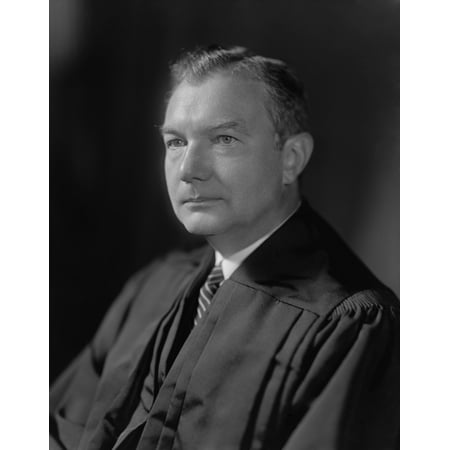
On April 1, 1940, Robert H. Jackson—age forty-eight, three
months into his service as Attorney General of the United States—gave one
of his most important, famous, enduring speeches: The Federal
Prosecutor.
1 He spoke on that Monday to the chief federal prosecutors of
his day, the U.S. Attorneys then serving in each Federal Judicial District
across the country. They were assembled in the Great Hall at the U.S.
Department of Justice in Washington, D.C., for the Second Annual
Conference of U.S. Attorneys.
Attorney General Jackson had moved up to that position from
having been Solicitor General of the U.S., then DOJ’s number two
position. As a new AG in 1940, he was leading a Department that had
been misdirected and, as a result, badly demoralized. This speech was part
of Jackson’s work to clean up DOJ. The speech offered his vision of
proper, ethical conduct by federal prosecutors. It was, you will note, the
antithesis of an April Fool’s Day message.
Jackson’s speech is quoted often. I recall first reading of it in
summer 1988 in Justice Scalia’s dissenting opinion in Morrison v. Olson,
which quotes from it liberally,2 and then getting and reading the whole
Jackson speech to get a better understanding of it in full, in context.
* Professor of Law, St. John’s University School of Law, New York City, and Elizabeth S.
Lenna Fellow, Robert H. Jackson Center, Jamestown, New York (www.roberthjackson.org).
I emailed earlier versions of this essay to The Jackson List on April 1, 2019, and on April 1, 2008.
For an archive of selected Jackson List posts, many of which include document images or
photographs, visit http://thejacksonlist.com. This essay is posted there as a PDF file with “live”
hyperlinks.
To subscribe to The Jackson List, which does not display recipient identities or distribute their
email addresses, send “subscribe” to barrettj@stjohns.edu.
1 The speech is published as Robert H. Jackson, The Federal Prosecutor, 31 JOURNAL OF
CRIMINAL LAW & CRIMINOLOGY 3-6 (1940), and Robert H. Jackson, The Federal Prosecutor, 24
JOURNAL OF THE AMERICAN JUDICATURE SOCIETY 18-20 (June 1940).
2 487 U.S. 654 (1988), available at www.law.cornell.edu/supremecourt/text/487/654. Justice
Scalia, in his solo dissent from the Supreme Court’s decision explaining the constitutionality of the
independent counsel law, first quoted two full paragraphs (almost four hundred words) from what he
described as Jackson’s “memorable speech to the United States Attorneys,
” and then later quoted
one of Jackson’s sentences a second time. See id. at 727-28 & 730 (Scalia, J., dissenting).————————————————————————————————————
ATTORNEY GENERAL JACKSON’S “THE FEDERAL PROSECUTOR” (1940)
————————————————————————————————————
I have read it many times since then. It was, for example, handed
out as assigned reading to many attorneys by a senior DOJ official when I
worked in there in the 1990s. I completed the assignment and was very
impressed by Jackson’s words. Since then, including recently, I have heard
or read most U.S. Attorneys General, Deputy Attorneys General, and other
senior DOJ officials quoting from Jackson’s speech in their own speeches,
other public remarks, and written work.
Attorney General Jackson’s speech bears rereading in full. It also
bears what he hoped in 1940 that it would accomplish: absorption and then
implementation by every “gentleman,” today every gentleperson, who
wields prosecutorial power.
* * *
The Federal Prosecutor
By Robert H. Jackson
Attorney General of the United States
April 1, 1940
It would probably be within the range of that exaggeration
permitted in Washington to say that assembled in this room is one of the
most powerful peace-time forces known to our country. The prosecutor
has more control over life, liberty, and reputation than any other person in
America. His discretion is tremendous. He can have citizens investigated
and, if he is that kind of person, he can have this done to the tune of public
statements and veiled or unveiled intimations. Or the prosecutor may
choose a more subtle course and simply have a citizen’s friends
interviewed. The prosecutor can order arrests, present cases to the grand
jury in secret session, and on the basis of his one-sided presentation of the
facts, can cause the citizen to be indicted and held for trial. He may
dismiss the case before trial, in which case the defense never has a chance
to be heard. Or he may go on with a public trial. If he obtains a
conviction, the prosecutor can still make recommendations as to sentence,
as to whether the prisoner should get probation or a suspended sentence,
and after he is put away, as to whether he is a fit subject for parole. While
the prosecutor at his best is one of the most beneficent forces in our
2————————————————————————————————————
ATTORNEY GENERAL JACKSON’S “THE FEDERAL PROSECUTOR” (1940)
————————————————————————————————————
society, when he acts from malice or other base motives, he is one of the
worst.
These powers have been granted to our law-enforcement agencies
because it seems necessary that such a power to prosecute be lodged
somewhere. This authority has been granted by people who really wanted
the right thing done—wanted crime eliminated—but also wanted the best
in our American traditions preserved.
Because of this immense power to strike at citizens, not with mere
individual strength, but with all the force of government itself, the post of
Federal District Attorney from the very beginning has been safeguard by
presidential appointment, requiring confirmation of the Senate of the
United States. You are thus required to win an expression of confidence in
your character by both the legislative and the executive branches of the
government before assuming the responsibilities of a federal prosecutor.
Your responsibility in your several districts for law enforcement
and for its methods cannot be wholly surrendered to Washington, and
ought not to be assumed by a centralized Department of Justice. It is an
unusual and rare instance in which the local District Attorney should be
superseded in the handling of litigation, except where he requests help of
Washington. It is also clear that with his knowledge of local sentiment and
opinion, his contact with and intimate knowledge of the views of the court,
and his acquaintance with the feelings of the group from which jurors are
drawn, it is an unusual case in which his judgment should be overruled.
Experience, however, has demonstrated that some measure of
centralized control is necessary. In the absence of it different district
attorneys were striving for different interpretations or applications of an
Act, or were pursuing different conceptions of policy. Also, to put it
mildly, there were differences in the degree of diligence and zeal in
different districts. To promote uniformity of policy and action, to establish
some standards of performance, and to make available specialized help,
some degree of centralized administration was found necessary.
Our problem, of course, is to balance these opposing
considerations. I desire to avoid any lessening of the prestige and influence
of the district attorneys in their districts. At the same time we must
proceed in all districts with that uniformity of policy which is necessary to
the prestige of federal law.
3————————————————————————————————————
ATTORNEY GENERAL JACKSON’S “THE FEDERAL PROSECUTOR” (1940)
————————————————————————————————————
Nothing better can come out of this meeting of law enforcement
officers than a rededication to the spirit of fair play and decency that should
animate the federal prosecutor. Your positions are of such independence
and importance that while you are being diligent, strict, and vigorous in
law enforcement you can also afford to be just. Although the government
technically loses its case, it has really won if justice has been done. The
lawyer in public office is justified in seeking to leave behind him a good
record. But he must remember that his most alert and severe, but just,
judges will be the members of his own profession, and that lawyers rest
their good opinion of each other not merely on results accomplished but on
the quality of the performance. Reputation has been called “the shadow
cast by one’s daily life.” Any prosecutor who risks his day-to-day
professional name for fair dealing to build up statistics of success has a
perverted sense of practical values, as well as defects of character.
Whether one seeks promotion to a judgeship, as many prosecutors rightly
do, or whether he returns to private practice, he can have no better asset
than to have his profession recognize that his attitude toward those who
feel his power has been dispassionate, reasonable and just.
The federal prosecutor has now been prohibited from engaging in
political activities. I am convinced that a good-faith acceptance of the
spirit and letter of that doctrine will relieve many district attorneys from the
embarrassment of what have heretofore been regarded as legitimate
expectations of political service. There can also be no doubt that to be
closely identified with the intrigue, the money raising, and the machinery
of a particular party or faction may present a prosecuting officer with
embarrassing alignments and associations. I think the Hatch Act should be
utilized by federal prosecutors as a protection against demands on their
time and their prestige to participate in the operation of the machinery of
practical politics.
There is a most important reason why the prosecutor should have,
as nearly as possible, a detached and impartial view of all groups in his
community. Law enforcement is not automatic. It isn’t blind. One of the
greatest difficulties of the position of prosecutor is that he must pick his
cases, because no prosecutor can even investigate all of the cases in which
he receives complaints. If the Department of Justice were to make even a
pretense of reaching every probable violation of federal law, ten times its
present staff would be inadequate. We know that no local police force can
strictly enforce the traffic laws, or it would arrest half the driving
population on any given morning. What every prosecutor is practically
4————————————————————————————————————
ATTORNEY GENERAL JACKSON’S “THE FEDERAL PROSECUTOR” (1940)
————————————————————————————————————
required to do it to select the cases for prosecution and to select those in
which the offense is the most flagrant, the public harm the greatest, and the
proof the most certain.
If the prosecutor is obliged to choose his cases, it follows that he
can choose his defendants. Therein is the most dangerous power of the
prosecutor: that he will pick people that he thinks he should get, rather
than pick cases that need to be prosecuted. With the law books filled with
a great assortment of crimes, a prosecutor stands a fair chance of finding at
least a technical violation of some act on the part of almost anyone. In
such a case, it is not a question of discovering the commission of a crime
and then looking for the man who has committed it, it is a question of
picking the man and then searching the law books, or putting investigators
to work, to pin some offense on him. It is in this realm—in which the
prosecutor picks some person whom he dislikes or desires to embarrass, or
selects some group of unpopular persons and then looks for an offense, that
the greatest danger of abuse of prosecuting power lies. It is here that law
enforcement becomes personal, and the real crime becomes that of being
unpopular with the predominant or governing group, being attached to the
wrong political views, or being personally obnoxious to or in the way of
the prosecutor himself.
In times of fear or hysteria political, racial, religious, social, and
economic groups, often from the best of motives, cry for the scalps of
individuals or groups because they do not like their views. Particularly do
we need to be dispassionate and courageous in those cases which deal with
so-called “subversive activities.” They are dangerous to civil liberty
because the prosecutor has no definite standards to determine what
constitutes a “subversive activity,” such as we have for murder or larceny.
Activities which seem benevolent and helpful to wage earners, persons on
relief, or those who are disadvantaged in the struggle for existence may be
regarded as “subversive” by those whose property interests might be
burdened or affected thereby. Those who are in office are apt to regard as
“subversive” the activities of any of those who would bring about a change
of administration. Some of our soundest constitutional doctrines were once
punished as subversive. We must not forget that it was not so long ago that
both the term “Republican” and the term “Democrat” were epithets with
sinister meaning to denote persons of radical tendencies that were
“subversive” of the order of things then dominant.
5————————————————————————————————————
ATTORNEY GENERAL JACKSON’S “THE FEDERAL PROSECUTOR” (1940)
————————————————————————————————————
In the enforcement of laws which protect our national integrity and
existence, we should prosecute any and every act of violation, but only
overt acts, not the expression of opinion, or activities such as the holding of
meetings, petitioning of Congress, or dissemination of news or opinions.
Only by extreme care can we protect the spirit as well as the letter of our
civil liberties, and to do so is a responsibility of the federal prosecutor.
Another delicate task is to distinguish between the federal and the
local in law-enforcement activities. We must bear in mind that we are
concerned only with the prosecution of acts which the Congress has made
federal offenses. Those acts we should prosecute regardless of local
sentiment, regardless of whether it exposes lax local enforcement,
regardless of whether it makes or breaks local politicians.
But outside of federal law each locality has the right under our
system of government to fix its own standards of law enforcement and of
morals. And the moral climate of the United States is as varied as its
physical climate. For example, some states legalize and permit gambling,
some states prohibit it legislatively and protect it administratively, and
some try to prohibit it entirely. The same variation of attitudes towards
other law-enforcement problems exists. The federal government could not
enforce one kind of law in one place and another kind elsewhere. It could
hardly adopt strict standards for loose states or loose standards for strict
states without doing violence to local sentiment. In spite of the temptation
to divert our power to local conditions where they have become offensive
to our sense of decency, the only long-term policy that will save federal
justice from being discredited by entanglements with local politics is that it
confine itself to strict and impartial enforcement of federal law, letting the
chips fall in the community where they may. Just as there should be no
permitting of local considerations to stop federal enforcement, so there
should be no striving to enlarge our power over local affairs and no use of
federal prosecutions to exert an indirect influence that would be unlawful if
exerted directly.
The qualities of a good prosecutor are as elusive and as impossible
to define as those which mark a gentleman. And those who need to be told
would not understand it anyway. A sensitiveness to fair play and
sportsmanship is perhaps the best protection against the abuse of power,
and the citizen’s safety lies in the prosecutor who tempers zeal with human
kindness, who seeks truth and not victims, who serves the law and not
factional purposAttorney General Jackson on
“The Federal Prosecutor” (1940)
John Q. Barrett*
Copyright © 2019 by John Q. Barrett.
All rights reserved.
On April 1, 1940, Robert H. Jackson—age forty-eight, three
months into his service as Attorney General of the United States—gave one
of his most important, famous, enduring speeches: The Federal
Prosecutor.
1 He spoke on that Monday to the chief federal prosecutors of
his day, the U.S. Attorneys then serving in each Federal Judicial District
across the country. They were assembled in the Great Hall at the U.S.
Department of Justice in Washington, D.C., for the Second Annual
Conference of U.S. Attorneys.
Attorney General Jackson had moved up to that position from
having been Solicitor General of the U.S., then DOJ’s number two
position. As a new AG in 1940, he was leading a Department that had
been misdirected and, as a result, badly demoralized. This speech was part
of Jackson’s work to clean up DOJ. The speech offered his vision of
proper, ethical conduct by federal prosecutors. It was, you will note, the
antithesis of an April Fool’s Day message.
Jackson’s speech is quoted often. I recall first reading of it in
summer 1988 in Justice Scalia’s dissenting opinion in Morrison v. Olson,
which quotes from it liberally,2 and then getting and reading the whole
Jackson speech to get a better understanding of it in full, in context.
* Professor of Law, St. John’s University School of Law, New York City, and Elizabeth S.
Lenna Fellow, Robert H. Jackson Center, Jamestown, New York (www.roberthjackson.org).
I emailed earlier versions of this essay to The Jackson List on April 1, 2019, and on April 1, 2008.
For an archive of selected Jackson List posts, many of which include document images or
photographs, visit http://thejacksonlist.com. This essay is posted there as a PDF file with “live”
hyperlinks.
To subscribe to The Jackson List, which does not display recipient identities or distribute their
email addresses, send “subscribe” to barrettj@stjohns.edu.
1 The speech is published as Robert H. Jackson, The Federal Prosecutor, 31 JOURNAL OF
CRIMINAL LAW & CRIMINOLOGY 3-6 (1940), and Robert H. Jackson, The Federal Prosecutor, 24
JOURNAL OF THE AMERICAN JUDICATURE SOCIETY 18-20 (June 1940).
2 487 U.S. 654 (1988), available at www.law.cornell.edu/supremecourt/text/487/654. Justice
Scalia, in his solo dissent from the Supreme Court’s decision explaining the constitutionality of the
independent counsel law, first quoted two full paragraphs (almost four hundred words) from what he
described as Jackson’s “memorable speech to the United States Attorneys,
” and then later quoted
one of Jackson’s sentences a second time. See id. at 727-28 & 730 (Scalia, J., dissenting).————————————————————————————————————
ATTORNEY GENERAL JACKSON’S “THE FEDERAL PROSECUTOR” (1940)
————————————————————————————————————
I have read it many times since then. It was, for example, handed
out as assigned reading to many attorneys by a senior DOJ official when I
worked in there in the 1990s. I completed the assignment and was very
impressed by Jackson’s words. Since then, including recently, I have heard
or read most U.S. Attorneys General, Deputy Attorneys General, and other
senior DOJ officials quoting from Jackson’s speech in their own speeches,
other public remarks, and written work.
Attorney General Jackson’s speech bears rereading in full. It also
bears what he hoped in 1940 that it would accomplish: absorption and then
implementation by every “gentleman,” today every gentleperson, who
wields prosecutorial power.
* * *
The Federal Prosecutor
By Robert H. Jackson
Attorney General of the United States
April 1, 1940
It would probably be within the range of that exaggeration
permitted in Washington to say that assembled in this room is one of the
most powerful peace-time forces known to our country. The prosecutor
has more control over life, liberty, and reputation than any other person in
America. His discretion is tremendous. He can have citizens investigated
and, if he is that kind of person, he can have this done to the tune of public
statements and veiled or unveiled intimations. Or the prosecutor may
choose a more subtle course and simply have a citizen’s friends
interviewed. The prosecutor can order arrests, present cases to the grand
jury in secret session, and on the basis of his one-sided presentation of the
facts, can cause the citizen to be indicted and held for trial. He may
dismiss the case before trial, in which case the defense never has a chance
to be heard. Or he may go on with a public trial. If he obtains a
conviction, the prosecutor can still make recommendations as to sentence,
as to whether the prisoner should get probation or a suspended sentence,
and after he is put away, as to whether he is a fit subject for parole. While
the prosecutor at his best is one of the most beneficent forces in our
2————————————————————————————————————
ATTORNEY GENERAL JACKSON’S “THE FEDERAL PROSECUTOR” (1940)
————————————————————————————————————
society, when he acts from malice or other base motives, he is one of the
worst.
These powers have been granted to our law-enforcement agencies
because it seems necessary that such a power to prosecute be lodged
somewhere. This authority has been granted by people who really wanted
the right thing done—wanted crime eliminated—but also wanted the best
in our American traditions preserved.
Because of this immense power to strike at citizens, not with mere
individual strength, but with all the force of government itself, the post of
Federal District Attorney from the very beginning has been safeguard by
presidential appointment, requiring confirmation of the Senate of the
United States. You are thus required to win an expression of confidence in
your character by both the legislative and the executive branches of the
government before assuming the responsibilities of a federal prosecutor.
Your responsibility in your several districts for law enforcement
and for its methods cannot be wholly surrendered to Washington, and
ought not to be assumed by a centralized Department of Justice. It is an
unusual and rare instance in which the local District Attorney should be
superseded in the handling of litigation, except where he requests help of
Washington. It is also clear that with his knowledge of local sentiment and
opinion, his contact with and intimate knowledge of the views of the court,
and his acquaintance with the feelings of the group from which jurors are
drawn, it is an unusual case in which his judgment should be overruled.
Experience, however, has demonstrated that some measure of
centralized control is necessary. In the absence of it different district
attorneys were striving for different interpretations or applications of an
Act, or were pursuing different conceptions of policy. Also, to put it
mildly, there were differences in the degree of diligence and zeal in
different districts. To promote uniformity of policy and action, to establish
some standards of performance, and to make available specialized help,
some degree of centralized administration was found necessary.
Our problem, of course, is to balance these opposing
considerations. I desire to avoid any lessening of the prestige and influence
of the district attorneys in their districts. At the same time we must
proceed in all districts with that uniformity of policy which is necessary to
the prestige of federal law.
3————————————————————————————————————
ATTORNEY GENERAL JACKSON’S “THE FEDERAL PROSECUTOR” (1940)
————————————————————————————————————
Nothing better can come out of this meeting of law enforcement
officers than a rededication to the spirit of fair play and decency that should
animate the federal prosecutor. Your positions are of such independence
and importance that while you are being diligent, strict, and vigorous in
law enforcement you can also afford to be just. Although the government
technically loses its case, it has really won if justice has been done. The
lawyer in public office is justified in seeking to leave behind him a good
record. But he must remember that his most alert and severe, but just,
judges will be the members of his own profession, and that lawyers rest
their good opinion of each other not merely on results accomplished but on
the quality of the performance. Reputation has been called “the shadow
cast by one’s daily life.” Any prosecutor who risks his day-to-day
professional name for fair dealing to build up statistics of success has a
perverted sense of practical values, as well as defects of character.
Whether one seeks promotion to a judgeship, as many prosecutors rightly
do, or whether he returns to private practice, he can have no better asset
than to have his profession recognize that his attitude toward those who
feel his power has been dispassionate, reasonable and just.
The federal prosecutor has now been prohibited from engaging in
political activities. I am convinced that a good-faith acceptance of the
spirit and letter of that doctrine will relieve many district attorneys from the
embarrassment of what have heretofore been regarded as legitimate
expectations of political service. There can also be no doubt that to be
closely identified with the intrigue, the money raising, and the machinery
of a particular party or faction may present a prosecuting officer with
embarrassing alignments and associations. I think the Hatch Act should be
utilized by federal prosecutors as a protection against demands on their
time and their prestige to participate in the operation of the machinery of
practical politics.
There is a most important reason why the prosecutor should have,
as nearly as possible, a detached and impartial view of all groups in his
community. Law enforcement is not automatic. It isn’t blind. One of the
greatest difficulties of the position of prosecutor is that he must pick his
cases, because no prosecutor can even investigate all of the cases in which
he receives complaints. If the Department of Justice were to make even a
pretense of reaching every probable violation of federal law, ten times its
present staff would be inadequate. We know that no local police force can
strictly enforce the traffic laws, or it would arrest half the driving
population on any given morning. What every prosecutor is practically
4————————————————————————————————————
ATTORNEY GENERAL JACKSON’S “THE FEDERAL PROSECUTOR” (1940)
————————————————————————————————————
required to do it to select the cases for prosecution and to select those in
which the offense is the most flagrant, the public harm the greatest, and the
proof the most certain.
If the prosecutor is obliged to choose his cases, it follows that he
can choose his defendants. Therein is the most dangerous power of the
prosecutor: that he will pick people that he thinks he should get, rather
than pick cases that need to be prosecuted. With the law books filled with
a great assortment of crimes, a prosecutor stands a fair chance of finding at
least a technical violation of some act on the part of almost anyone. In
such a case, it is not a question of discovering the commission of a crime
and then looking for the man who has committed it, it is a question of
picking the man and then searching the law books, or putting investigators
to work, to pin some offense on him. It is in this realm—in which the
prosecutor picks some person whom he dislikes or desires to embarrass, or
selects some group of unpopular persons and then looks for an offense, that
the greatest danger of abuse of prosecuting power lies. It is here that law
enforcement becomes personal, and the real crime becomes that of being
unpopular with the predominant or governing group, being attached to the
wrong political views, or being personally obnoxious to or in the way of
the prosecutor himself.
In times of fear or hysteria political, racial, religious, social, and
economic groups, often from the best of motives, cry for the scalps of
individuals or groups because they do not like their views. Particularly do
we need to be dispassionate and courageous in those cases which deal with
so-called “subversive activities.” They are dangerous to civil liberty
because the prosecutor has no definite standards to determine what
constitutes a “subversive activity,” such as we have for murder or larceny.
Activities which seem benevolent and helpful to wage earners, persons on
relief, or those who are disadvantaged in the struggle for existence may be
regarded as “subversive” by those whose property interests might be
burdened or affected thereby. Those who are in office are apt to regard as
“subversive” the activities of any of those who would bring about a change
of administration. Some of our soundest constitutional doctrines were once
punished as subversive. We must not forget that it was not so long ago that
both the term “Republican” and the term “Democrat” were epithets with
sinister meaning to denote persons of radical tendencies that were
“subversive” of the order of things then dominant.
5————————————————————————————————————
ATTORNEY GENERAL JACKSON’S “THE FEDERAL PROSECUTOR” (1940)
————————————————————————————————————
In the enforcement of laws which protect our national integrity and
existence, we should prosecute any and every act of violation, but only
overt acts, not the expression of opinion, or activities such as the holding of
meetings, petitioning of Congress, or dissemination of news or opinions.
Only by extreme care can we protect the spirit as well as the letter of our
civil liberties, and to do so is a responsibility of the federal prosecutor.
Another delicate task is to distinguish between the federal and the
local in law-enforcement activities. We must bear in mind that we are
concerned only with the prosecution of acts which the Congress has made
federal offenses. Those acts we should prosecute regardless of local
sentiment, regardless of whether it exposes lax local enforcement,
regardless of whether it makes or breaks local politicians.
But outside of federal law each locality has the right under our
system of government to fix its own standards of law enforcement and of
morals. And the moral climate of the United States is as varied as its
physical climate. For example, some states legalize and permit gambling,
some states prohibit it legislatively and protect it administratively, and
some try to prohibit it entirely. The same variation of attitudes towards
other law-enforcement problems exists. The federal government could not
enforce one kind of law in one place and another kind elsewhere. It could
hardly adopt strict standards for loose states or loose standards for strict
states without doing violence to local sentiment. In spite of the temptation
to divert our power to local conditions where they have become offensive
to our sense of decency, the only long-term policy that will save federal
justice from being discredited by entanglements with local politics is that it
confine itself to strict and impartial enforcement of federal law, letting the
chips fall in the community where they may. Just as there should be no
permitting of local considerations to stop federal enforcement, so there
should be no striving to enlarge our power over local affairs and no use of
federal prosecutions to exert an indirect influence that would be unlawful if
exerted directly.
The qualities of a good prosecutor are as elusive and as impossible
to define as those which mark a gentleman. And those who need to be told
would not understand it anyway. A sensitiveness to fair play and
sportsmanship is perhaps the best protection against the abuse of power,
and the citizen’s safety lies in the prosecutor who tempers zeal with human
kindness, who seeks truth and not victims, who serves the law and not
factional purpos


No comments:
Post a Comment