Friday, April 06, 2018

"Believe it or NOT!": Greedy developers caterwauling over increased impact fees in St. Johns County, Florida

Developer fanboy STUART KORFHAGE's latest one-sided pro-developer PR puff piece. Pitiful. Putrid. Dull.
  •  Quotes NO independent economics or legal experts. 
  • Quotes NO public interest advocates. 
  • Quotes NO one from government. 
  • Quotes NOTHING  from findings of fact and conclusions of law by St. Johns County Commissioners in their enacting ordinance insufficiently increasing impact fees, which are NOT high enough.


Builders worry impact fees will price more customers out of St. Johns County
Stuart Korfhage
Posted at 6:29 AM
Updated at 6:29 AM
St. Augustine Record

While home building leaders in Northeast Florida can’t predict all of the results from the rise in residential impact fees, they are sure about one thing: Buyers are going to pay more.

Days after the St. Johns County Commission voted to implement a new fee schedule for residential and commercial construction, industry leaders voiced their concerns about what will happen.

Joe Blanco, division president of ICI Homes’ North Florida Division, said the higher fees — increases of about $1,500 to $9,600, depending on the size of the home — are going to add a lot of pressure to the local market.

Even before the new fees go into effect, which will begin to be phased in July 1, St. Johns County already had high home prices compared to the surrounding area. According to the Northeast Florida Association of Realtors, the median home price in this county (new and existing) for 2017 was $312,500 compared with $180,000 for Duval; $189,000 for Clay; and $229,000 for Nassau.

ICI builds in all of those markets, and Blanco said some buyers might start looking at places other than St. Johns County when shopping for a new home.

“It’s still a great county, and the schools do so much for you where people want to be there,” Blanco said. “It’s still tough when you try to explain why they’re paying so much more compared to outlying counties. That’s still a little bit of an issue there.

“On the developer side, you have a lot more developers looking at Clay County and Nassau County now because St. Johns County’s prices are getting so high. To have a first-time home buyer in St. Johns County is kind of getting tough. It’s getting tough to meet that price point where they can afford it.”

Chris Dostie, president of Dostie Homes and president of the Northeast Florida Builders Association, said he’s also concerned about any additional costs passed on to the customers.

“Every time a home price is raised, it eliminates somebody from the marketplace,” Dostie said. “The increase is significant. It’s something that ultimately the end user, the buyer, is paying for.”


Blanco said the fee increase in homes of 2,501 to 3,750 square feet of about $6,000 to a total of $19,924 will affect the highest number of his company’s clients.

“That’s really the sweet spot for the market, that 2,500- to 2,600-square-foot range where more of your medium income buyers are,” he said.

Builders have pointed to the fact that Duval County has no impact fees as one of the reasons homes are less expensive there. And in Nassau County, the fees are much lower.


But the currents fees — $9,770, or $13,952 for homes larger than 1,800 square feet — have done little to slow residential growth in the county. St. Johns County had more new home permits issued than Duval County last year.

For 2018, St. Johns County is also off to a blazing start. There were 341 residential permits issued in March to bring the total to 1,010 for the calendar year. Duval County issued 506 permits in the first months of the year, according to NEFBA. March numbers have not been released for Duval.

“The county is a very popular place for developers to develop, for builders to buy lots to build,” Dostie said. “I think there will naturally be demand to be in St. Johns County, but you cannot ignore the fact that every time you raise prices it eliminates people’s ability to purchase within the county.

“It would be naive of anybody to think that this increase is not going to eliminate a sizeable group’s ability to purchase and live in St. Johns County.”


With the impact fees set to start rising by this summer, Blanco said he expects a surge in permitting activity in St. Johns County.

“The building department is going to be very busy until July 1, for sure,” he said.

Dostie said he wishes it didn’t have to be this way. He said the county government is putting a lot of pressure on the housing industry to pay for so much of the cost of growth. The consequence is that housing costs for everyone could become increasingly expensive.

“Every county government ... should be trying to provide a climate that enables all the developers and builders who would go and purchase and invest to build in a given area so the first-time home buyer and the luxury home buyer have a spot within the county,” Dostie said.

Instead of just raising the impact fees, Dostie said it might have been better for the county to look in other places for revenue, such as the gas tax or sales tax.

“It appears to me there are more broad-based ways to meet the funding for the growth that is being created within the county,” Dostie said. “It always is difficult for me to stomach as a home builder when it feels punitive to my industry.

“Any time you target one sector of people and say that’s how we’re going to fund growth or keep pace with growth, it’s punitive (sic).”


Comments

Follow
REALTIME
Edward Adelbert Slavin
  • Edward Adelbert Slavin
  •  
  • Rank 0
Who owns ICI? How large is it? What is its business plan? What data supports its emotional response? The plural of "anecdote" is not "data." Here, we have not even an anecdote. "Development" Reporter STUART KORFHAGE almost NEVER asks basic questions.
  • 6 minutes ago (edited recently)
Edward Adelbert Slavin
  • Edward Adelbert Slavin
  •  
  • Rank 0
  • Just now
Edward Adelbert Slavin
  • Edward Adelbert Slavin
  •  
  • Rank 0
"Worse than any carpetbagger."-- St. Johns County developers, described by former St. Johns County Commission Chairman Ben Rich, Sr. Patronizing to print this baby-talking propaganda story about predatory corporations singing the blues.
  • 1 hour ago (edited)
Richard Guzinya
  • Richard Guzinya
  •  
  • Rank 0
Due to irre$pon$ible governance by some current and some prior county commissioner$, thousands of prior purchasers of new homes have shifted the financial burden to future new home buyers. Some of those irresponsible former commissioners may have moved on to Tallahassee. Now the same construction industry that filled the political coffers are singing the blues. Bless their hearts!
  • 3 hours ago
Edward Adelbert Slavin
  • Edward Adelbert Slavin
  •  
  • Rank 0
1. One-sided story. Unsophisticated. Propaganda. Not one law professor or economist quoted. Dull. Dupey. Sheds more heat than light.  
2. Is anyone crying, besides the greedy "developers," crying in their champagne, who are being cast as "leaders'?" Is there martyrdom involved? This is one silly story. Developers testified at four public hearings. 
3. No mention of Dr. James Nicholas's economic study, St. Johns County Commission findings of fact and conclusions of law, the state of Florida case law, or valid public criticism that impact fees are not high enough to internalize external costs of "development," including all of the roads, schools, parks, police, fire, drainage and other infrastructure. Why? 
4. We in the "reality-based community" expect much better reporting from the Record.  
5. Stuart Korfhage's "beat" is "Development." He is a former sports reporter. Lacks any objectivity. History of writing biased, pro-developer stories, one bordering dangerously on libel (falsely accusing St. Augustine South neighbors of slashing tire at DOW PUD construction site). Never apologized? Never corrected? 
6. Why no designated environmental affairs reporter? GateHouse-Austin: will you please remedy today? 
7. Facts matter.  
8. Kindly report all of the news, without fear or favor of special interests.  
9. Read Tom Wicker's "On Press?" Provincial local papers which kiss up to local industries (whether tobacco or "development") do not fulfill the "watchdog" function our Founders had in mind for newspapers.  
10. I challenge the Record to sponsor video discussion panels on this and other issues. Engage your readers, instead of studiously ignoring citizen concerns and testimony, acting like the Record is written for the Chamber of Commerce and white, male, Republicans.« less
  • 4 hours ago (edited)
Richard Guzinya
  • Richard Guzinya
  •  
  • Rank 0
Mr. Slavin, the Record sadly, is a joke. Most of the Record content is parroted from sources such as the AP, fillers such as HOA news, etc. There is little local reporting/local news other than shallow fluff pieces. Much of the space in their building is rented out. Even their editorials are frequently copied from other papers. 

I suspect that the reporters are so understaffed and controlled by "corporate," that they don't have the ability nor freedom to do other than fluff pieces, i.e. lacking investigative effort. 

RIP Record.« less
  • 3 hours ago
Edward Adelbert Slavin
  • Edward Adelbert Slavin
  •  
  • Rank 0
@Richard Guzinya Once upon. a time, in a place far, far away, I was editor of a weekly newspaper in Appalachia, and we reported the NEWS. Too much to ask of SAR?
  • 1 hour ago
NigelVer2
  • NigelVer2
  •  
  • Rank 0
Builders worry impact fees will price more customers out of St. Johns County Good!!!!
  • 5 hours ago
Edward Adelbert Slavin
  • Edward Adelbert Slavin
  •  
  • Rank 0
@NigelVer2 Amen!
  • 4 hours ago
Richard Guzinya
  • Richard Guzinya
  •  
  • Rank 0
@Edward Adelbert Slavin  

Double Amen.

JOHN PARKER rightly resigned over segregation remark, but media focused on use of phrase "Colored People." Why?


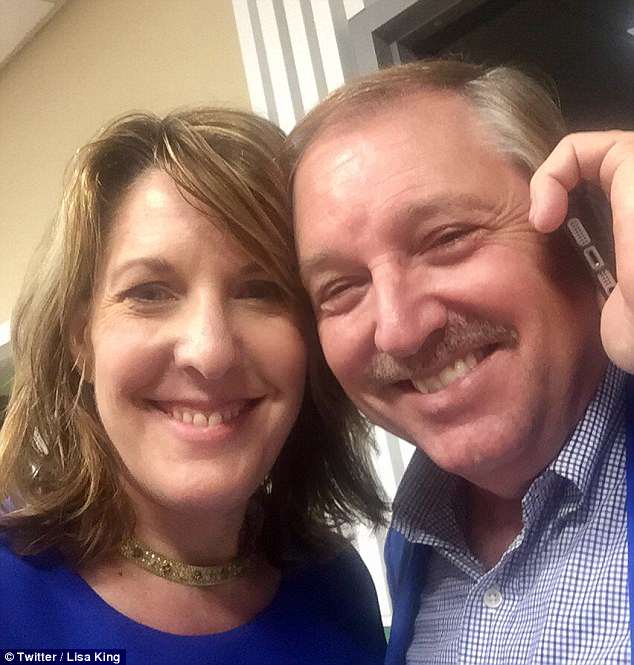
ALL IN THE FAMILY: Resignation signed by JOHN PARKER (right), Duval County member of the Democratic National Committee, who married to Duval County Chair LISA KING (left), a lobbyist, who called for his resignation two months after his remarks.

JOHN PARKER rightly after racist pro-segregation remarks. Took two months for remarks to become public. Pitiful.

Then PARKER's wife, the Duval County Chair, LISA KING, called on JOHN PARKER to resign.

She's a pro, who was present when remarks were made? Right? Took two months.

Duval County Democratic Chair LISA KING, PARKER's wife is no hausfrau, no Edith Bunker stay-at-home: she is a principal in Langton Associates, which lobbies for government grants. LISA KING's firm website biography says "has extensive contacts in state and federal government and is a registered lobbyist in Tallahassee and Washington, D.C."
Ms. King is the firm’s specialist in the fields of:
 Environmental Land Acquisition  Historic Preservation
 Recreation
 Coastal Management
 Cultural Facilities  Disaster Mitigation

What do you expect?   Archie Bunker is alive and well and living in Jacksonville, de facto biggest city in South Georgia.  Stetson Kennedy said all our local St. Johns County KKK members became Republicans.  In Jacksonville, even the Democratic Party resembles a movie or television drama or comedy about wicked South-people.

By comparison, is St. Augustine becoming suave, debonair and sophisticated?

DNC member JOHN PARKER's reported remarks in favor of segregation were offensive. 

But the lede in news stories focused on his use of the term "Colored People."  Why?

Yes, like the word "vagrant," the phrase "Colored People" is obsolete, antique and pretty offensive.

DNC member PARKER apparently freely used the term, showing his obsolescence.   A retired union leader, PARKER's word choice shows his cabined Weltanschauung.

But what about the National Association for the Advancement of Colored People (NAACP)?

In response to State Senator Audrey Gibson, will NAACP now change is name, its seal, and ask that all of its court victories be amended to include some less "offensive" name?

NAACP has a proud past and bright future.

I don't see NAACP changing its name to suit State Senator Audrey Gibson's whim of iron.

NAACP and the NAACP Legal Defense and Education Fund, Inc. ("Inc. Fund") are  enshrined and engraved in hundreds of successful civil rights lawsuits, like those led by Thurgood Marshall, later the first African-American Supreme Court Justice.  Justice Thurgood Marshall was appointed by President Lyndon Johnson, who like most Americans in the 1960s, was still saying "Colored People?"

If he were alive, would Justice Thurgood Marshall be laughing at the media's "Colored People" lede and the fact that journalists buried, missed and omitted what should have been the lede -- pro-segregation nincompoopery by DNC member JOHN PARKER.

Knowing that NAACP is still the NAACP, activists and journalists failed to ask critical questions. Was this another "created crisis?"

Why two month delay in learning about what he said?

Where's the journalism?  What else do we need to know about dysfunctional Florida political organizations? Where's the linguist being quoted in these stories?  Where's the research.

For example, Wikipedia reports NAACP's 2008 statement that use of the term "Colored People" was inoffensive, but archaic: "It's outdated and antiquated but not offensive."

"In 1851, an article in The New York Times referred to the "colored population".[7] In 1863, the War Department established the Bureau of Colored Troops.
The first twelve United States Census counts enumerated '"colored" people, who totaled nine million in 1900. The census counts of 1910–1960 enumerated "negroes." NPR reported that the "use of the phrase "colored people" peaked in books published in 1970."[8] "It's no disgrace to be colored," the black entertainer Bert Williams famously observed early in the century, "but it is awfully inconvenient."[9]
"Colored people lived in three neighborhoods that were clearly demarcated, as if by ropes or turnstiles," wrote Harvard professor Henry Louis Gates, Jr. about growing up in segregated West Virginia in the 1960s. "Welcome to the Colored Zone, a large stretched banner could have said.... Of course, the colored world was not so much a neighborhood as a condition of existence."[10]"For most of my childhood, we couldn't eat in restaurants or sleep in hotels, we couldn't use certain bathrooms or try on clothes in stores," recalls Gates. His mother retaliated by not buying clothes that she was not allowed to try on. He remembered hearing a white man deliberately calling his father by the wrong name: "'He knows my name, boy,' my father said after a long pause. 'He calls all colored people George.'" When Gates's cousin became the first black cheerleader at the local high school, she was not allowed to sit with the team and drink Coke from a glass but had to stand at the counter drinking from a paper cup.[10] Professor Gates also wrote about his experiences in his 1995 book, Colored People: A Memoir.[11]
In the 21st century, "colored" is generally regarded as an offensive term.[5][12] The term lives on in the National Association for the Advancement of Colored People, generally called the NAACP.[5] In 2008 Carla Sims, its communications director, said "the term 'colored' is not derogatory, [the NAACP] chose the word 'colored' because it was the most positive description commonly used [in 1909, when the association was founded]. It's outdated and antiquated but not offensive."[13]


------


Florida DNC official resigns after 'colored people' remark
BY MORGAN GSTALTER - 04/05/18 12:22 PM EDT 335
The Hill


A Florida Democratic National Committee (DNC) member resigned on Wednesday after other officials — including his wife — denounced his use of the term “colored people.”

In a letter obtained by Politico, John Parker offered his resignation as state committeeman of the Duval County Democratic Party and as a state DNC member after fierce pushback for his use of the term "colored people." He also reportedly praised segregation during a dinner party on Jan. 22.

“I misspoke and used language that was hurtful,” Parker wrote. “I apologized and pledged that I would learn from my mistake.”

Parker told Politico on Wednesday that he had simply misused the phrase when he intended to say “people of color.”
Diallo-Sekou Seabrooks, the head of the Black Commission in Jacksonville, told First Coast News that the remark did not appear to be an error.

“Why would you still think that 'colored' was cool? Because to me it's a Jim Crow terminology and it's unacceptable," Seabrooks said.

Seabrooks said Parker openly discussed problems created by integration of “colored people” into the city.

"I'm old enough to understand when people use context and frame that they are using it in and there was no joking in it," Seabrooks said. "Structural racism is as normal as the absence of a black agenda inside of the Democratic Party, which is 55 percent black."

Parker said that he was resigning for the good of the Democratic Party.

“I am confident that a full investigation would have shown that I erred with my mouth, not my heart,” Parker said.

Parker’s wife of 23 years, Duval County Democratic Executive Committee Chairwoman Lisa King, called on him to resign.

“Though it is painful and awkward to air this conflict publicly, I have told John from the beginning that the most appropriate course of action for him was to resign,” King told First Coast News in a written statement.

King said she had never heard him use the phrase “colored people” before and told him that his choice of words was offensive.

State Rep. Kimberly Daniels (D) told Politico that King should also resign because her silence “demonstrated her complicity.”

Daniels said this was not the first time Parker had used racially charged language.

“Preceding this instance, he allegedly referred to the Working People Caucus as the ‘Poor Black People Working Caucus' and called a constituent the 'mayor’s mammy,'" Daniels wrote in statement to Politico on Monday night.

Parker denied the allegations but still submitted his resignation after several other prominent Democrats insisted, including Florida Democratic Party Chairwoman Terrie Rizzo, state Sen. Audrey Gibson and two gubernatorial candidates, Gwen Graham and Andrew Gillum.

Gillum is the mayor of Tallahassee and the only African-American running for governor.

“While I do not believe John had any intent of malice in the manner in which he spoke, it is imperative that for the good of this city and the local and statewide party that he take this action,” Gibson said in a statement Wednesday.

Jeff Sessions wants to bribe judges to do his bidding (WaPo)


Read this article by retired U.S. Immigration Judge, Pepperdine Prof. Bruce Einhorn.

I was honored to represent seven U.S. Department of the Interior Indian Probate Judges in federal litigation.

My clients, the majority of Administrative Law Judges in DoI, were given lesser titles, lower pay and pressured to decide cases as Bush I appointees demanded. They were subjected to illegal orders and harassment, their judicial independence under attack, as documented in an American Bar Association's ABA Journal cover story quoting the judges and me, and in an article I wrote for the ABA Judges Journal.

Too often, agencies pressure judges, because there is no central corps of ALJs, unlike protections that exist in Florida and other states. (Florida's Department of Administrative Hearings help protect State of Florida ALJ independence.)

The violations of judicial independence sought by DONALD JOHN TRUMP -- exposed by Judge Einhorn -- must be remedied at once.


Jeff Sessions wants to bribe judges to do his bidding
The Washington Post
By Bruce J. Einhorn April 5 at 7:46 PM

Bruce J. Einhorn, an adjunct professor of immigration, asylum and refugee law at Pepperdine University, served as a U.S. immigration judge from 1990 to 2007.

It’s a principle that has been a hallmark of our legal culture: The president shouldn’t be able to tell judges what to do.

No longer. The Trump administration is intent on imposing a quota system on federal immigration judges, tying their evaluations to the number of cases they decide in a year. This is an affront to judicial independence and the due process of law.

I served as a U.S. immigration judge in Los Angeles for 17 years, presiding over cases brought against foreign-born noncitizens who Immigration and Customs Enforcement officers believed were in this country illegally and should thus be removed. My responsibility included hearing both ICE’s claims and the claims from respondents for relief from removal, which sometimes included asylum from persecution and torture.

As a judge, I swore to follow the Fifth Amendment of the U.S. Constitution, which guarantees that “no person” (not “no citizen”) is deprived of due process of law. Accordingly, I was obliged to conduct hearings that guaranteed respondents a full and reasonable opportunity on all issues raised against them.

My decisions and the manner in which I conducted hearings were subject to review before the U.S. Board of Immigration Appeals and U.S. courts of appeals. At no time was my judicial behavior subject to evaluation based on how quickly I completed hearings and decided cases. Although my colleagues on the bench and I valued efficiency, the most critical considerations were fairness, thoroughness and adherence to the Fifth Amendment. If our nativist president and his lapdog of an attorney general, Jeff Sessions, have their way, those most critical considerations will become a relic of justice.

Under the Trump-Sessions plan, each immigration judge, regardless of the nature and scope of proceedings assigned to him or her, will be required to complete 700 cases in a year to qualify for a “satisfactory” performance rating. It follows that only judges who complete more, perhaps many more, than 700 cases per year will qualify for a higher performance rating and, with it, a possible raise in pay.

Essentially, the administration’s plan is to bribe judges to hear and complete more cases regardless of their substance and complexity, with the corollary that judges who defy the quota imposed on them will be regarded as substandard and subject to penalties. The plan should be seen for what it is: an attempt to undermine judicial independence and compel immigration judges to look over their shoulders to make sure that the administration is smiling at them.

This is a genuine threat to the independence of the immigration bench. While Article III of the Constitution guarantees the complete independence of the federal district courts and courts of appeal, immigration judges are part of the executive branch. Notwithstanding the right of immigration judges to hear and decide cases as they believe they should under immigration law, they are unprotected from financial extortion and not-so-veiled political intimidation under the U.S. Administrative Procedure Act or any regulations.

Moreover, federal laws do not guarantee respondents in removal hearings a right to counsel, and a majority of those in such hearings are compelled to represent themselves before immigration judges, regardless of the complexity of their cases. Those who lack representation in removal hearings typically cannot afford it, and the funds to help legal aid organizations fill in for private attorneys are nowhere to be found.

Hearings in which respondents proceed pro se, or unrepresented, are often the most challenging and time-consuming for immigration judges, who must take care to assure that the procedural rights of those facing possible removal are protected and to guarantee that inarticulate relief claims are fully considered.

The Trump administration’s intention is clear: to intimidate supposedly independent judges to expedite cases, even if it undermines fairness — as will certainly be the case for pro se respondents. Every immigration judge knows that in general, it takes longer to consider and rule in favor of relief for a respondent than it does to agree with ICE and order deportation. The administration wants to use quotas to make immigration judges more an arm of ICE than independent adjudicators.

In my many years on the immigration bench, I learned that repressive nations had one thing in common: a lack of an independent judiciary. Due process requires judges free of political influence. Assembly-line justice is no justice at all.

Wednesday, April 04, 2018

ANNALS OF ST. AUGUSTINE: Did Ex-Mayor LEN WEEKS Commit Perjury About 62A Spanish Street "Accident": September 25, 2014 DON PEDRO FORNELLS HOUSE DESTRUCTION

Destruction of 211-year old Don Pedro Fornells House by ex-Mayor of St. Augustine LEN WEEKS on September 25, 2014 was no "accident." Yet seven incurious PZB members gave him another special zoning privilege April 3, not asking one question following up on my testimony. The City fined WEEKS the grand amount of $3700 for working without permits, collapsing Spanish colonial building as he ignored instructions from City building officials and his own engineer and architect. Violating the OSHA General Duty clause, ex-Mayor WEEKS risked lives of workers inside and outside the building. But OSHA took no action, based on a Jacksonville office policy of refusing to investigate building collapses unless a worker is hurt or killed.


"I'm not going to shake your hand. You're a piece of scum." -- So barked disgraced ex-Mayor Claude Leonard Weeks, Jr., a/k/a "LEN WEEKS," to me (Ed Slavin), April 3, 2018, in the St. Augustine City meeting room, after I congratulated him on his latest victory before a city board on behalf of his many businesses.

I had testified and frankly disputed WEEKS testifying under oath and misusing and abusing the word "accident" to describe what happened September 25, 2014 -- his working without permits, ignoring directions from his own and City experts, resulting in the destruction of 211-year old Don Pedro Fornells House as an "accident" should be treated as perjury.   WEEKS was fined $3700 for lawbreaking.  OSHA did nothing.  No word on DBPR complaints.

At the time of the destruction, non-resident WEEKS was chair of the City's Historic Architectural Review Board and its Parking and Traffic Committee.  When WEEKS resigned, City manager John Regan was in tears, stating WEEKS was his "mentor" on "historic preservation."

Contractor-landlord-politician WEEKS' character was at issue in a special use permit.  WEEKS did not dispute my testimony.

While Chair Sarah Ryan interrupted me, I explained the relevance and spoke the truth about the destruction of 62A Spanish Street, the property in quo in the application.  Everything I said was under oath and matter of public record.

Yet seven incurious members of the Planning and Zoning Board of the City of St. Augustine allowed property owner WEEKS' tenant to sell alcohol in the new building at that site.

WEEKS'  new 62A Spanish Street building lacks ADA access to the second floor and fire door for the second floor. Yet WEEKS' tenant, Bath Junkie, wanted to sell alcohol on the second floor.  It may now do it on the first floor, in connection with entertaining spouses and family members of people customizing bath products.

After WEEKS testified that the destruction of his building caused by his illegal work resulting in destroying an historic building was an "accident," I disputed it.

In retaliation and desperation for having been called out for his crime against St. Augustine history, WEEKS disrupted the meeting as he left.

As he walked by me, I said "congratulations," and reached out my hand to shake his hand.  WEEKS bellowed, " "I'm not going to shake your hand. You're a piece of scum."  I responded facetiously, "I love you too."  We both earned a rebuke from Ms. B.J. Kalaidi, but not the PZB chair, who had moved on to other business.

WEEKS' perjurious, false characterization of his destruction of 62A Spanish Street is noteworthy.


Ex-Mayors LEN WEEKS and JOE BOLES were exposed by Folio Weekly Magazine in 2014, contributing to BOLES' twin electoral defeats that year.

Nancy Shaver and Joe Boles survived the three-person primary, and "upstart" Nancy Shaver -- as the St. Augustine Record called her  (in an article by developer fanboy Stuart Korfhage).  Nancy Shaver then defeated Boles in the November 2014 general election.

The Folio article was about their long-term, below-market. no-bid lease of City property at 81 St. George Street.  The pair promised public restrooms as the come-on for the sweetheart deal which close in the early evening, resulting in the public pooping and pissing problems WEEKS testified to on February 26, 2018 in pursuit of another possibly unconstitutional ordinance governing "his" historic area.   I filed a March 4, 2018 USDOJ ADA complaint against the City of St. Augustine over its tenants WEEKS and BOLES failing to provide 24/7 ADA accessible restrooms in a tourist town with some six million visitors annually.