I saw Texas Agriculture Commissioner Jim Hightower speak at a food conference in Nashville circa 1978 and he said "They're stealing the alternatives, folks!"
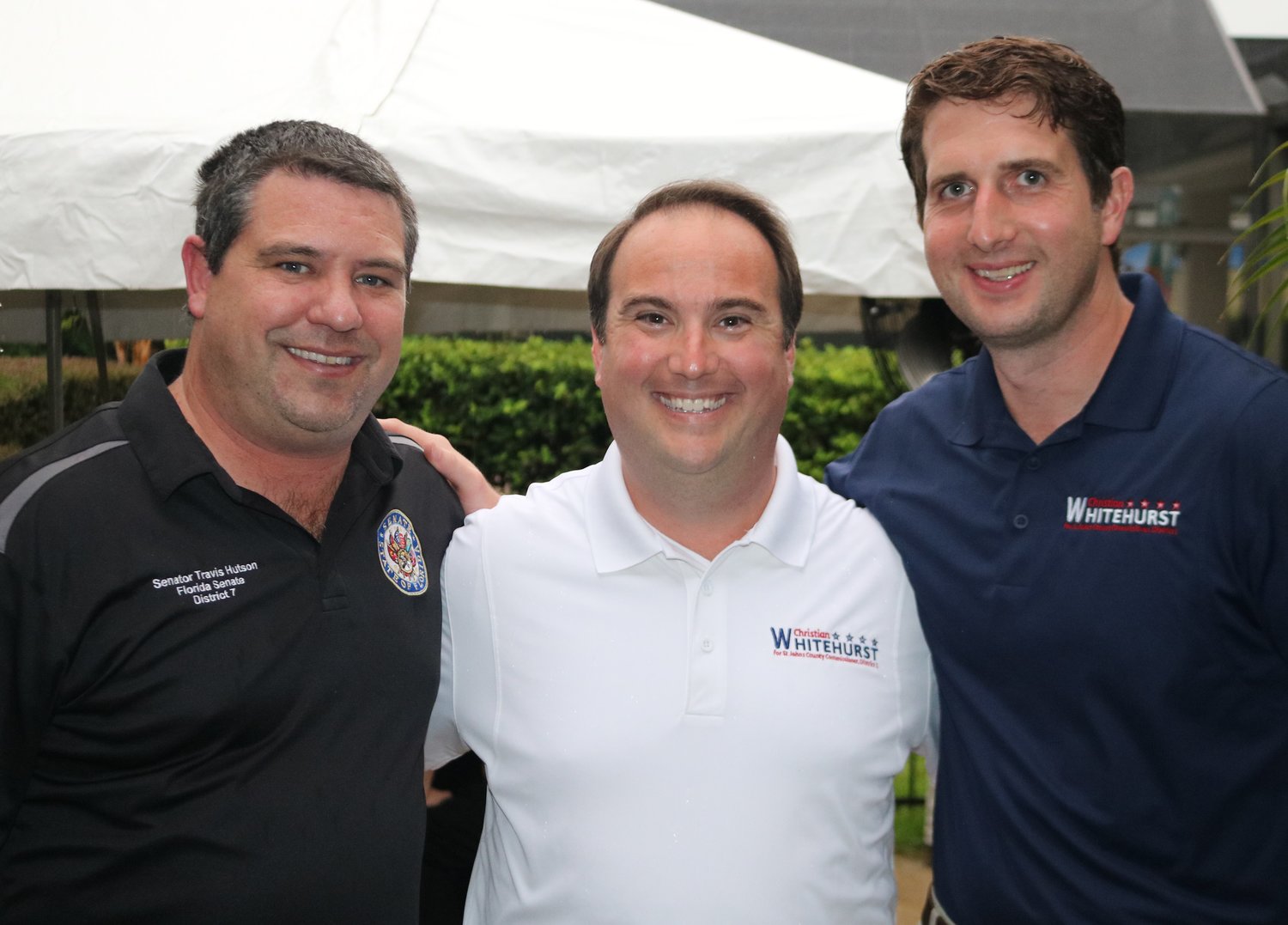
TRAVIS JAMES HUTSON is now the $75,000/year lobbyist for St. Johns County Clerk of Courts and Comptroller. Ex-Senator-developer TRAVIS JAMES HUTSON is responsible for the Flora-DUH legislature banning ranked choice voting.
What rough beast eliminates peoples' rights to ranked choice voting?
Pray for TRAVIS JAMES HUTSON, et pals,, my friends.
"They're stealing the alternatives, folks!"
From Florida Politics:
Lawmakers explore ranked-choice voting possibilities for Florida
Jacob Ogles, Florida Politics, January 11, 2022
No city in Florida has ever fully enacted instant runoffs. Now the Legislature may outlaw the voting methodology before anyone gets the chance.
Sen. Travis Hutson, a Palm Coast Republican, has filed an elections package that would, among other things, eliminate ranked-choice voting (RCV) in Florida.
“I don’t think you should be numbering and ranking people on the ballot,” he said. “One person should win, or if there is a runoff you should go to a top two.”
His bill (SB 524) would make sure a numbering system like that controversially used to elect New York City’s Mayor will never help pick a Florida elected official.
While that won’t have much effect on state elections, all of which by statute are decided by winner-takes-all Primary and General elections, Florida municipalities can and do employ a variety of election methods for picking city officials.
Yet, only one Florida city has ever jumped on the RCV bandwagon and approved an instant runoff system. Sarasota voters in 2007 approved a charter amendment that called for ranked-choice ballots whenever the state Division of Elections certified a system for use. More than 77.6% of voters endorsed the measure.
The idea is that costly runoffs can be eliminated by directing voters to vote not just for their favorite candidate, but to rank their choices in order. From there, elections officials would tabulate votes and figure out which candidates should advance to a runoff. But rather than holding a new election, voter preferences on the ballot would be taken into account.
Any voter whose top choice was eliminated would have their ballot cast in a second tabulation for the candidate they ranked the next highest. Some systems of ranking will apply those votes in a multistep process, knocking out the lowest vote-getting candidates one at a time and reapplying second choices to the next eligible candidate each time.
“It is effectively the same as having a runoff election except that voters only need to fill out a ballot once,” explained David Angel, general counsel for the group Rank My Vote Florida.
But 14 years after Sarasota approved such an election process, nothing has come of it yet. City Attorney Robert Fournier said the Secretary of State and Division of Elections have resisted certifying the software for legal use. If Hutson’s law passes, state elections officials won’t be allowed to give such an OK.
“The charter amendment also said there was no obligation or duty to pursue certification of the charter amendment,” Fournier noted.
Still, the City Commission in September did vote to pursue a lawsuit against the state, working with Rank My Vote. However, officials quickly backed off that, deciding the issue needed further study.
But Fournier said with the pending legislation — which, if it became law, would preempt city charter language — all talk in Sarasota about instant runoffs has temporarily come to a halt.
That said, other larger cities started flirting with the process before Hutson’s bill was filed. The Clearwater City Council in June voted to begin work on their own ranked-choice voting charter amendment. That was done in response to the election of Council member Mark Bunk winning a five-candidate race with 27% of the vote. Bunk notably voted against exploring instant runoffs.
When Hutson heard of cities in Southwest Florida considering ranking candidates on ballots, it caught him off guard. He had no idea such a system was even legal in Florida, but in a conversation with Secretary of State Laurel Lee, he learned cities absolutely could change their charters to call for instant runoffs. So Hutson filed language to change that.
Hutson notably included it in a broader bill that would also raise a cap on candidate reporting fines and allow for elections supervisors to have two more early voting sites.

Jacob Ogles
Jacob Ogles has covered politics in Florida since 2000 for regional outlets including SRQ Magazine in Sarasota, The News-Press in Fort Myers and The Daily Commercial in Leesburg. His work has appeared nationally in The Advocate, Wired and other publications. Events like SRQ’s Where The Votes Are workshops made Ogles one of Southwest Florida’s most respected political analysts, and outlets like WWSB ABC 7 and WSRQ Sarasota have featured his insights. He can be reached at jacobogles@hotmail.com.
Here's the fruits of the poisonous tree poisoned by partisan TRAVIS JAMES HUTSON:
The 2026 Florida Statutes

| |||
101.019 Ranked-choice voting prohibited.— (1) A ranked-choice voting method that allows voters to rank candidates for an office in order of preference and has ballots cast to be tabulated in multiple rounds following the elimination of a candidate until a single candidate attains a majority may not be used in determining the election or nomination of any candidate to any local, state, or federal elective office in this state. (2) Any existing or future ordinance enacted or adopted by a county, a municipality, or any other local governmental entity which is in conflict with this section is void. History.—s. 14, ch. 2022-73; s. 24, ch. 2023-8. |


No comments:
Post a Comment