Saturday, August 08, 2020

Six Democrats running for Broward County Sheriff (South Florida Sun Sentinel)

One day soon, St. Johns County will have Democratic candidates running for every county office.   With good management, our St. Johns County Democratic Executive Committee will become a force for good.

The Blue Wave is coming,  Our local heroes in 2018 were the Blue Wave Coalition, totally independent of our St. Johns County Democratic Party, long run by what my friend Tom Reynolds calls "Undercover Republicans," nattering nabobs of negativism.  

With sclerotic management, SJC DEC is a vestigial organ, like a vermiform appendix.

It's why we can't have a nice Sheriff, and Democrats don't even have a choice for Sheriff, other than. being urged to register Republican to vote in an illegally-closed "universal primary," closed because former Secretary of State Katherine Harris ooined, and Tallahassee lawyer Mark Herron persuaded courts to rule, that a phantom write-in candidate is "opposition."


From South Florida Sun-Sentinel:


Closing arguments: The six Democratic candidates for Broward Sheriff make their case

Broward County Sheriff Democratic candidates Gregory Tony, Scott Israel, Santiago Vazquez, Al Pollock, Andrew Maurice Smalling, Willie Jones.
Broward County Sheriff Democratic candidates Gregory Tony, Scott Israel, Santiago Vazquez, Al Pollock, Andrew Maurice Smalling, Willie Jones. (John McCall/South Florida Sun Sentinel)

Two weeks ago, we published our endorsement in the most contentious race on the Aug. 18 ballot — the six-way Democratic primary for Broward County sheriff. Today, we give the six candidates the opportunity to reach our readers directly. Here was their assignment: Write a heartfelt, honest pitch that answers this question: “Why me and why not him/them?”
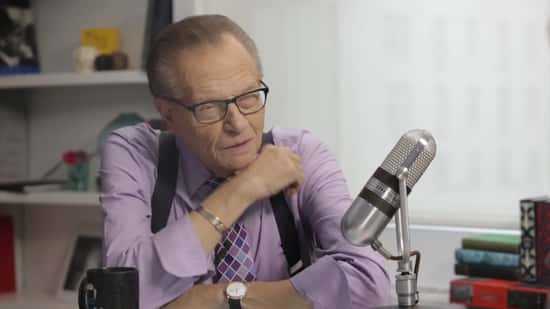

Excerpt: The ex-sheriff, Scott Israel, my chief opponent, would like to make this election about the past. … Scott Israel’s past? That’s the story of systemic incompetence, leading up to the catastrophic response to two mass shootings: at Fort Lauderdale airport and then at Marjory Stoneman Douglas High School. …. Eighteen months later, we’ve turned this department around.

Excerpt: In my time as your Sheriff we reduced violent crime, ushered in a new era of diversity in our hiring and leadership, and equipped our deputies with body cameras. We focused on keeping kids out of jail, protecting the peace and community service. We ran a tight ship, were accountable to taxpayers and treated the community and our employees with dignity and respect. … Gregory Tony’s first boss, Coral Springs Police Chief Duncan Foster, said, “knowing what we know now, I would not have hired him.” Well, you should not hire him, either.


Excerpt: In Broward’s sheriff election, I am the honest candidate who will bring positive change to the law enforcement agency. .. (The current sheriff) pounds on police brutality, while not disclosing a killing and lying on law enforcement employment applications. I will honestly serve and lead by example. … A past sheriff claims he was wrongfully removed from office while not taking responsibility for murdered children. As a BSO colonel, I guided the policy: “deputies WILL enter” an active shooter scene.

Excerpt: Three candidates in this race have held top positions of indisputable power and authority in the Sheriff’s office and despite that power and authority, they failed to bring about the much needed change that we desire. Why?

Excerpt: Our past sheriffs and Interim Sheriff have failed the people of Broward County and employees … We deserve a leader who inspires confidence not fear, and is accountable to all citizens.

Excerpt: As an ordinary person with extraordinary vision, I embody the ideals that this country has long stood for. … It will be important to me to deliver the professional services that the people of Broward County want and deserve. I also want to check unrestrained police violence and misconduct, arrest criminals who prey on innocent victims and help those who have become stigmatized as the underserved in our communities.

Friday, August 07, 2020

The Supreme Court invented qualified immunity. Now, a judge’s blistering opinion shows why it must go. (WaPo)

As the prevailing plaintiff in a civil rights case against disgraced former Anderosn County, Tenn. Sheriff Dennis O. Trotter, I can tell you first-hand that the hoary 'ole doctrine of "qualified immunity" must go. It only protects tortfeasors, like St. Johns County Sheriff DAVID SHOAR, who legally changed his name from "HOAR" in 1994.

The Supreme Court invented qualified immunity. Now, a judge’s blistering opinion shows why it must go.

The Supreme Court on Jan. 25.The Supreme Court on Jan. 25.
The Supreme Court on Jan. 25. (Jonathan Newton/The Washington Post)

U.S. District Court Judge Carlton Reeves couldn’t do justice for the plaintiff in his court, who had sued over police abuse. The Supreme Court won’t let him. So Reeves issued an opinion that dutifully followed the law — and blistered the justices for the all-but-insurmountable barrier they have constructed to shield police officers from being held to account.

Reeves, a Barack Obama nominee who sits in Jackson, Miss., and is the second Black federal judge in the history of the state, produced one of the most powerful pieces of legal writing I have encountered. His opinion is a 72-page cri de coeur directed at the Supreme Court, arguing that it must do away with the doctrine of “qualified immunity” for law enforcement officials.

Reeves begins with the larger context. “Clarence Jamison wasn’t jaywalking.” Footnote: “That was Michael Brown,” shot by police in Ferguson, Mo. “He wasn’t outside playing with a toy gun.” Footnote: “That was 12-year-old Tamir Rice,” shot in a park by a Cleveland police officer. “He wasn’t suspected of ‘selling loose, untaxed cigarettes.’ ” Footnote: “That was Eric Garner,” the Staten Island man who died after an officer put him in a chokehold.

And on and on, for 19 excruciating footnotes, George Floyd and Philando Castile, Sandra Bland and Breonna Taylor, until we get to Jamison’s non-offense: “He didn’t make an ‘improper lane change.’ He didn’t have a broken tail light. He wasn’t driving over the speed limit. He wasn’t driving under the speed limit. No, Clarence Jamison was a Black man driving a Mercedes convertible.” In 2013, in Pelahatchie, Miss., an hour south of Philadelphia, Miss., where Andrew Goodman, Michael Schwerner and James Chaney were killed in 1964. Because his temporary tag — he had just purchased the car — was allegedly folded over.

As Reeves recounts, Jamison’s fate was less dire than that of many others: “As he made his way home to South Carolina from a vacation in Arizona, Jamison was pulled over and subjected to one hundred and ten minutes of an armed police officer badgering him, pressuring him, lying to him and then searching his car top to bottom for drugs. Nothing was found. Jamison isn’t a drug courier. He’s a welder.”

Jamison wasn’t shot. He wasn’t killed. But he was frightened and humiliated, and his car suffered several thousand dollars in damage to its seats and convertible top. And, as Reeves found, his constitutional rights were violated: Officer Nick McClendon’s search of Jamison’s car violated the Fourth Amendment, and Jamison’s supposed “consent” to the search could hardly be deemed voluntary.

“In an America where Black people ‘are considered dangerous even when they are in their living rooms eating ice cream, asleep in their beds, playing in the park, standing in the pulpit of their church, birdwatching, exercising in public, or walking home from a trip to the store to purchase a bag of Skittles,’ ” Reeves wrote, “who can say that Jamison felt free that night on the side of Interstate 20? Who can say that he felt free to say no to an armed Officer McClendon?”

But none of that mattered, which brings us to the larger context that Reeves explores: the purpose of the federal civil rights law under which Jamison sued McClendon. Its popular name tells the story: the Ku Klux Klan Act of 1871, a Reconstruction era-effort to respond to what a later court described as the “reign of terror imposed by the Klan upon black citizens and their white sympathizers in the Southern States.” The law, now commonly known as Section 1983, provides for damages against state officials who deprive individuals of their constitutional rights.

All good, but for the fact that the Supreme Court began to eviscerate the law more than 50 years ago. As Reeves explains, “Judges have invented a legal doctrine to protect law enforcement officers from having to face any consequences for wrongdoing. The doctrine is called ‘qualified immunity.’ In real life it operates like absolute immunity.”

Nothing in the text of the 1871 statute provides for immunity — not a single word — but the court imported common-law protections in 1967 to shield officials operating in good faith.

Then, in 1982, it went further. To be held liable, it’s not enough to prove that a police officer violated someone’s constitutional rights; the right must be so “clearly established” that “every reasonable official would have understood that what he is doing violates that right.” There must be a case on point, except that how can there be a case on point if there wasn’t one already in existence. This is Catch-22 meets Section 1983.

Numerous justices across the ideological spectrum — Anthony M. Kennedy, Antonin Scalia, Clarence Thomas, Sonia Sotomayor — have criticized the doctrine. But the court has appeared unwilling to do anything about it. As its term concluded, the court refused to hear any of the eight cases offering it the opportunity to reconsider the doctrine.

This cannot continue. As Reeves writes, “The status quo is extraordinary and unsustainable. Just as the Supreme Court swept away the mistaken doctrine of ‘separate but equal,’ so too should it eliminate the doctrine of qualified immunity.”

The judge couldn’t help Jamison. But maybe his message to his judicial bosses will help future Jamisons win the justice they deserve.

Read more:

Jennifer Rubin: It’s a big deal when the Supreme Court decides not to decide 

Tuesday, August 04, 2020

Former Honored City of St. Augustine Visitor: JUAN CARLOS, Former King of Spain, Amidst Criminal Investigation, Flees for Where? (WaPo)

Upon reading this news, I am harkening back to a time earlier in the 21st century, under disgraceful disgraced dictatorial St. Augustine City Manager WILLIAM BARRY HARRISS, when King Juan Carlos was a stilll heroic figure, visiting our Nation's Oldest City amidst ACLU protests against the illegal, unconstitutional harassment of artists, musicians and buskers who once made St. George Street a cool place, before successive maladministrations fought federal court orders and violated First, Ninth and Fourteenth Amendment rights.   

From The Washington Post:


Spain’s former king fled the country, but where in the world did he go?

News of the sudden departure of former king Juan Carlos dominates the front pages of Spain's newspapers on Aug. 4. (EFE/EPA-EFE/Shutterstock)
News of the sudden departure of former king Juan Carlos dominates the front pages of Spain's newspapers on Aug. 4. (Efe/EPA-Efe/Shutterstock)


Monday, August 03, 2020

A group of FL sheriffs without face masks stand by as President Trump spews insults on people and groups. (Florida Phoenix)

Well, lookie here -- among the Florida Sheriffs, standing with DJT while he hurled insults, wwas retromingent repugnant, rebarbative St.Johns Ciunty Sheriff DAVID SHOAR, who legally changed his name from "HOAR" in 1994:


A group of FL sheriffs without face masks stand by as President Trump spews insults on people and groups

President Donald Trump in Tampa, with Florida sheriffs standing behind, Friday, July 31, 2020. Credit: YouTube

Standing without face masks behind President Donald Trump in Tampa on Friday, several Florida sheriffs endorsing the president stood by as Trump streamed numerous insults on people and groups.

Trump called U.S. House Speaker Nancy Pelosi – second in succession to the presidency – “Crazy Nancy Pelosi.”

Trump referenced the news media as “those people” – “a couple of good ones, mostly bad ones.”

At least twice, Trump used the term “China virus,” to describe COVID-19. The term used by Trump is considered by some people as racist.

(A New York Times report said “the term has angered Chinese officials and a wide range of critics, and China experts say labeling the virus that way will only ratchet up tensions between the two countries, while resulting in the kind of xenophobia that American leaders should discourage.”)

During a roughly half-hour speech at Tampa International Airport, Trump also described U.S. Sen. Bernie Sanders of Vermont as “Crazy Bernie” and said “he is a great loser.”

He also referenced Democratic-run cities such as Chicago as “places run by the radical left.” (The Chicago mayor is a lawyer and former federal prosecutor.)

As to Joe Biden, presumptive Democratic nominee for president, Trump said, “He has no idea what he is talking about,” among other comments.

While the president has insulted various people and groups before, Trump is gearing up to take on Biden in the big swing state of Florida.

The president on Friday mentioned that polls in Florida “are going up up up,” in the president’s favor. Florida has long been considered a swing state in the presidential election, and Biden has only a four-point lead over Trump in Florida, according to a Mason-Dixon poll released earlier this week.

Trump and the several sheriffs behind him were not wearing masks during the president’s comments.

The event included the endorsement of 48 sheriffs in Florida’s counties. The list is here, from the Republican National Committee. Florida has 67 counties in all.

“There’s a big love affair between us and law enforcement, and it is especially great in Florida,” Trump said.

Still, tension and protests have continued nationwide following the death of George Floyd, a Black man who died following actions of a white police officer in Minneapolis who knelt for many minutes on Floyd’s neck.

And not all sheriffs support Trump. The sheriffs who thus far have not endorsed the president represent the major urban areas and large populations in Florida, including Miami-Dade, Broward, Palm Beach, Hillsborough and Orange counties.

Trump’s home in Florida is in Palm Beach, and the sheriff of Palm Beach is not listed as having endorsed Trump.