Tuesday, August 03, 2021

‘Freedom,’ Florida and the Delta Variant Disaster (Paul Krugman, NY Times)

Nobel economic laureate Paul Krugman exposes the idiocracy of Florida Governor RONALD DION DeSANTIS, now lagging in the polls due to his execrable concept on vaccinations and masks.

Reckon that 2022 will be a great year for Florida Democrats!

From The New York Times: 


‘Freedom,’ Florida and the Delta Variant Disaster

Credit...Joe Raedle/Getty Images

Opinion Columnist

Ron DeSantis, governor of Florida, isn’t stupid. He is, however, ambitious and supremely cynical. So when he says things that sound stupid it’s worth asking why. And his recent statements on Covid-19 help us understand why so many Americans are still dying or getting severely ill from the disease.

The background here is Florida’s unfolding public health catastrophe.

We now have highly effective vaccines freely available to every American who is at least 12 years old. There has been a lot of hype about “breakthrough” infections associated with the Delta variant, but they remain rare, and serious illness among the vaccinated is rarer still. There is no good reason we should still be suffering severely from this pandemic.

But Florida is in the grip of a Covid surge worse than it experienced before the vaccines. More than 10,000 Floridians are hospitalized, around 10 times the number in New York, which has about as many residents; an average of 58 Florida residents are dying each day, compared with six in New York. And the Florida hospital system is under extreme stress.

There’s no mystery about why this has happened. At every stage of the pandemic DeSantis has effectively acted as an ally of the coronavirus, for example by issuing orders blocking businesses from requiring that their patrons show proof of vaccination and schools from requiring masks. More generally, he has helped create a state of mind in which vaccine skepticism flourishes and refusal to take precautions is normalized.

ADVERTISEMENT

Continue reading the main story

One technical note: Florida’s vaccination rate is well below the rates in the Northeast, but closely matches the national average. But seniors are much more likely to be vaccinated than younger Americans, in Florida as elsewhere; and Florida, of course, has an unusually high number of seniors. Among younger groups the state lags behind the nation as a whole, and even further behind blue states.

So, given these grim developments, one might have expected or at least hoped that DeSantis would reconsider his position. In fact, he has been making excuses — it’s all about the air-conditioning! He has been claiming that any new restrictions would have unacceptable costs for the economy — although Florida’s recent performance looks terrible if you place any value on human life.

Above all, he has been playing the liberal-conspiracy-theory card, with fund-raising letters declaring that the “radical left” is “coming for your freedom.”

So let’s talk about what the right means when it talks about “freedom.” Since the pandemic began, many conservatives have insisted that actions to limit the death toll — social distancing, wearing a mask and now getting vaccinated — should be matters of personal choice. Does that position make any sense?

Well, driving drunk is also a personal choice. But almost everyone understands that it’s a personal choice that endangers others; 97 percent of the public considers driving while impaired by alcohol a serious problem. Why don’t we have the same kind of unanimity on refusing to get vaccinated, a choice that helps perpetuate the pandemic and puts others at risk?

ADVERTISEMENT

Continue reading the main story

True, many people doubt the science; the link between vaccine refusal and Covid deaths is every bit as real as the link between D.U.I. and traffic deaths, but is less obvious to the naked eye. But why are people on the right so receptive to misinformation on this subject, and so angry about efforts to set the record straight?

My answer is that when people on the right talk about “freedom” what they actually mean is closer to “defense of privilege” — specifically the right of certain people (generally white male Christians) to do whatever they want.

Not incidentally, if you go back to the roots of modern conservatism, you find people like Barry Goldwater defending the right of businesses to discriminate against Black Americans. In the name of freedom, of course. A lot, though not all, of the recent panic about “cancel culture” is about protecting the right of powerful men to mistreat women. And so on.

Once you understand that the rhetoric of freedom is actually about privilege, things that look on the surface like gross inconsistency and hypocrisy start to make sense.

Why, for example, are conservatives so insistent on the right of businesses to make their own decisions, free from regulation — but quick to stop them from denying service to customers who refuse to wear masks or show proof of vaccination? Why is the autonomy of local school districts a fundamental principle — unless they want to require masks or teach America’s racial history? It’s all about whose privilege is being protected.

The reality of what the right means by freedom also, I think, explains the special rage induced by rules that impose some slight inconvenience in the name of the public interest — like the detergent wars of a few years back. After all, only poor people and minority groups are supposed to be asked to make sacrifices.

ADVERTISEMENT

Continue reading the main story

Anyway, as you watch DeSantis invoke “freedom” to escape responsibility for his Covid catastrophe, remember, when he says it, that word does not mean what you think it means.


4 Reasons I’m Wearing a Mask Again: Our vaccines are extraordinary, but right now they need all the help they can get. (The Atlantic)

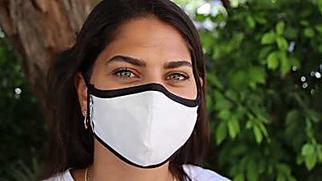
 4 Reasons I’m Wearing a Mask Again

Our vaccines are extraordinary, but right now they need all the help they can get.

By Katherine J. Wu

The Atlantic Monthly

JULY 22, 2021

Earlier this month, I pulled a mask out of the bin of hats, scarves, and gloves I keep by the door; strapped it on; and choked. I had inhaled a mouthful of cat hair—several weeks’ worth, left by my gray tabby, Calvin, who has been napping on a nest of face coverings since I largely dispensed with them in May.

I’ve been fully vaccinated for two months. I spent the end of spring weaning myself off of masking indoors, and exchanging, for the first time, visible smiles with neighbors in the lobby of our apartment building. I dined, for the first time in a year and a half, at a restaurant. I attended my first party at another (vaccinated) person’s home since the spring of 2020. I am, after all, now at very low risk of getting seriously sick should SARS-CoV-2 infect me, thanks to Pfizer’s vaccine.

But the pandemic is once again entering a new phase that feels more dangerous and more in flux, even for the people lucky enough to have received their lifesaving shots. A more transmissible variant—one that can discombobulate vaccine-trained antibodies—has flooded the world. It’s wreaking havoc among the uninoculated, a group that still includes almost half of Americans and most of the global population. After a prolonged lull, the pandemic’s outlook is grimmer than it’s been in months. I am, for the foreseeable future, back to wearing masks in indoor public places, and there are four big reasons why.

1. I don’t want to get COVID-19.

Let me be clear: My chances of getting sick are low, very low, especially if I’m thinking about the disease in its worst forms. The vaccines are spectacularly effective at blocking COVID-19, particularly cases that lead to hospitalization or death, even when squaring off with Delta and other antibody-dodging variants. I expect this to hold true for some time: These vaccines were tested primarily for their power to curb deadly illness, and that’s what they’re accomplishing against every version of the coronavirus they face.

But no vaccine is perfect. Some immunized people will end up infected with the virus; a small subset of this group will fall ill, occasionally severely so. The proportion of vaccinated people who catch the coronavirus might tick up in the presence of certain mutations that make the virus less recognizable to vaccinated immune systems, and thus harder to purge. The longer the virus sticks around in the body—the more opportunity it’s given to copy itself and mosey through our tissues—the more likely it is that symptoms will arise as immune defenders rally to fight. (Delta might be extra well equipped to accumulate in airways.) Most post-vaccination infections, or breakthroughs, appear to be asymptomatic or mild, a sign that the vaccines are doing their job. But mild illness still isn’t desirable illness, especially given the threat of long COVID, which reportedly can happen in vaccinated people, though researchers aren’t yet sure how widely.

Masks slash the risks of all these outcomes. Breakthroughs are more common when the immune system faces a ton of inbound virus—when there’s an ongoing outbreak, or when the people around me aren’t immune. A mask reduces my exposure every time I wear one. Some variants, including Delta, might be more transmissible, but they’re still thwarted by physical barriers such as cloth.

I’m not duping myself into thinking that I’ll stave off this virus forever; SARS-CoV-2 is here to stay. But as hospitals in several states once again start to fill up, I’m in no rush to rendezvous with the coronavirus, especially because …

2. I don’t want people around me to get COVID-19.

If I get infected, that affects more than just me. I worry about the strangers I encounter—many of them maskless—whose immune status I don’t know. I worry about the youngest kids in my social network, who aren’t yet eligible for shots, and the elderly and immunocompromised, whose defenses may be weaker than mine. I worry about the people in my community who have been structurally barred from accessing the vaccines, or who are reluctant to take the shots. My risk of getting COVID-19 is low. Theirs is very much not.

The COVID-19 vaccines come with the delightful perk of blocking some asymptomatic infection, but researchers are still figuring out how often vaccinated people can pass on the pathogen. The math gets all the messier with more contagious variants such as Delta. Inbound virus affects me directly, but it can also turn me into a pathogen pit stop, potentially allowing outbound virus to bop into someone with less immunological armor. “Masks protect both us and the people around us,” Krutika Kuppalli, an infectious-disease physician at the Medical University of South Carolina, told me. In the United States, inoculation rates have taken a serious dip. The proportion of vulnerable people is stagnant, yet still too high.

During a pandemic, personal safety can’t be the only consideration, as my colleague Ed Yong has written. The disease we’re dealing with is infectious; the repercussions of our behavior ripple to those around us. Many unvaccinated people belong to populations that have been marginalized by the country’s fractured health-care system. Saddling them with any increased COVID-19 risk, even indirectly, threatens to widen disparities. Going maskless indoors still feels like a gamble, especially because …

3. I trust the vaccines, but I understand their limits.

My pivot back to masks says nothing about my continued confidence in the vaccines and what they’re capable of. But although vaccines are an excellent tool, they are also an imperfect one, and they’ll perform differently depending on the context in which they’re used.

Consider, for example, the effectiveness of sunscreen, another stellar yet flawed preventive. Certain brands, including those with higher SPF, will be better than others at blocking burns and cancer. Mileage may vary even with the same tube of sunscreen, depending on who’s using it (how much melanin is in their skin?), how they’re behaving (are they dipping in and out of the shade, or spending all day soaking up rays?), and local conditions (is it a cloudy day in a wooded park, or a sunny day on a snow-speckled hill?). Vaccines are similar. Breakthroughs are more likely in people with a weakened immune system and those who mingle frequently with the virus; they may happen more often with certain variants.

Asking a vaccine to shoulder the entire burden of protection felt all right a month ago, when case rates were plunging. Now they’re ticking back up. The vaccines don’t feel different, but the conditions they’re working in do. Maybe now’s not the best time to rely on them alone. “That’s putting a lot of pressure on the vaccines,” Jason Kindrachuk, a virologist at the University of Manitoba, told me. The virus has upped the ante, and I feel the urge to match it. When it’s extra sunny out, I’m probably going to reach for sunscreen and a hat, especially because …

4. Wearing an accessory on my head doesn’t feel like a huge cost to me.

Don’t get me wrong. I don’t enjoy wearing a mask, and all else equal, I’d still prefer to keep it off. But for me, it’s not a big sacrifice to make for a bit more security: I’ll mainly be using one indoors when I’m around strangers, a situation in which the risk of spread is high. And I’ll keep checking pandemic conditions like I would a weather forecast—hospitalizations, variants, immunization rates, and the behaviors of people around me—and adjust as needed. The idea is that this state of affairs will be short-lived, until vaccinations climb and the virus retreats again.

I live in New England, where things are relatively calm. I could probably get away with resuming normal life, whatever that is. But the status quo feels tenuous. It will take work to maintain. As Delta dominates the nation and case rates rise, we may already be losing our grip. Kuppalli said that although she’s concerned about our current menagerie of variants, she’s also trying to ensure that more problematic versions of the virus don’t have the opportunity to arise. The stakes in her community are particularly high: In South Carolina, where vaccination rates are relatively low, “it’s a free-for-all,” she said. “When I walk into a supermarket, I’m the only one in a mask. People look at you like you’re crazy.”

Vaccines have sometimes been billed as an option to supplant the nuisance of masks. But making that trade-off at an individual level feels overly simplistic in a population where so many people are neither immune nor covered up. I also didn’t get vaccinated because I wanted to stop masking. I got vaccinated because I wanted to reduce my chances of getting sick with this virus and transmitting it to others. Masking is a complementary means to the same end. My return to it isn’t an indictment of vaccination. It’s an insurance policy. It’s a small price to pay for more protection, especially once I’ve washed the cat hair away.

The Atlantic’s COVID-19 coverage is supported by grants from the Chan Zuckerberg Initiative and the Robert Wood Johnson Foundation.


Katherine J. Wu is a staff writer at The Atlantic, where she covers science.

Florida poll: DeSantis falls behind Crist as COVID-19 cases surge. (The Hill)

 Governor RONALD DION DeSANTIS -- headed for electoral defeat?  This hobbledehoy in our employ will likely lose in 2022.  Coupled with his mishandling of the COVID crisis, will is adenoidal arrogance, his whiny kvetchiness, his uncouth unkindness, may him a pariah?  You tell me.

From The Hill:


Florida poll: DeSantis falls behind Crist as COVID-19 cases surge

Florida poll: DeSantis falls behind Crist as COVID-19 cases surge
Pause
0:00 / 0:00
Settings
Full-screen

Florida Gov. Ron DeSantis (R) has slipped behind a Democratic gubernatorial rival in a new poll as he faces scrutiny over his handling of the pandemic amid a surge in COVID-19 cases and hospitalizations in the Sunshine State. 

The survey, conducted by Florida-based firm St. Pete Polls, found that 45 percent of voters said they would vote for Democratic Rep. Charlie Crist (Fla.), who previously served as governor from 2007 to 2011, while 44 percent said they would back DeSantis.

St. Pete Polls noted that Crist’s lead was within the survey’s margin of error of 1.6 percentage points. 

ADVERTISEMENT

About 11 percent of the more than 3,900 respondents in the poll, conducted from Monday to Tuesday, said they were still undecided about their choice for governor heading into the 2022 contest.

A previous St. Pete Polls survey released in May revealed that just 30 percent of voters believed Crist had better than even odds of unseating the Republican, with 38 percent giving him a 50-50 chance of winning.

Voters in the May poll expressed greater optimism that fellow Democratic gubernatorial candidate Nikki Fried, the state’s current agriculture commissioner, would be able to beat DeSantis in 2022.

DeSantis, a staunch ally of former President Trump, is also considered a favorite by many for a potential 2024 White House bid.

The poll comes as Florida has emerged as the new epicenter of the coronavirus surge across the country, fueled in part by the highly transmissible delta variant. 

ADVERTISEMENT

While DeSantis has attracted support from fellow conservatives for his hands-off approach to the pandemic, including resisting calls for new mask mandates and lockdowns, his actions amid worsening case and hospitalization numbers have fueled more fervent criticism from his opponents. 

Crist last week accused DeSantis of neglecting his duties amid the pandemic, arguing, “We don’t have leadership.”

The congressman argued that DeSantis has focused on responses to the migration surge at the Texas border rather than the worsening COVID-19 figures in his own state. 

"What’s he [DeSantis] doing about it? He’s going to Texas. He goes to the border. Texas. You’re the governor of Florida, you know," Crist said. "He doesn’t understand. And you know he’s spending our tax dollars out there, giving our law enforcement to Texas while people are dying in Florida. Unbelievable."

On Tuesday, Crist called on DeSantis to require state employees to be vaccinated against COVID-19, saying, “The way to stamp out the virus, and protect our public health, economy and our jobs, is to get everyone vaccinated.”

Florida now accounts for about 1 in 5 new coronavirus cases nationally and on Tuesday broke its record for coronavirus hospitalizations for the third straight day, with 11,515 recorded.


Joy Behar calls Ron DeSantis a ‘sociopath’ with ‘white supremacist base’ who rejects mask mandates. Asks lawyer panelist on 'The View' whether Republican governor could be charged with homicide. (Washington Times)

Joy Behar calls Ron DeSantis a ‘sociopath’ with ‘white supremacist base’ who rejects mask mandates

Asks lawyer panelist on 'The View' whether Republican governor could be charged with homicide

From The Washington Times: 


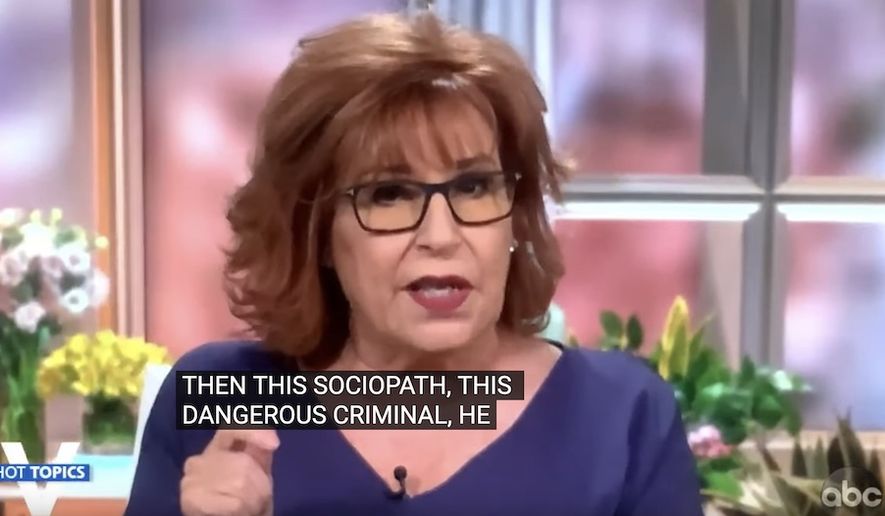
Joy Behar talks about COVID-19 policies favored by Florida Gov. Ron DeSantis, Aug. 3, 2021. (Image: YouTube, ABC's "The View" channel, video screenshot)

By Douglas Ernst - The Washington Times - Tuesday, August 3, 2021

Joy Behar wants to know whether Florida Gov. Ron DeSantis can be accused of “negligent homicide” for his rejection of COVID-19 mask mandates.

The co-host of ABC’s “The View” exploded on the Republican’s continued opposition to government mandates regarding the contagion while blaming him for hospitalized children.

“This sociopath, this dangerous criminal, he tells schools that they will rescind funding if they insist upon a mask mandate,” Ms. Behar said Tuesday. “So now the Broward County school board says you don’t have to wear a mask. I mean, what is he doing? What is he doing?”

Ms. Behar then framed Florida’s resistance to COVID-19 mask mandates as a result of “white supremacist” thought.

“He’s risking the lives of children, children’s parents, their grandparents — anyone they may come in contact with so that he can appeal to his white supremacist base and continue in his career and get re-elected? I don’t know,” Ms. Behar continued. 

The comedian then asked co-host Sunny Hostin about the possibility of criminal charges being filed against the governor.

“Maybe you know whether this is negligent homicide,” Ms. Behar said. “That’s what I call it.”

“I think it’s really difficult to hold public officials accountable for things like that,” replied Ms. Hostin, a lawyer and legal analyst. “A lot of times you have qualified immunity in many instances.”

But, Ms. Hostin added, “I do have to agree that Gov. DeSantis is somewhat of a menace when it comes to public health. I think that Republicans have decided this is a hill they want to die on. I think that this is where the party is headed, and it doesn’t really make sense because … many of the people that aren’t vaccinated are Republicans, are conservatives, are evangelicals. That is their base, so why do you want to kill off your base? It really doesn’t make sense. This argument about freedom also doesn’t make sense. … You don’t have the freedom to put my life at risk.”

Mr. DeSantis, however, says the power to require a child to wear a mask should reside with the parents. 

“Forcing kids to wear masks is bad policy,” he tweeted on July 28. “Parents are best equipped to decide whether they want their kids to wear a mask in school. Neither bureaucrats in Washington nor local authorities should be able to override the decision of the parents.”