Tuesday, May 30, 2017

Nation’s fallen honored with ‘choicest flowers of springtime’ at annual Memorial Day ceremony

It was a very moving, simple ceremony, with an eloquent speech by Brig. Gen. Brian Sampler, USAF. Roses were handed out, and we were asked to place a flower on a grove, in "uniform" direction, quietly stating the name of the servicemember whose grave we were honoring. I placed a rose on the grove of CPL John Robinson, U.S. Colored Troops, a Civil War unit of the United States Army recruited in Key West; he died in 1890. Prior observances with other National Guard speakers were marred by missteps, including reading out the name of a Nazi German veteran and omission of any mention of the Civil War (in a speech that was all about our national custom of going abroad and killing foreigners, in both just and unjust wars). I wore the cartoonist Herblock's American flag tie and my father's 82nd Airborne jacket (the South Jersey Chapter of the 82nd Airborne DIVN ASSN, Inc. is named the "Edward A. Slavin Chapter" in dad's honor).


Posted May 30, 2017 12:02 am - Updated May 30, 2017 05:47 am
By JARED KEEVER jared.keever@staugustine.com
Nation’s fallen honored with ‘choicest flowers of springtime’ at annual Memorial Day ceremony


Photos by PETER.WILLOTT@STAUGUSTINE.COM Navy veteran Garry Cohn pays his respects to a veteran buried in the St. Augustine National Cemetery after the annual Memorial Day Ceremony on Monday. New to the ceremony this year was placing roses at the grave sites.

PETER.WILLOTT@STAUGUSTINE.COM Brig. Gen. Brian Simpler, assistant adjutant general for the Air Florida National Guard, gives the keynote address at the annual Memorial Day ceremony held in St. Augustine National Cemetery.

The simple placement of a rose on a grave was the final act for many as they left the St. Augustine National Cemetery Monday following the morning’s Memorial Day ceremony.

It was an act alluded to in the remarks of the ceremony’s only guest speaker, Brig. Gen. Brian Simpler, assistant adjutant general for the Air Florida National Guard.

In a speech that provided historical perspective for the cost of the nation’s wars, Simpler read portions of the 1868 general order from Gen. John A. Logan, which is generally credited with starting the solemn holiday.

As the nation was recovering from the Civil War, the commander of the Grand Army of the Republic sought to set aside a day that would “honor comrades who died in defense of their country,” Simpler said.

“At this appointed time, we should gather around their sacred remains and garland the mounds above them with the choicest flowers of springtime, and let us raise above them the dear old flag they saved from dishonor,” he added, paraphrasing the order.

Standing at the north end of the cemetery, Simpler went on to acknowledge the Dade Pyramids near the wall at the opposite end of the grounds.

The three pyramids, built in 1842, cap vaults that contain the remains of men who died in the Second Seminole War. The coquina structures are thought to be the oldest monument in any national cemetery.

Those lost to other wars were also mentioned in the speech. Simpler read the names — and provided a brief story — of men buried there who died as far back as the Spanish-American War, and told the stories of local men who were lost in more recent fighting in Iraq and Afghanistan.

After his speech, Nancy Birchall and Gretchen Titshaw, of the American Legion Post 37 Auxiliary, read the names of 177 St. Johns County veterans who have died since Memorial Day 2016.

A moment of silence, wreath laying ceremony and playing of taps wrapped up the morning’s events before visitors were invited to place roses at the cemetery’s grave sites.

The roses were a new addition to the annual ceremony this year.

Bill Dudley, chairman of the St. Johns County Veterans Council, said they were donated, with plans to have more next year.

“It really ends the ceremony in a very special way,” he said.

The Ancient City Chapter of the Military Officer’s Association of America and the Florida National Guard sponsor the annual event. Retired Army Lt. Col. Ron Birchall was this year’s master of ceremonies.


Solomon Eubanks, R.I.P.

My friend Solomon Eubanks has died.  He will be missed.  Here's the obit from Historic City News:

Obituary: Solomon Robert Eubanks

Solomon Robert Eubanks passed away on Saturday May 27, 2017. He had just turned 73-years-old on May 14th. He grew up in Lincolnville on Palmo Street and resided at 164 Twine Street, its current name.
Eubanks attended St. Benedict and Excelsior schools and is a 1959 graduate of Richard J. Murray High School. In addition to his hometown of St Augustine, Eubanks had also lived in Gainesville, Palatka, and Columbus, Ohio. He was a lifelong member of the Democratic Party.
His funeral service will be held on Saturday, June 3rd at 3:00 p.m. at St Paul’s Family AME Church under the direction of Reverend Ron Rawls.
The St. Augustine Foot Soldiers Monument, installed just south of the market in the Plaza de la Constitution, was intentionally created using nameless faces by sculptor Brian Owens. His decision was to convey that the “foot soldiers” of the Civil Rights movement of the 1960’s were not only the Martin Luther King Jr’s of the world, but also the anonymous, ordinary local residents of the city who courageously waded in at the beaches, kneeled in at the churches, and sat in at the lunch counters.
Eubanks, who would have certainly qualified as a celebrity of the Civil Rights movement, would probably rather be remembered simply as a foot soldier.


Alice Sutherland, R.I.P.

My friend Alice Sutherland has died, after a long epic battle with cancer.  She will be missed.  From Historic City News:

Obituary: Alice Ann Sutherland

Born August 18, 1960, in Virginia Beach, 56-year-old Alice Ann Sutherland passed away at 9:13 a.m. this morning at her home on Davis Street in St Augustine; where she has lived since 1999.
Historic City News editor in chief, Michael Gold, was informed by her mother, Ann S Proctor, and sister, Susan S Williams, who were with her at the time of her death, that in lieu of a funeral service, a celebration of Alice’s life will follow at a date and location to be announced.
Close family friend, Kirsten Miller-Starling, confirmed the news and has been receiving condolences all day on her facebook from friends, business associates and Clan Sutherland members around the country.

ALICE SUTHERLAND
Alice worked with Travel Related Services division of America Express in Jacksonville, where she learned that travel and tourism were in her blood. She assisted in marketing at Northeast Florida Regional Airport and was one of the leading supporters working to bring a commercial airline carrier to town.
She founded the original “City Walks” — a walking tour utilizing licensed, and entertaining guides. The idea quickly grew in popularity, so she added the food tour and pub crawl tours. When she retired, Sutherland sold her tour businesses to Tour St Augustine. They continue to thrive.

Alice Sutherland was an advocate for good business and good government. If you won her friendship, you had a formidable ally. If she ever learned that you betrayed her trust, or her adopted home town of St Augustine, you had a daunting adversary.
Alice was one of the city’s early Internet personalities and a frequent commenter on Talk of the Town, Plazabum, and other community forums under the nickname, “Dunrobin”. Her intuition was uncanny. Her ability to ferret out the back story on local news and expose the truth was the foundation of a seventeen-year association with Historic City News.
“Alice was an amazingly insightful citizen journalist,” Michael Gold wrote today in a message to her family. “It’s impossible for me to look anywhere around our business and our publication without seeing her influence.”
Alice had a smile all her own and an impish grin that always made me wonder what she was up to. Her sense of humor made me want to laugh; but, there is no laughter today. Maybe we can get back to that tomorrow, but the laughs won’t come today.

Monday, May 29, 2017

Another good editorial in Historic City News

Keep up the good work, Michael Gold! Good use of one of my favorite phrases (tinpot Napoleon). Salud!

Bad week for over-reaching would-be Republican leaders
May 28, 2017 Editorials
Some of the precinct committeemen and women in the St Johns County Republican Party have drifted so far away from the party platform over the past 15-years, that it no longer resembles the party of Lincoln. We are supposed to be about the inherent ability of the people to be self-governed — not the election of unaccountable, self-serving tin pot Napoleons like we have today.

Why in the world would the St Johns County Republican Executive Committee of the Republican Party of Florida be endorsing candidates for office in municipal elections, and other non-partisan elections? That is not the purpose of the officially chartered organization of the Republican Party.

When I cautioned against this intrusion into non-partisan politics, and the tactics being used to manipulate the outcome of local elections through false, misleading and deceptive means, many of the current leadership looked at me like I had three heads. Now, as we see in the outcome of this recent case before the Florida Ethics Commission, where St Augustine nonpartisan Beach Mayor, Rich O’Brien, has had to pay a fine for claiming to be “The Republican Choice”, I may not have been as far off the mark as the hotheads wanted me to be.

People have told me that “the party moved away from us” when I’ve asked why I no longer hear their voice in decisions and actions by the local party.

That point-of-view won’t work for me. I’m not changing my party affiliation, or shrinking off to the Republican Retirement Home. And I sure as hell am not the guy for anyone to try to make “go along” if it means turning a blind eye to bullies, trying to feather their own nests, who have been Republicans for about a minute. You might as well ask me to declare every philosophical principle I’ve held my entire life to be a lie.

Comments

Marion Brown
The Trivial Trolls of the St. John's ( REC ) will soon
Have to answer for their Crimes.
Perhaps they will rename their Dysfunctional Dung heap to the ( MEC) Mepublican Entitled Communists.
God Bless America!
Like · Reply · 58 mins

Tom Reynolds · Public relations at Self-Employed
Good Editorial and the Leaders of the St Johns County REC better read it a few times.

Sunday, May 28, 2017

Record (finally) reports St. Augustine Beach Mayor RICHARD BURTT O'BRIEN's illegal home construction


St. Augustine Beach City Manager BRUCE MAX ROYLE, you failed.  Horribly.
So did your staff.  Miserably.
No one respects your illegal gag order and your unconstitutional effort to silence City Commissioners and to keep this local scandal from public discussion.
Your latest First Amendment violation has flopped:
First, this blog broke the news, with several stories commencing on Tuesday, May 23, 2017.
http://cleanupcityofstaugustine.blogspot.com/2017/05/secrecy-in-st-augustine-beach-mayor.html
http://cleanupcityofstaugustine.blogspot.com/2017/05/florida-courts-agree-if-buildings.html
Then, a code enforcement complaint was filed on May 28, 2017.
http://cleanupcityofstaugustine.blogspot.com/2017/05/code-enforcement-complaints-filed-on.html 
Now, mirabile dictu, the St. Augustine Record has a short story on Monday, May 29, 2017:


Posted May 29, 2017 12:02 am 
By SHELDON GARDNER sheldon.gardner@staugustine.com

Online headline:
Setback on St. Augustine Beach mayor’s property violates permit
Print headline:
Construction on Mayor's property hits a snag
City Commission to review issue on June 5


Construction has been delayed on St. Augustine Beach property owned by St. Augustine Beach Mayor Rich O’Brien and his wife after the city learned the project was in violation of a conditional use permit.
The issue will be in focus at the City Commission’s June 5 meeting, where the recommendations of an independent report on the issue are expected to be discussed, City Manager Max Royle said.
After the issue arose, City Manager Max Royle asked for an independent report on the matter by Steven Lindorff, president of Community Redevelopment & Planning Consultants of Atlantic Beach.
According to the report, a city commissioner who is unnamed reportedly asked in April about the project, which led the city to discover that what is being built at 16 F Street had a western setback of about 12 feet instead of the 15-foot setback required.
“It is my professional opinion that the 3-foot encroachment is just a mistake that started and was compounded by there being too many versions of lot dimensions,” according Lindorff’s report. “It does not appear to be the result of any specific intent to deceive by any of the parties.”
The mistakes led “to the erroneous staking of the building corners and encroachment into the special 15-foot setback established by the City Commission,” according to the report. Also, Lindorff reported that he believes the City Commission imposed the special setback “as a result of it erroneously showing up on the sketch site plan based on several inconsistent depictions of the property boundaries.”
The report indicates that both the city and O’Brien and his wife’s team should have caught the mistakes, and it says responsibility for administering the Land Development Code rests with Building Official Gary Larson.
“The responsibility for ensuring that a development project is constructed per the applicable codes and ordinances is a shared one,” according to his report.
In April 2016, the City Commission approved the conditional use permit for two homes to be built on two adjacent commercially zoned lots at the corner of F Street and A1A Beach Boulevard — the city’s planning and zoning board had recommended denial. O’Brien recused himself from the discussion after initially saying he would remain at the dais.
O’Brien said in 2016 that he and his wife planned to build two three-bedroom, 3 1/2 bathroom homes, with one at a little more than 2,500 square feet and the other at about 3,000 square feet. The plans rattled some neighbors, who worried about the scale of the homes on small residential lots and the trend of more development like that happening.
Lindorff suggests O’Brien and his wife modify the conditional use permit approval order. That would be an “alternative to seeking compliance with the original order, i.e., removal of the partially-completed structure, via the city’s code enforcement procedures,” according to the report.
Lindorff’s report suggests the city take a number of action to prevent problems elsewhere, including adding mandatory field inspection after a building is staked out and before the foundation is poured.
O’Brien, who said construction on the building stopped because of the issue, said this week that he believes the commission’s discussion will show that his team “dotted every I and crossed every T.”
The study cost $2,550, Royle said, but he declined to comment in detail about the report.

“The study will speak for itself, and I prefer that it do that rather than me commenting on the study,” Royle said. “This is a matter that concerns land use issue on property worth a considerable amount of money. … I’m always aware of the liabilities of the city.”

COMMENTS:


Tom Reynolds

This is ..........................KARMA BABY.......................................... and NOBODY escapes ...................................................................KARMA ! ..............................................................................

City Commissioners, DO YOUR JOB..................... and order that Illegal House be torn down.

This was NOT AN HONEST MISTAKE !

Both the Builders and the Property Owners knew exactly what they were doing.

TEAR DOWN THAT HOUSE, because that is what the LAW REQUIRES.

Building Official Gary Larson FAILED and FAILED on purpose. All for Commissioner Richard Burt O'Brien to illegally build a house. The City Commission needs to order City Manger Bruce Max Royle to FIRE LARSON.

O'BRIEN IS CAUGHT AGAIN ! YOUR DONE O'BRIEN, RESIGN NOW !


Mark Priester
Inconsistent property boundaries ? Ever heard of a Survey? Mandatory field inspection? They already have that it's a footer inspection and the Inspectors are too lazy to do their job especially when it is for one their own . The study cost $2550? Hey I will come pull a tape measure on the lines for half that . This is simple make them chop the 3 feet out of the building .Why should everyone else including me have to modify plans to meet requirements ? Trust me these crooks will get a pass it's just what Government workers expect and this is why they run for office .

Raymond Newdell
Yes, tear it down and. yes, it's time for Mr. O'Brien to resign.

Artemis Kore
At the Commission meeting in which these two homes were approved Mayor Obrien stated inequivocably he would comply with any and all requirements his fellow Commissioners requested. And I can assure you many unusual requirements were added and especiaaly by one of the Commissioners. If you know SAB you know all the properties the Obriens have built and/or renovated are some of the most beautiful and well kept on the Beach. So does it surprise me whatsoever that 1) worh all the requirements and survey variations a SMALL as in 3 ft setback was missed by ALL. And 2) that the "unamed" ""commissioner who started all this was the same commissioner who requested all the additional requirements to start with. No the Obriens should not be requested to chop off 3 feet. The permit should be adjusted accordingly. We residents should be more concerned about why our city commissioners (some) more focused on anything OTHER than we residents newds. I am sick and tired if it. YOu all should be too. Government by anger and revenge seeking needs to stop.


Tom Reynolds
We will look forward to you speaking at the hearing.

Brian Roach
This is an unfortunate circumstance given the participants involved are public figures. Regardless of your personal opinions of the owners they do not deserve to be publicly tarred and feathered. So close on the heels of the new hotel height kerfuffle at the Pope Rd end its much more than a wake up call to St. Augustine Beach government to get the story straight as soon as possible, that the same errors won't compound: the entire region is under siege from developers eyeing every square inch for exploitation so don't think for a minute that any similar "mistake" would be 'unintentional.".
I think it's absurd to insist the offending structures be torn down. Rather, the community should see this as a cheap lesson and tighten the oversight and approval process to avoid future scenarios like this.

Mike Woodruff
Thank you Brian. Mr. Reynolds is his predictable mean-spirited self. Even when he is right his personal attacks are unsettling. Having endured listening to his vitriolic rants at commission meetings in the past I do not relish his next display of incoherent hyperbole. On an up note, his candidacy for county commissioner will likely maintain that seat in the hands of the St. Johns County Republicans.

Tom Reynolds
Thank you Mike for recognizing I am right all the time. There are no personal attacks ! It is hard for you Mike to have to read that Commissioner O,Brian is involved again in wrongdoings. You never speak Mike , so I look forward to hearing you talk at the podium. I won,t get tired of hearing your three minutes. Yes Mike I also understand why you can only hear "incoherent hyperbole.". Again it is hard to hear the truth about an Elected Official who is a friend of yours. But Big Mike, Commissioner O'Brien is a proven Unethical Elected Official. Just a few weeks ago Commissioner O'Brien paid a fine for an Unethical Election Violation. Commissioner O'Brien just got caught trying to sneak health Insurance for himself and Spouse. a 170 % raise. .So Big Mike your Boy Rich, should is not an open, honest, transparent, and Ethical Elected Official. That is why Mr> O'Brien should RESIGN !

One last thing Big Mike, I spoke two times in favor of Commissioner O'Brien building these homes. I expected him to obey the laws and rules.

Chip Kirk
It's sad that they're turning St. Augustine beach into a small daytona ! Stop this madness or the great little town will totally disappear! This goes for the hotels also ridicules

jason hamilton
I wonder what would be done if these were my properties, or some other resident of SAB? Would there still be those who feel 3 ft is no big deal? Would I get to keep the buildings the way they are, or would I have to fix the mistake?

Tom Reynolds
You would have to tear it down !

Just like Commissioner O'Brien is going to.... TEAR IT DOWN !

Mark Priester
You would have to re-design the plans then get them re-approved then whack the 3 feet out .Trust me I know

Joseph Piccioni
Once a politician always a politician.
What would be done if it were your average joe? Then apply those same rules to the Mayor they should have no more rights than we do...
Yet inspectors came out to my buddies shop and make him take down two small signs, or pay fines. What a joke..

Lance Davidson
This actually seems to be pretty gross. Under most circumstances, they usually mandate compliance. In this case, that would get expensive... and since it's the mayor, well, they're talking about things like 'shared responsibility' and 'in the future, lets include another cost-adding layer of bureaucracy so this never happens again', to strongly imply they're going to wave this one off but add expense to all future projects. If you built a house that went 3 feet (!) deep into a setback, you almost certainly wouldn't get those same favorable considerations. Starting to really lose faith in the integrity of this particular elected body. It actually pains me to say this, given some of the loons it puts me in agreement with.

Douglas Detrick
I have seen this happen before. And it, was caught oncr the foundation was poured. And it and it all had to be torn out. Re engineered. And rebuilt. This shouldn't fall on Gary larson. It should fall on the builder. For not knowing how too read a survey and Blueprint.

JFK's 100th birthday, May 29, 2017 (Washington Post)

"Ask not what your country can do for you, but ask what you can do for your country." -- John F. Kennedy, January 20, 1961

JFK's spirit lives on. I was only 6.5 years old when JFK was murdered, having worn a prepackaged JFK constume trick-or-treating on Halloween 1964, only 22 days earlier. I was 11 years old when RFK was murdered. And at age 17.5 I went to work -- as a freshman and sophomore intern and staff assistant -- for their brother, Sen. Ted Kennedy, best U.S. Senator ever. Here's an article by Washington Post columnist E.J. Dionne, who teaches government at my alma mater, Georgetown University, where it all began for me in 1974.


JFK, the forever-young president, 100 years on


President John F. Kennedy in December 1961. (Associated Press)
By E.J. Dionne Jr. Opinion writer May 28 at 7:26 PM
We cannot imagine John F. Kennedy on his 100th birthday. For all of us, he will always be a man in his 40s, exuding the vigor that became one of his trademark words, pronounced in his distinctively New England way.
He was a student of history whose rhetoric gloried in the future, challenge and change. He became an icon even though he was an iconoclast. He could be coldly realistic, but he preached idealism. He honored intellectuals but mistrusted abstract thinking and ideology. He promised greater affluence but preached against complacency.
He was a fervent Cold Warrior whose most important triumphs came in the name of peace. He avoided nuclear holocaust during the Cuban missile crisis and negotiated a partial nuclear test-ban treaty with the Soviet Union. He took office with a muscular promise that the United States would “pay any price, bear any burden” in the battle for freedom. But five months before his death, he became a prophet of what would be called detente, describing peace as “the necessary, rational end of rational men.”
There was also the contrast between the organizing slogans of his Democratic forebears and his own. Woodrow Wilson’s “New Freedom” and Franklin D. Roosevelt’s “New Deal” were rooted in broad but specific objectives. Kennedy’s “New Frontier” was more journey than goal, more temperament and disposition than program or wish list. He was a restless figure in a restless time.
He was also one very canny politician who revolutionized presidential campaigns, as Thomas Oliphant and Curtis Wilkie describe in “The Road to Camelot,” their new book on Kennedy’s five-year quest for the White House. His dad’s money certainly helped, but so did Kennedy’s understanding of his need to play a long game outside the lines of convention.

It is fitting that we honor the 100th anniversary of JFK’s birth on Memorial Day, which salutes those who died for their country. Kennedy and his moment in history were shaped by the experiences of the Greatest Generation of which he was a part. World War II veterans developed a deep confidence in the capacity of Americans to act in common.
Government’s role in pushing back against the Depression and then achieving victory over the Nazis and Imperial Japan bolstered their view of the United States as an inspiring democratic nation that stood on the right side of history. The shared sacrifices of combat strengthened the claims of a civil rights movement that Kennedy at first reluctantly and then wholeheartedly endorsed. “We are confronted primarily with a moral issue,” Kennedy declared on June 11, 1963. “It is as old as the Scriptures and is as clear as the American Constitution.”
Later in the 1960s, many Americans came to see post-World War II patriotism as naive and unrealistic. Especially in the eyes of the Vietnam War’s opponents, it could also be dangerously arrogant and self-serving.
Confidence in government was sapped, and a long era of debunking began. Kennedy’s own reputation came in for some of that. His imperfections, long known to his friends and some of his enemies, became part of his legacy.
Yet Kennedy’s heroic status has never faded, and not simply because he was taken from us on Nov. 22, 1963. It was an act of violence that presaged a decade that would grow more violent still.
Across our increasingly rigid political divides, we still treasure his cool and ironic perspective on life that coexisted with an infectious sense of public service. He drew thousands to government and tens of thousands to a Peace Corps that was one of his proudest creations.
And he is the president who is forever young.
“I think there attaches to him his youthfulness, his hope, his promise, and the country won’t let that go,” the historian Robert Dallek once told NPR. Dallek’s fine Kennedy biography is affectingly titled “An Unfinished Life.” All these years later, we share a collective sense of an unfinished era, an unfulfilled promise and a lost opportunity.
One of Kennedy’s most admirable traits was his talent for maintaining a critical distance from himself and who he became. Theodore Sorensen, who was 24 when he first went to work for JFK, noted in 1965 that his old boss was “a constant critic” of his own myth.
So let’s not mythologize Kennedy. But let us remember with respect and gratitude a man who scorned the yearning for “the comfort of opinion without the discomfort of thought.” Kennedy’s self-awareness, his dedication to discovery and his success in marshaling our nation’s energies in a more hopeful time are a gift to us still.
Read more about this topic:


E.J. Dionne writes about politics in a twice-weekly column and on the PostPartisan blog. He is a senior fellow in Governance Studies at the Brookings Institution, a government professor at Georgetown University and a commentator on politics for National Public Radio, ABC’s “This Week” and MSNBC. He is the author of “Why the Right Went Wrong." Follow @EJDionne

Florida worker wages remained flat for a decade: AP FLORIDA

This is what happens when you elect Republicans, who are aiding and abetting concentration of wealth and power by the 1%.


TAMPA BAY TIMES/AP FLORIDA Report: Wages for Florida workers was (sic) flat for a decade
Published: May 27, 2017
GAINESVILLE, Fla. (AP) — Wages paid to Florida workers remained stagnant for the last decade, says a new report from researchers.

The Bureau of Economic and Business Research at the University of Florida this week released a 10-year overview that said average wages remained relatively flat between 2005 and 2015.

The report says after wages were adjusted for inflation the average wage hovered around $45,000 a year. It actually declined right after the start of the Great Recession, rebounded slightly but then fell again. This pattern was seen in metropolitan areas and in different industries.

The report does note that wages increased in 2015 which brought the average wage to over $46,000. Researchers say that may be a sign that the period of stagnation has come to an end.

___

On the web: https://www.bebr.ufl.edu/economics/website-article/10-year-overview-florida%E2%80%99s-real-wages

DEPUTY JEREMY BANKS' WIFE TAKES DIVERSION ON DRIVING UNDER THE INFLUENCE CHARGE

St. Johns County Deputy JEREMY BANKS' wife, LINDSAY MARIE DEGLER, has pled nolo contendere (no contest) to reckless driving charges, paid $402.25 in fines, court and prosecution costs and received an "adjudication withheld" (probation) deal from State's Attorney RALPH JOSEPH LARIZZA, approved by Judge Charles Tinlin May 9th. Ms. DEGLER was represented in the DUI case by JEREMY BANKS' lawyer in his controversial retaliatory lawsuit against FDLE and Special Agent Rusty Ray Rodgers over the Michelle O'Connell case, ROBERT LESTER "MAC" McLEOD, II.

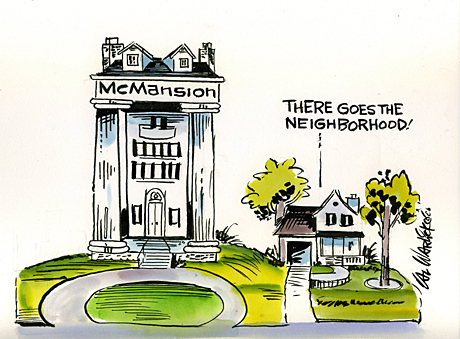
Code Enforcement Complaints Filed on Illegal McMansion Being Built by St. Augustine Beach Mayor RICH O'BRIEN


Under Florida law, illegal construction of a structure will result in an order to demolish it, no matter who is at fault, including the government.

St. Augustine Beach resident Ms. Rosetta Bailey is among those who have or will file a Code Enforcement complaint against St. Augustine Beach Mayor RICHARD BURTT O'BRIEN and his wife, LAUREN RINGHAVER, for having exceeded the mandatory fifteen foot setback in the mandatory development order by 2.9 feet.  The 16 F Street structure is still under construction, and subject of a $2500 consultant report that is on the agenda for the June 5, 2017 meeting, along with a demand by City Manager BRUCE MAX ROYLE that Commissioners not discuss it with anyone.

Last year, St. Augustine Beach Planning and Zoning Board denied Mayor O'BRIEN a conditional use permit to build residential properties in a commercial zone, taking two commercial lots out of use in St. Augustine Beach, a small town of 1.7 square miles. O'BRIEN appealed and Commissioners voted to allow him and wife a special use permit, along the lines PZB wanted but the O'BRIENS refused. The special use permit requires a fifteen foot setback. O'BRIEN violated the setback by 2.9 feet on the western McMansion of the two he's building, bordering A1A Beach Blvd.

This is not rocket science. It's simple arithmetic, a subject O'BRIEN could brush up on (if St. Johns County Schools had any math program during summer school, which they sadly lack).

Perhaps Mayor O'BRIEN was hoping to do an end-run around the entire Code Enforcement process.

Perhaps Mayor O'BRIEN thought no one would notice.

Perhaps Mayor O'BRIEN thought his feckless thuggery could overcome the Due Process afforded to any building owner by the Code Enforcement Board.

Putting the cart before the horse, RICHARD O'BRIEN was going to try to sneak his 2.9 foot encroachment by the people by sneaking it on the "Consent Agenda" some sort of resolution of the problem that he and compliant City officials created.

Now, there must be an investigation, and some kind of hearing before the Code Enforcement Board, not a consultant report and a City of St. Augustine Beach Code Enforcement hearing, with competent and substantial evidence, complying with Florida administrative procedure law.

Ms. Bailey wrote St. Augustine Beach Building and Zoning Director GARY LARSON on May 28, 2017:

Mr. Larson, 

I am filing a code enforcement complaint against an illegally built building that is 2.9 feet over set back. 

Encroachment into a special 15 foot corner side yard set back for a single family residence currently under construction on 
Lot 17, Block 38 of the Coquina Gables Subdivision, aka 16 F street.

Thank you 

Rosetta V. Bailey 


Ms. Bailey ran and lost against O'BRIEN in the November 8, 2016 election and was the victim of O'BRIEN's dirty campaign tactics, including a partisan mailing in a nonpartisan race, suggesting he was the "Republican's choice.


Mayor O'BRIEN's ally LEONARD TRINCA, CEO of several companies, faces criminal charges over having shoved Ms. BAILEY in the back on Election Day, nearly causing her to fall down.


Note: the standard of care requires that City Attorney James Patrick Wilson prepare a legal memo.

No more "warm fuzzies" are desired or required, Jim.

Here's the e-mail trail:


Fri, May 26, 2017 11:22 am
Re: Request No. 2017-239: Research on demolition of 16 F Street -- Mayor O'Brien's illegally constructed building 
From
Ed Slavin easlavin@aol.comhide details
To
jpwilson jpwilson@cityofsab.org
Dear Jim:

Please research and prepare a legal memo for the Commission.  I understand that a Code Enforcement complaint is being filed based o  the findings in the consultant's report.
Thank you.
With kindest regards, I am,
Sincerely yours,
Ed Slavin
904-377-4998


-----Original Message-----
From: Jim Wilson <jpwilson@cityofsab.org>
To: Ed Slavin <easlavin@aol.com>
Sent: Fri, May 26, 2017 11:13 am
Subject: Re: Request No. 2017-239: Research on demolition of 16 F Street -- Mayor O'Brien's illegally constructed building

I have no documents responsive to your request.
From: Ed Slavin <easlavin@aol.com>
Sent: Friday, May 26, 2017 11:06:37 AM
To: Jim Wilson
Subject: Request No. 2017-239: Research on demolition of 16 F Street -- Mayor O'Brien's illegally constructed building

Dear Jim:
Please send me your research and draft order, under Florida legal precedents, for the demolition of Mayor RICHARD BURTT O'BRIEN's illegally-constructed building building at 16 F Street, which violates setback requirements.
Thank you. 
With kindest regards, I am,
Sincerely yours,
Ed Slavin
904-377-4998


City of St. Augustine Legislative Agenda Fails in 2017 Florida Legislature


Commissioner TODD DAVID NEVILLE a/k/a "ODD TODD" once again shows his unfitness to be Mayor of St. Augustine. He excuses nonperformance by the lobbyists hired by his running dog, City Manager JOHN PATRICK REGAN, P.E. Hiring lobbyists, the City bet on corruption. It lost. It needs to re-think its business plan. That "plan" is predicated on Tallahassee legislators doling out moola by endless begging. Last year, the Governor vetoed some $275,000 for West Augustine sewers while signing $2,882,000 for restoring storm-clogged Summer Haven River for rich folks.  Last year, I filed a civil rights complaint about this discrimination by Governor RICHARD LYNN SCOTT, referred by by DOJ to EPA's Office of Civil Rights, which interviewed me.

NO RESPONSE from anyone to the fact that our vaunted lobbyists failed yet another year. Time for Commissioners to support a St. Augustine National Historical Park and National Seashore study. time for Commissioners to stop their stinkin' thinkin', their negativity on federal help, federal planning and federal funding, while placing all their eggs in one basket -- noblesse oblige from Flori-DUH legislators.


FROM LEE GEANULEAS, St. Augustine Residents Count, quoting Historic City News:

Interesting article below from Historic City News.
On one hand, budgets are inherently fungible; money can be moved as needed and priorities reordered as necessary. That said, losing $2 million dollars in an approximately $50M total budget is not trivial. It certainly raises the question of what doesn't get funded in the next budget that otherwise would have. Will we fall further behind on street paving and maintenance? Hope not - has anyone driven on Cordova ST between St Francis and Bridge ST lately? Yikes!
Beyond that, there's a more strategic issues at play here: Why was the city unable to get its legislative priorities funded in Tallahassee? Are the city's hired lobbyists not up to the task? Was our legislative strategy ill conceived or poorly executed? Or was it just a year in which no municipality received funding for any requested projects?
I'd like to hear some discussion of why these important projects weren't funded and what we're going to do differently next budget cycle.


Neville “not worried” over loss of more than $2 million in state funds


Apparently, Jesse Fish is buried underneath a money tree, because Todd Neville, a Davis Shores accountant and city commissioner, told Lorena Inclan in a televised interview yesterday that he’s not worried that the legislature has eliminated more than $2 million meant for public works projects in the city — especially one that would prevent flooding in Davis Shores.
Neville admitted that only “some money” was set aside in the city’s budget to begin implementing seventeen potentially life-saving backflow preventers that would protect the island from seawater infiltration of the type reported by Historic City News during Hurricane Matthew.
“I’m not worried about it because we’re going to get it done this year no matter what,” Neville said, even though the full cost of the Davis Shores project is not budgeted and planners were counting on these state funds to complete the work.
The projects that did not receive state funding include retrofitting backflow preventers in Davis Shores, wastewater lift stations that serve The Florida School for the Deaf and the Blind, and extending sewer capacity in West Augustine.
Neville could only offer his lofty guarantee yesterday because the budget cycle doesn’t begin until next month. That’s when the city manager, John Regan, would normally be expected to formulate and bring forward his plan.
However, at the last commission meeting, Regan announced that he is “reorganizing” the workflow at the city and redirecting responsibility of the department heads in city government, including public works, to junior city manager, Tim Burchfield.  It was at the end of that meeting that Regan first publicly introduced his intentions by way of an elementary lecture on human resource management.
  • It is not yet clear what legal authority Regan has to absolve himself of the responsibility for these management functions, but perhaps Neville, whose first term on the commission ends next year, knows something that the public does not.
  • What the public does know, at this point, is that the City of St Augustine must act soon to pay for these projects that did not make it into the state budget; or to abandon them, or to abandon others that have been contemplated — and have funding.
Neville isn’t saying exactly what projects he will axe.

FIVE WAYS THAT FAUX "FOX NEWS" COVER UP TRUMP SCANDALS

FIVE WAYS THAT FAUX "FOX NEWS" COVER UP TRUMP SCANDALS
Trump vs. Truth (John Oliver)


St. Johns County lags on projects because it won't collect impact fees upfront


Where is the Inspector General? (We have none.). Where is the Ombudsman? (We have none.) Where is the Grand Jury investigating corruption? Developer-driven St. Augustine and St. Johns County, Florida are a veritable swamp of developer-directed doofuses, a Confederacy of Dunces. Good article by Jake Martin -- where is the FBI and federal grand jury going on its multi-year investigation of white collar crime and corruption, starting with County Administrator MICHAEL DAVID WANCHICK, County Attorney PATRICK FRANCIS McCORMICK, Medical Examiner Dr. PREDRAG BULIC, M.D., State's Attorney RALPH JOSEPH LARIZZA and Sheriff DAVID BERNARD SHOAR f/k/a "HOAR?"

Posted May 28, 2017 12:02 am
By JAKE MARTIN jake.martin@staugustine.com
Meeting St. Johns County’s transportation needs looking like a long road


Making St. Johns County’s transportation plans a reality is a process that has been hindered in recent years by an ongoing lack of money to maintain what’s already here, much less to meet the demands of continued growth.

The public works department, among other things, is responsible for the planning, construction and upkeep of the county’s roads and related infrastructure. Most of its revenues for these programs and services come from ad valorem taxes and gas taxes. Other revenues from sources like impact fees, application fees and interest are much smaller and almost always committed to certain projects or zones.

Neal Shinkre, public works director, told The Record on Thursday that the transportation-end of his department is anticipating just under $31.8 million in revenues for 2018. Meanwhile, its operational expenditures, which include salaries and numerous programs and services related to maintenance of existing roads and infrastructure, are expected to be around $33.5 million.

Shinkre said he’s typically balanced out the difference with his reserves. However, county commissioners gave direction to staff this year to come up with a version of next year’s budget that does not rely on drawing down from reserves.

Reductions are proposed for infrastructure improvements and capital maintenance projects such as replacing old drainage or stormwater pipes, sidewalks and culverts, but Shinkre said all those cuts are just operational, never mind capital.

“I don’t have any money, any money in my transportation fund, meaning zero, to do transportation projects,” he said. “Zero. I can’t do any projects.”

He said while it’s true many maintenance projects are capital-intensive, they only keep an existing road or piece of infrastructure up to its current standards. They do nothing to address demands of growth and more people using the roads and infrastructure.

Shinkre said there’s a list of about $90 million worth of roadway projects that would enhance safety and increase capacity, including improvements to sections of Wildwood Drive, Roberts Road, King’s Estate Road and Old Moultrie Road. And that’s just looking ahead five years. The need will easily top $150 million over 10 years, he added.

“These are roads that have been on our map a long time and that need upgrades to meet the current traffic conditions and meet our standards for levels of service,” he said. “I don’t have money for those.”

What’s being done?

Shinkre said the only types of capital projects he can do come mostly from impact fees, which the county collects from housing and commercial developers. He said the county’s Transportation Trust Fund, on average, gets $4-$5 million a year from those fees but the county also has annual bond commitments totaling $1.5 million (for projects in the northwest and northeast) that come out of that pot.

There are just $3.1 million in impact fee-funded projects planned for next year.

Shinkre said those projects include improvements to C.R. 210 from Interstate 95 to U.S. 1 for $961,000, four-laning of Longleaf Pine Parkway from Roberts Road to Oxford Estates for $900,000, and capacity-based maintenance on the C.R. 208 Town Branch Bridge for $600,000. There are some smaller maintenance and drainage projects funded by impact fees elsewhere.

“I can only collect for growth where it occurs and put projects where that growth is headed,” he said.

Officials have said the results of an impact fee study will be presented to the board during the budget process for 2018 and that the commission could revisit its options at that time. The county’s impact fees were last adjusted in 2011, however, annual adjustments (upward) have been made based on a cost index.

Other road projects are done largely through developers’ commitments, although those projects are at the whim of the developers and where they are in terms of construction on their properties. Shinkre said there were four or five projects from this year that are going to carry over to the next year, including some major improvements to Race Track Road and Woodlawn Road. Shearwater will also be contributing, over time, toward a four-lane expansion of C.R. 210 west of Cimarrone Boulevard to the C.R. 210/Greenbriar Road junction. Most of these projects, however, will still require the county to come up with millions of dollars to bring to fruition.

While FDOT is mainly concerned with state roads, it does offer some criteria-dependent help on local roads.

Shinkre said the intersection of Wildwood Drive and U.S. 1 will get about $1 million in state assistance within the next 18 months, but only to address safety concerns due to some crashes that have been happening there. FDOT is also expected to pitch in on shoulder widening of C.R. 13 from C.R. 208 to S.R. 16, but those funds aren’t anticipated till around 2020. He said the county is working with FDOT on the intersection of Race Track Road and C.R. 13, but added that’s “absolutely not a funded project yet.”

The county next year will also get a $750,000 grant, requiring no local match, from the Florida Department of Transportation for a multi-use path for the St. Johns River to Sea Loop Trail.

Strapped for cash

Pavement management will likely continue to receive less than half of the estimated $14 million that’s needed on an annual basis to keep the county’s roads up to standard.

Shinkre said he is recommending just $6 million for the program next year in order to stay within the bounds of expected revenues. He said pavement management is currently in a $50 million hole that’s only going to get deeper with time if it’s not addressed.

In a near-perfect world, he said he could invest just $2 a square yard to maximize the life of a roadway before there’s a critical need, although a road could also be brought back up to par for $4 a square yard, at least for some time. But $6 a square yard is the end of the line.

“I don’t want to wait [until] $6, [until] the road is completely dead and I have to reconstruct the entire roadway,” he said.

The picture was already bleak four or five years ago when Shinkre first arrived at the $14 million-a-year figure. He said maybe that figure could be up to $16 million a year by now, adding he’s trying to get a new study done.

Shinkre has told the board he needs about $10.8 million a year for deferred maintenance, including $8 million for pavement management and $1.5 million for drainage infrastructure, to at least cover the annual deficit for those areas.

“Identifying revenue sources is very critical for us,” he said. “We have really skinned the cat as much as we can, and to the bone, right now.”

Shinkre said the county used to maximize on grants, but that’s out the window given the current circumstances.

“Grants are great because they’re a way of getting 50 cents or 75 cents to a dollar for a project where we contribute half the money, or less,” he said. “Well, I don’t have half that money to contribute.”

He said the county stands to receive $11.5-$12 million in hazard mitigation grant funding for Hurricane Matthew, with the state and feds paying a 75 percent share, within the next 6-10 months. He said the funding is for the county, school district, sheriff’s office, St. Augustine and St. Augustine Beach, but that his department would probably account for at least half of those funds.

Shinkre said he doesn’t know what projects will be going where as of yet, but there’s also the problem of where the county’s anticipated $1.8 million share is going to come from.

“I can always use my reserves,” he said. “But is that the way to get projects done?” (To those who would say “not for long,” Shinkre would one-up you and say “long” has already occurred.)

He said Transportation Trust Fund reserves are down to about $12 million, but less when factoring in monies that need to be set aside for bond commitments and 3-6 months of operating expenses. The bottom line, he said, is $12 million just isn’t a whole lot when it comes to roads and infrastructure.

“I can suck up that $12 million in one project,” he said.


3 Comments

Sponger2 Harvell
If you can't do projects, stop building unwanted and unneeded stuff that requires projects. Working off the "can't put ten gallons of sewage in a five gallon bucket model" this should be easy enough to see even for those without an engineering degree.

Mach Hoyle
Like the port -a - potty, build it and they will come!

Tom Reynolds
The County Government, Elected and non-elected made a decision to not collect the Impact fees UPFRONT ! So now comes all the desperate stories of "we have no money" to do what should be getting done. Who is to blame ? All the County Commissioners PAST and PRESENT ! What do all the County Commissioners, PAST and PRESENT, who have failed the Residents of St Johns County have in common ......... an ..............R ..................... after their name ! The Elected County Commissioners past and present, NEVER HAVE PUT THE RESIDENTS FIRST !
But those past and present R County Commissioners, sure have taken EXCELLENT CARE OF THE NORTH FLORIDA DEVELOPERS !! Well maybe one day the Resident Voters of St Johns County will actually look and read about a Candidate before just checking the box with the candidate who has an R next to his or her name. Simply just R voting is why this County is SHORT A Lot Of Funds (money) and can NOT do projects it should be DOING !

Pinellas licensing board executive director settled hundreds of cases without getting his board's approval (Tampa Bay Times)

Pinellas County Inspector General and Grand Jury investigating. Yes. Investigating. That's what you're supposed to do with big shot crooks. Unlike St. Johns County, where there is NO Inspector General and the Grand Jury never investigates corruption and has never met on the September 2, 2010 Michelle O'Connell shooting death. http://cleanupcityofstaugustine.blogspot.com/2017/05/pinellas-licensing-board-executive.html


Pinellas licensing board executive director settled hundreds of cases without getting his board's approval

Mark Puente, Tampa Bay Times Staff Writer
Friday, May 26, 2017 8:14pm


RELATED NEWS/ARCHIVE
Sen. Jack Latvala blocks oversight efforts for Pinellas licensing board
Pinellas construction licensing board to decide on former leader's payout and interim replacement
Pinellas licensing board hopes to decide on Rodney Fischer's vacation payout soon

Eleanor Morrison complained to the Pinellas licensing board in 2015 that her contractor installed crooked walls and windows and poured too much concrete for her carport.

A panel of experts reviewed the evidence and ruled in her favor. The contractor faced a fine and possible license suspension.

That's when Rodney Fischer stepped in.

The longtime executive director of the Pinellas County Construction Licensing Board met with the contractor one-on-one, after which he dismissed the complaint.

No fine. No suspension. No public record outlining why he made the decision after the experts had reviewed the same case.

"It bothers me," said Morrison, of Treasure Island. "I feel like I didn't have my day in court."

Fischer held similar private meetings a lot during his 16-year tenure, the Tampa Bay Times found. After the meetings, he often waived or lowered fines and sometimes dismissed complaints entirely.

The 15 board members the Times reached for comment said Fischer made many of the decisions without their approval. And the Times found that the agency's records included hundreds of cases that were settled or dismissed that never came before the board.

Gay Lancaster, who took over as the agency's interim leader after Fischer stepped down in January, said the Times' findings troubled her enough that she alerted the county's inspector general and Pinellas-Pasco State Attorney Bernie McCabe.

"Never would I be one-on-one in a meeting with someone where a fine was levied or changed," she said.

For its investigation, the Times interviewed more than 30 people, reviewed hundreds of the licensing board's case files and thousands of pages of other public records, and analyzed a database of 22,000 complaints and citations.

Among the other findings:

• Fischer stressed in writing that contractors could face higher fines and license suspensions if they ignored his request to meet with him.

• Homeowners didn't know that Fischer was meeting with contractors to settle their cases. They wondered why they weren't invited to tell their side of the story.

• The agency could not fully account for all the fines it issued over the past 16 years. The electronic tracking system, for instance, included hundreds of cases with no indication of whether the agency collected the fines. In hundreds of others, there was no final resolution listed at all.

• Since 2014, county officials have twice asked to look at the agency's records, including its finances. Both times, officials said that Fischer stood in the way, arguing that the agency was independent from the county and not required to comply with the requests.

Bill Loughery, a former chief assistant prosecutor for Pinellas and Pasco counties, said local government agencies should be so transparent that the public can quickly understand how they track information and money.

"It's highly suspicious when there is not a check and balance," Loughery said, speaking generally, not specifically about the licensing board. "The public has to understand how the processes work."

In a statement to the Times, Fischer's attorney, Marion Hale, disputed that her client had somehow left the board members in the dark. She said they were "well aware" that Fischer was meeting with contractors. They even received copies of the letters Fischer sent to contractors requesting they meet with him, she said.

Hale also wrote that the board's former chairman, Paul Skipper, "assured Mr. Fischer he had full authority to handle these cases," and that he didn't need board approval for cases he settled, a claim Skipper disputes.

"The board could have heard all of these matters had it wanted to but it did not," Hale wrote.

• • •

Fischer joined the licensing board in 1973, the year the Florida Legislature established it to help regulate building codes and protect homeowners. He became executive director in 2001.

The Pinellas board doesn't report to anyone, not the county or even the Legislature. That makes it unlike any other similar board in the state. That also gave Fischer considerable power.

In 2014, for instance, a board investigator cited a contracting company for failing to obtain 26 permits to install air conditioners.

The board's panel of experts reviewed the evidence and ruled against the company. At $300 for each infraction, the company faced a $7,800 fine.

The panel then discussed whether Fischer should hammer the contractor or go easy, according to a recording of the meeting. Fischer interrupted, reminding them that while they decide if a contractor committed an infraction, he determines the punishment.

"We can pretty much charge whatever we want with those numbers," Fischer said.

As he did in hundreds of cases, Fischer then sent the company a letter.

"You are required to schedule an appointment with me to discuss the substance of the complaint and the possible resolution in lieu of a hearing," many of the letters said.

Another letter Fischer often sent stated the message in bold words, calling it "imperative" to schedule the meeting.

Both letters said that failing to meet with Fischer could lead to stiffer penalties and a license suspension.

Two months later, Fischer met an official with the air conditioning company and reached a $3,900 settlement, records show.

In Eleanor Morrison's case, Fischer met with contractor Jason Donton for less than 15 minutes before dismissing the complaint. Donton told the Times that he convinced Fischer that he completed the work required by the contract.

Morrison wasn't invited to the meeting. In fact, she had no idea Fischer had dismissed the case until months later when a Times reporter called her.

She questioned why Fischer was allowed to go behind closed doors to confer with a contractor whose work the board's own panel of experts had found faulty. She also wondered how Fischer reviewed the same evidence and came to a different conclusion.

"I didn't know whether to laugh, cry or scream," Morrison said.

In 2016, contractor Dennis McGinnis received one of Fischer's letters after the panel of experts had ruled against him. While McGinnis sat in the board's lobby with a stack of paperwork waiting his one-on-one meeting, Fischer opened a glass door to deliver a message.

I decided to throw this case out. You can go home, McGinnis remembered Fischer saying.

Surprised, McGinnis told Fischer that he was prepared to use his stack of records to refute the allegations.

You want me to reopen the case? McGinnis recalled Fischer asking. McGinnis, who said he didn't know why Fischer dismissed the case, walked out the door.

Homeowner Louise Phillips, who filed the complaint against McGinnis, questioned whether the agency is fulfilling its watchdog role for consumers.

"I don't know how he made that decision," Phillips said about Fischer. "I would like to have somebody else really look at my case."

• • •

The 15 board members the Times reached said they did not know Fischer settled cases in private meetings without board approval. Several said they were too busy with their full-time jobs to know the details of the agency's entire operation.

"I was not aware of negotiations between Mr. Fisher and the contractors," interim board chair Rick Dunn wrote in a statement.

Hale, Fischer's attorney, said her client "conducted these matters as his predecessors had done prior to his appointment."

The previous executive director, William Owens, died in 2001. But Peter Lipman, the board's first executive director, from 1973 until 1981, said he did not meet with contractors privately to settle or dismiss any disciplinary cases.

"We didn't operate that way," said Lipman, a retired lawyer who now lives in Las Vegas. "There was no such thing."

Building officials in Hernando, Hillsborough and Pasco counties told the Times that they were not allowed to dismiss complaints or negotiate fines in private meetings.

"Everything we do is in public," said Jim Blinck, executive manager of Hillsborough's development services. "There are no decisions made behind closed doors."

Hale also said that the meetings "were not private." She said investigators and the board's administrative manager, Anne Maddox, "often attended."

But Ken Burnett, a former deputy police chief in Illinois who worked as a board investigator from 2013 to 2015, said investigators were rarely in the meetings, which he described as "an almost daily occurrence."

"Fischer met with most of them alone," he said. "We didn't know what the fines were or what he did in his office."

• • •

When the board's 21 members meet every eight weeks, they usually spend some time approving fines and other discipline against contractors. The cases are listed on the written agenda and the board's decisions are recorded in the meeting's official record, also known as the minutes.

But the Times analysis found that many cases were not listed in either one of those documents, and there was no indication in the agency's tracking system that the board members were ever asked to approve them.

The tracking system, for instance, showed that licensed contractors paid fines in 442 cases filed in 2015. Yet the board approved only 145 of those fines, according to the meeting records.

Consider another example.

In some cases, contractors don't challenge complaints and agree in advance of the board meetings to pay the fines.

In 2010, the board approved 135 of those unchallenged cases, according to records. Last year, the board approved only eight.

Why the huge drop?

Maddox, the administrative manager, said Fischer stopped taking most of the unchallenged cases to the full board for approval to speed up the process, which helped save money.

"We were trying to avoid doing some paperwork," Maddox said.

Hale said that Skipper, the former chairman, gave Fischer the authority to settle cases in which the contractor did not request a formal hearing before the full board. In those cases, she said, Fischer did not need to get the board's approval. The meeting agendas did not list the settlements, but Fischer informed the board, she said.

"Mr. Fischer had authority to settle matters," she wrote.

Skipper said he did not grant Fischer that authority. He added that he didn't know Fischer dismissed complaints or fined contractors without the board's approval.

"He shouldn't have done that," Skipper said.

Division of Administrative Hearings Chief Deputy Judge Lisa Nelson said a judge or other presiding official can hold voluntary meetings to discuss evidence and procedures. But any recommendation that stems from such a meeting, including fines or dismissals, must then be approved by a governing authority, like a board of directors, said Nelson, who agreed to speak to the Times about the administrative process but not specifically about what was happening at the Pinellas licensing board.

Richard A. Harrison, an adjunct professor at Stetson University's College of Law and an expert on government law, said contractors could file legal challenges in court to have the sanctions voided if Fischer acted on his own.

"It would be extraordinary, if not unheard of, for the board of an agency to give the executive director blanket authority to negotiate and make final decisions without any oversight, reporting or approval," Harrison said.

• • •

As for the agency's record keeping, Lancaster acknowledged that even she has had problems understanding the system since she took over as interim director a few months ago.

Lancaster called the electronic tracking system "badly antiquated." Pinellas County Commissioner Karen Seel wants the county to spend $744,000 for a new tracking system, records show.

"We're struggling to show the process all the way across," Lancaster said.

The tracking system, with 22,000 cases filed since 2001, included at least 1,100 that lacked any indication of a final outcome, such as whether the case was closed, dismissed or whether a fine was paid.

The tracking system also referenced payment plans, but the agency could not say how many contractors were on a payment plan, or how much money those contractors still owed. Investigators track the payment plans on their computers and periodically update the system, Maddox said.

"You have to check each individual case," she said. "You can't pull a report. Much of the system doesn't work."

And the information in the tracking system didn't always match the written records from the board meetings.

In July 2016, for instance, the minutes show that the board approved 28 fines of $500 each for expired permits. The tracking system, however, showed the agency resolved six of those cases for $300 and another 17 for $426.

In those cases, the records didn't match because the agency allowed contractors to pay the lesser amount right up to the start of the board meeting. So while the board was approving a $500 fine, the contractor had paid $300 a few minutes earlier.

Lancaster told the board last week that county Inspector General Hector Collazo called that practice "insanity" because it created conflicting records.

• • •

Twice in the past three years, Fischer has cited the agency's autonomous status to keep county officials from examining its records.

In 2014, auditors from the Pinellas County inspector general wanted to review the tracking system during an investigation into possible misconduct by an investigator.

Fischer contended the system held confidential bank records and Social Security numbers, records show.

The refusal outraged Myriam Irizarry, chief deputy and general counsel to Clerk of the Circuit Court and Comptroller Ken Burke.

In response, she wrote a three-page memo outlining how the licensing board chairman gave auditors permission to obtain the records, but Fischer "still rebuffed" the request. She demanded "immediate and unrestricted access" to all records.

"The crucial records have been deliberately thwarted, which is obstructing this formal investigation," wrote Irizarry, who is now a Pinellas County judge.

Hale said Fischer did not "thwart" any investigation, writing: Fischer was told the inspector general "did not have authority to review the records as the board is not a division of the county government."

In 2015, Burke told the governing board that his office could perform several audits for the agency instead of it paying an outside firm. Fischer reminded his board members that the agency was not a county department and could reject the request, which they did.

"He put obstacles in our way," Burke said. "It put us in a very awkward position."

Times news researcher Carolyn Edds and data reporter Eli Zhang contributed to this report. Contact Mark Puente at mpuente@tampabay.com or (727) 892-2996. Follow @MarkPuente.

The investigation so far

A series of Tampa Bay Times reports has raised questions about how the lack of oversight at the Pinellas County Construction Licensing Board contributed to a fast and loose approach when it handled complaints against contractors. Previous coverage of the licensing board.

Executive director Rodney Fischer stepped down Jan. 31 after a Times report about how he treated residents and disciplined contractors.

The agency is now under investigation by a grand jury. The Pinellas County Office of the Inspector General is also examining its finances and operations. The Times reported earlier this month that the agency is running out of money as fines and citations have decreased.