Federal judge set to nuke restrictive Pentagon press policy
"Asking a question is not a crime," U.S. District Judge Paul Friedman said, noting the importance of military transparency as the nation enters a war with Iran.
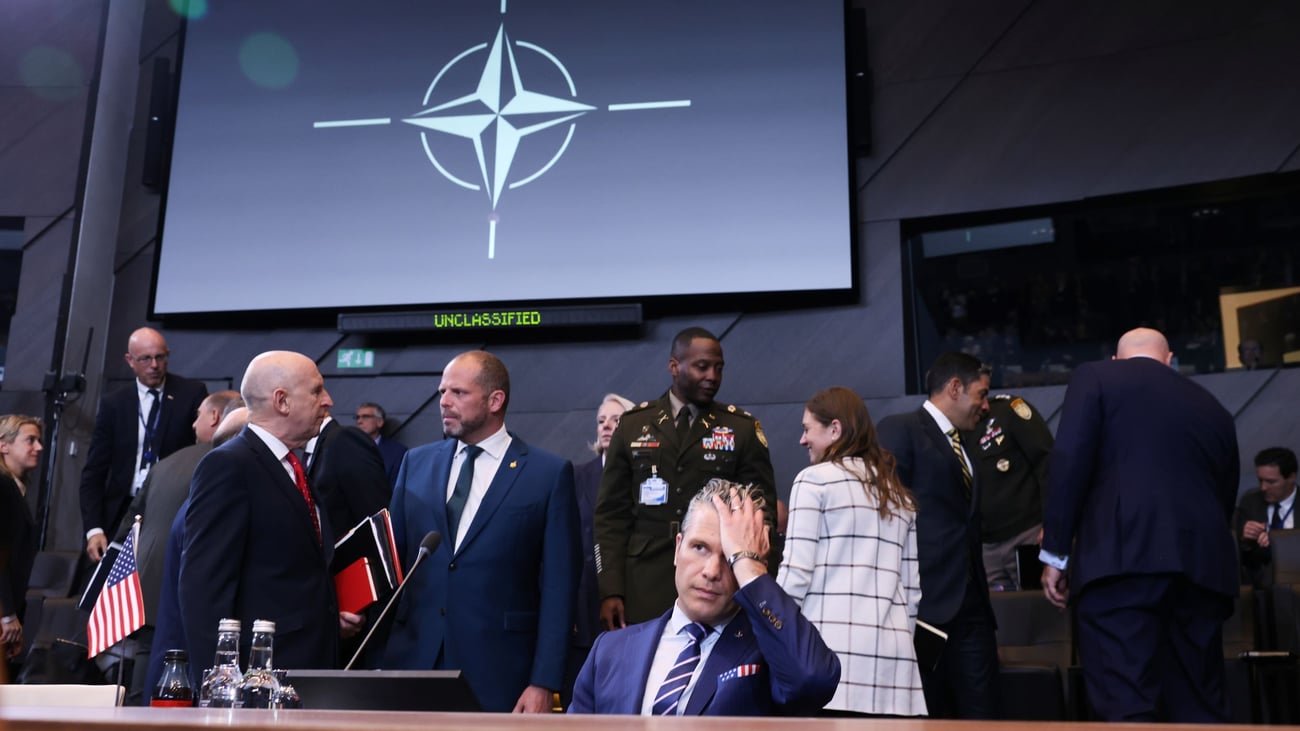
WASHINGTON (CN) — The Trump administration on Friday struggled to defend the Pentagon’s press policy that bars journalists from obtaining any information not explicitly approved for release by Pentagon officials, which pushed nearly 50 journalists from the nation’s largest news outlets, including the New York Times and Fox News, to walk out.
Senior U.S. District Judge Paul Friedman pressed the Justice Department to explain how the policy does not violate the First Amendment, particularly regarding journalists’ ability to gather news and the public’s access to vital information amid the new war in Iran.
Under the Pentagon’s Oct. 6 press policy, journalists could be deemed a “security risk” for disclosing classified or even unclassified information without the Pentagon’s authorization. Dozens of media outlets rejected the rules rather than sign on by the Oct. 17 deadline.
The Bill Clinton appointee said Defense Secretary Pete Hegseth’s policy breaks with decades of Pentagon practice that persisted through military conflicts, terrorist attacks and wars.
“In my lifetime, we’ve been through the Vietnam War, where the republic was lied to about a lot, and we’ve been through 9/11, the conflict in Kuwait, Iraq and Guantanamo Bay,” Friedman said. “I understand a lot of things need to be held secure, but openness and transparency allow the public to know what the government is doing, in times of peace but especially in times of war.”
In a heated exchange with Justice Department attorney Michael Bruns, Friedman focused on the policy’s apparent ban on “solicitation” of non-public information that would warrant the revocation of a journalist’s press credentials.
Bruns said the policy prohibits “solicitation of unlawful acts,” and pointed to the Supreme Court’s 2023 ruling United States v. Hansen — an individual scammed hundreds of immigrants by promising a path to U.S. citizenship via “adult adoption. There, the justices upheld a criminal statute forbidding the “purposeful solicitation” of acts that violate federal law.
“Asking a question is not a crime,” he said, adding that government officials have always been able to simply decline to answer and explain they can’t share classified information.
Theodore Boutrous of Gibson Dunn, representing The New York Times, said the Pentagon and the press corps had long maintained a “healthy, adversarial relationship” that kept the government accountable and the public informed.
He argued the relationship has largely disappeared under the new policy, leaving journalists unsure what they can and cannot report.
Boutrous pointed to Bruns’ inability to explain who would determine whether a journalist poses a “security risk,” arguing it shows the standard is subjective and could be used to discriminate against disfavored outlets and reporters.
One clear example, Boutrous said, was how the government viewed two tip lines seeking information from Pentagon staff, one run by conservative influence Laura Loomer and another by The Washington Post.
He said the government argued the Post’s request violated the policy because it specifically sought information from Pentagon employees, while Loomer’s was merely a “general tip line.”
Boutrous said there was nothing wrong with Loomer’s request but argued the distinction showed the Pentagon was engaging in unconstitutional viewpoint discrimination.
The Justice Department, as it has in other challenges to Trump administration policies, argued the issue involves national security and urged Friedman to defer to the Secretary of Defense and his “security experts.”
“With these new military conflicts, the need to protect military information is at its highest,” Bruns said.
Since the legacy media exodus, veteran journalists have been replaced by individuals and media outlets who closely align with the Trump administration and espouse viewpoints the Department favors, the Times said in its Dec. 4 lawsuit.
They include Mike Lindell, Loomer, Matt Gaetz and Raheem Kassam, among others.
David Schulz of Yale’s Media Freedom & Information Access Clinic, representing the amicus Pentagon Press Association, noted that Hegseth had not spoken in the Pentagon press room for more than six months.
Monday, just over a day after the United States launched a joint offensive on Iran with Israel, marked the first time he addressed reporters and took questions.
Schulz said only current members of the Pentagon press corps — those who signed on to the new policy — received a media advisory Sunday before officials contacted the five major networks to request a pool camera due to exposure concerns.
The networks requested reporters in the room, but the Pentagon allowed only one per outlet, who would need temporary day passes to enter.
Also present at the defense table was Navy Reserve Commander Tim Parlatore, attorney of Parlatore Law Group — who represented Hegseth against in a sexual assault case while at Fox News — and special adviser to the Secretary. Hegseth appointed Parlatore to the rank in March 2025.
 Follow @Ryan_Knappy

No comments:
Post a Comment